WA State Guide · Updated March 2026
Best Grass Seed for Washington
Top grass seeds for Washington lawns that handle rain, shade, and drought. Expert picks for Seattle, Spokane, Tacoma, and the Puget Sound region.
Disclosure: This article contains affiliate links. If you buy through our links, we may earn a commission at no extra cost to you. All opinions are our own. Learn more.
Washington State is really two states stitched together by the Cascade Range, and the lawn care advice that works in Bellevue will get you nothing but a dead yard in Spokane. West of the Cascades, the Puget Sound corridor from Bellingham to Olympia sits in a marine climate that delivers 35 to 50 inches of rain per year, keeps winter temps above 25 degrees, and then shuts off the water almost completely from mid-July through September. East of the Cascades, Spokane, the Tri-Cities, and the Yakima Valley get 6 to 17 inches of annual precipitation, endure winters that drop to minus 10, and bake under cloudless summer skies. If you've ever driven I-90 from Seattle to Ellensburg and watched the landscape flip from dark forest to golden steppe in 30 minutes, you already understand why a single grass seed recommendation for 'Washington' is fundamentally absurd.
For the roughly 4 million people living in the Seattle-Tacoma-Everett metro, the defining lawn challenge isn't heat, cold, or drought — it's the relentless combination of acidic glacial till soil, persistent winter cloud cover, and heavy shade from towering Douglas firs, western red cedars, and big-leaf maples. King and Snohomish county soils routinely test at pH 4.8 to 5.5, well below the 6.0 to 6.5 range where cool-season grasses absorb nutrients efficiently. Add in compacted clay hardpan left behind by the Vashon glaciation, and you've got soil that stays waterlogged from October through May, then bakes into concrete by August. Moss doesn't just grow here — it thrives with a vengeance that makes Portland look tame.
Eastern Washington is a completely different animal. Spokane sits at 1,900 feet in Zone 6b with genuine continental winters — the kind where your lawn is under snow from December through February and the freeze-thaw cycles crack unprotected soil like pottery. The Tri-Cities (Richland, Kennewick, Pasco) at the confluence of the Columbia and Yakima rivers get barely 6 inches of rain annually, making them the driest metro area in the Pacific Northwest. Yakima splits the difference with 8 inches of precipitation and an irrigation-dependent agricultural economy that produces more apples and hops than anywhere else in the country. Every maintained lawn east of the Cascades is entirely dependent on irrigation, and water rights and rates are a real part of the homeownership calculus.
The transition between these two worlds creates a third microclimate that doesn't get discussed enough. Ellensburg, Wenatchee, and the Kittitas Valley sit in the rain shadow directly east of the passes, where you get the cold winters of eastern Washington combined with wind exposure that would strip paint off a barn. Wenatchee's benchlands above the Columbia River experience some of the most intense freeze-thaw cycling in the state, and lawns there need cultivars selected specifically for cold hardiness and wind desiccation tolerance. The Columbia Basin further south — Moses Lake, Othello, Quincy — is irrigated desert converted to farmland, where lawn care means committing to a permanent water budget.
Washington State University's turfgrass program in Pullman and the WSU Extension offices scattered across the state are the best free resources available to Washington homeowners. The Puyallup Research and Extension Center near Tacoma runs turf trials under real western Washington conditions, and their publications on moss management, acidic soil amendment, and drought-tolerant grass selection are backed by decades of field data. The Spokane County Extension office provides eastern Washington-specific guidance that accounts for the continental climate most national lawn care advice ignores entirely. Before you buy a bag of seed from the home improvement store, spend 15 minutes on the WSU Extension turf publications page — the recommendations are calibrated to your actual climate, not a generic Zone 7 somewhere in the Midwest.
Quick Picks: Our Top 3 for Washington
Understanding Washington's Lawn Climate
Dramatically split by the Cascade Range. Western Washington (Seattle, Tacoma, Olympia) has a marine climate with mild, wet winters and dry summers — rainfall averages 37-50 inches annually but virtually stops from July through September. Eastern Washington (Spokane, Tri-Cities, Yakima) is semi-arid steppe with cold winters, hot summers, and only 8-17 inches of rain per year. The Puget Sound lowlands rarely see temperature extremes, while eastern WA swings from single digits in January to 100F+ in July.
Key Challenges
Best Planting Time for Washington
September through mid-October (fall) for western WA when rains return; April through May as secondary window. Eastern WA can plant spring or fall with irrigation.
Our Top 3 Picks for Washington
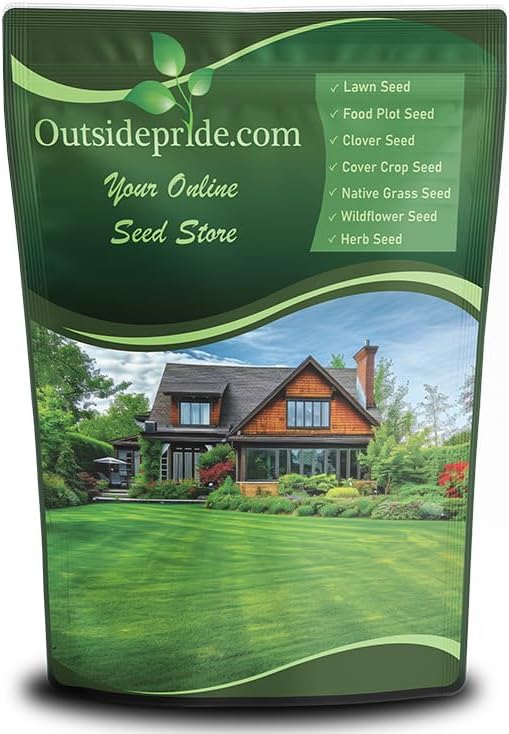
Outsidepride Midnight Kentucky Bluegrass Seed
Outsidepride · Cool Season · $35 (5 lbs) – $300 (50 lbs)
Why this seed for Washington: KBG thrives in Washington's Puget Sound climate — cool, moist conditions are ideal. Midnight's dark color looks stunning against the evergreen backdrop, and its cold tolerance handles eastern WA's harsh winters.
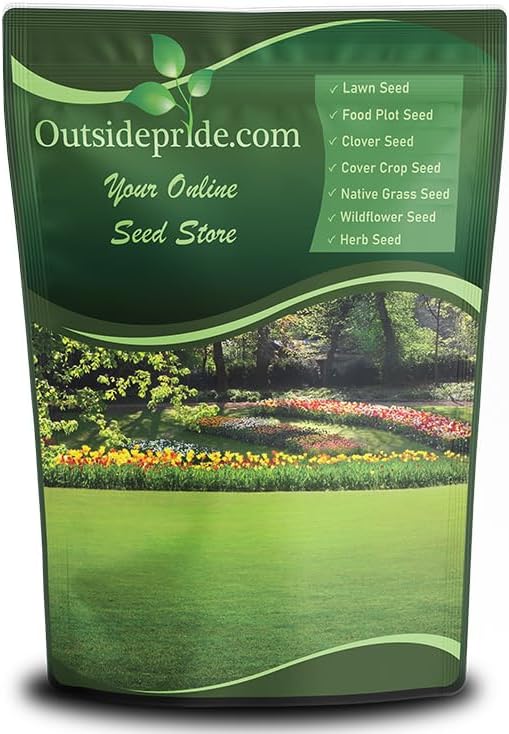
Outsidepride Creeping Red Fescue
Outsidepride · Cool Season · $35 (5 lbs) – $70 (25 lbs)
Why this seed for Washington: Western Washington's tall conifers create deep shade that defeats most grasses. Creeping Red Fescue is the answer — it thrives in the filtered light under Douglas firs and cedars while handling the constant moisture.
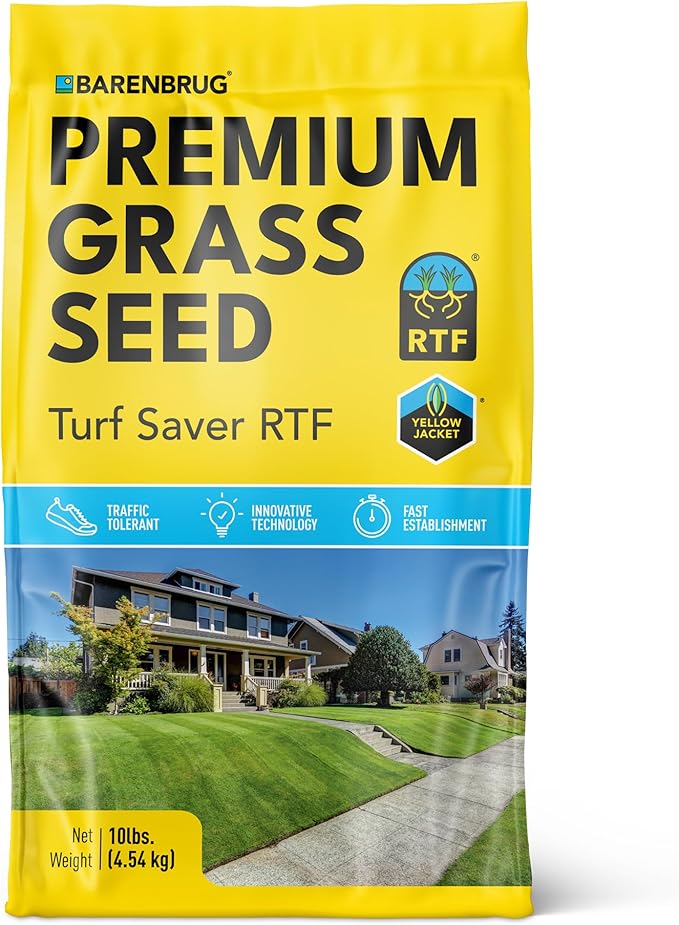
Barenbrug RTF Water Saver
Barenbrug · Cool Season · $40-55 for 5 lbs
Why this seed for Washington: RTF's self-repairing rhizomes and deep roots make it ideal for Washington's dry summers. Even in "rainy" Seattle, July and August are bone-dry — RTF survives the summer drought without excessive irrigation.
Best Grass Seed by Region in Washington
Puget Sound / Seattle Metro
The I-5 corridor from Everett through Seattle and Tacoma down to Olympia is Zone 8b, defined by mild wet winters, dry summers, and the heavy glacial till soils left behind by the Vashon ice sheet 15,000 years ago. Seattle proper averages 37 inches of rain, nearly all of it falling between October and June. The soil across King, Pierce, and Snohomish counties is a mix of compacted clay hardpan and poorly draining glacial till, with pH commonly running 4.8 to 5.5. Mature neighborhoods in Capitol Hill, Wallingford, West Seattle, and the older parts of Tacoma sit under dense canopies of Douglas fir, western red cedar, and big-leaf maple that block 60 to 80 percent of available light. Moss is the number one lawn problem across the entire metro. Fine fescue blends and perennial ryegrass dominate residential lawns, with Kentucky bluegrass performing well only in full-sun new construction subdivisions in Maple Valley, Sammamish, and Bonney Lake where trees haven't matured yet.
Top picks for this region:
- ✓Lime every fall without exception — Puget Sound glacial till tests pH 4.8 to 5.5 consistently, and you need 50 to 75 lbs of dolomitic lime per 1,000 sq ft annually for three to four years before pH stabilizes above 6.0
- ✓Core aerate in September before the October rains saturate the clay — once that glacial till is waterlogged, you can't aerate without destroying the turf surface
- ✓Overseed September 10 through October 5 when soil is still warm from summer — this is the best establishment window in the Pacific Northwest, and waiting until spring means competing with annual bluegrass germination
- ✓For shaded lots under conifers in older Seattle neighborhoods, creeping red fescue is the only viable lawn grass — bluegrass and ryegrass thin out within two seasons under year-round evergreen shade
- ✓Seattle Public Utilities offers rebates for reducing lawn irrigation — check their savingwater.org program if you're considering converting part of your yard to drought-tolerant native plantings
Bellingham / Whatcom & Skagit Counties
The northernmost Puget Sound region from Mount Vernon through Burlington and up to Bellingham sits in Zone 8a with even more rainfall than Seattle — Bellingham averages 35 inches but the foothills east of town toward Kendall and Glacier can hit 55 to 70 inches. The Skagit and Nooksack river floodplains have rich alluvial silt loam that's excellent for turf when it's not flooded, but drainage is a constant issue on the flat farmland parcels that are being subdivided for housing. The proximity to the Canadian border brings slightly colder winters than Seattle, with occasional Arctic outflow events that drop temperatures to single digits for a week. Bellingham's Lettered Streets, Sehome, and South Hill neighborhoods have mature tree cover comparable to Seattle's densest canopy areas. The Western Washington University campus is a testament to what Kentucky bluegrass can do in full sun here, while the shaded residential streets a block away tell the fine fescue story.
Top picks for this region:
- ✓Skagit Valley floodplain soil is incredibly fertile but stays soggy well into May — delay spring fertilization until the soil firms up enough that you're not leaving footprints when you walk across the lawn
- ✓Arctic outflow events every few winters can drop Bellingham to 5 to 10 degrees for several days — Kentucky bluegrass handles these cold snaps better than perennial ryegrass, which can suffer winter kill at the margins
- ✓The heavy rainfall here makes moss pressure even worse than Seattle — budget for annual liming and plan on aggressive moss management as a permanent part of your lawn care routine
- ✓Drainage tiles or French drains are worth the investment on former farmland lots in Burlington and Mount Vernon where the water table sits 18 inches below the surface from November through April
Southwest Washington / Vancouver
Clark, Cowlitz, and Lewis counties in the southwest corner of the state share more in common with Portland, Oregon than with Seattle. Vancouver, WA sits directly across the Columbia River from Portland and experiences nearly identical climate conditions — Zone 8b, 40 to 44 inches of annual rain, mild winters, and dry summers. The soil is Willamette Valley-style silt loam on the floodplain transitioning to rocky volcanic soil on the bluffs above the river. Longview and Kelso further north get even more rain (45 to 50 inches) and the timber industry heritage means many lots sit under second-growth Douglas fir canopy. Centralia and Chehalis in Lewis County represent the transition between the Portland climate zone and the Puget Sound zone, with slightly colder winters. The lawn care approach here mirrors the Willamette Valley: ryegrass and fescue blends, annual liming, fall overseeding, and the eternal battle against moss under the conifers.
Top picks for this region:
- ✓Clark County soil is less acidic than Seattle-area glacial till — pH 5.5 to 6.0 is typical, so you may need less aggressive liming, but test first through the WSU Extension lab before assuming
- ✓The Columbia River Gorge funnels east winds through the corridor from Camas to Washougal — lawns in the eastern part of Clark County deal with wind desiccation that Seattle properties never experience
- ✓Vancouver's urban heat island effect means summer temperatures run 3 to 5 degrees warmer than surrounding areas — RTF tall fescue with its deeper root system handles the extra heat stress better than ryegrass
- ✓Crane fly larvae are as much of a problem here as in Portland — scout in March by peeling back turf in thin spots, and treat with beneficial nematodes if counts exceed 25 per square foot
Spokane / Eastern Washington
Spokane and the surrounding Inland Empire — Cheney, Liberty Lake, Spokane Valley, Coeur d'Alene (just over the Idaho line) — sit at 1,900 to 2,500 feet in Zone 6b with a genuine continental climate. Winters regularly produce subzero temperatures, 45 to 50 inches of annual snowfall, and freeze-thaw cycles that heave unestablished turf right out of the ground. Summers are hot and dry, with July highs averaging 87 degrees and precipitation dropping to half an inch per month. Annual rainfall totals 16 to 17 inches, making irrigation mandatory for any maintained lawn. The soil is windblown Palouse loess — a deep, fertile silt loam that holds moisture well and supports excellent turf when properly irrigated. Kentucky bluegrass is the dominant lawn grass in Spokane by a wide margin, and the deep green irrigated lawns of the South Hill and Indian Trail neighborhoods look like a different planet from the bunchgrass prairie just outside city limits.
Top picks for this region:
- ✓Spokane's Palouse loess soil is naturally fertile and holds moisture well — you can irrigate less frequently here than on sandy soils, but each session needs to deliver a full inch to wet the root zone deeply
- ✓The fall overseeding window in Spokane is August 15 through September 15 — any later and seedlings won't establish enough root mass to survive the first hard freeze, which typically hits in mid-October
- ✓Snow mold (both gray and pink varieties) is a real problem after Spokane's long winters — avoid late fall nitrogen applications that push tender growth, and rake matted grass in early spring to promote air circulation
- ✓Spokane's city water rates have climbed steadily — consider RTF tall fescue blends that use 30 percent less water than Kentucky bluegrass while still providing a dense, attractive lawn through the hot summers
- ✓Windblown Palouse silt is alkaline compared to western Washington — pH 6.5 to 7.5 is common, so skip the lime and watch for iron chlorosis (yellowing between leaf veins) that indicates micronutrient lockout at higher pH
Yakima Valley / Tri-Cities / Columbia Basin
The arid heart of Washington — Yakima (8 inches of rain), the Tri-Cities (6 inches), Moses Lake (7 inches), and Ellensburg (9 inches) — is irrigated desert that produces world-class agriculture but requires a permanent water commitment for any residential lawn. Zone 6b to 7a with hot, dry summers that hit 100 degrees multiple times per year and cold winters that drop to minus 5. The soil ranges from deep volcanic loess in the Yakima Valley to sandy alluvial deposits along the Columbia River to rocky caliche hardpan in parts of the Tri-Cities. Every drop of water that reaches a lawn here comes from irrigation, whether from city systems fed by the Yakima or Columbia rivers or from private wells tapping the declining Wanapum basalt aquifer. Yakima's irrigation districts have water rights that predate statehood, but residential users face escalating costs and occasional curtailment during drought years. Kentucky bluegrass is the standard lawn grass, though tall fescue is gaining ground as water conservation becomes a bigger priority.
Top picks for this region:
- ✓In the Tri-Cities, every lawn is 100 percent irrigation-dependent — budget $80 to $150 per month for water during summer and plan your lawn size accordingly, because there is no rainfall safety net
- ✓Yakima Valley soil is alkaline (pH 7.0 to 8.0) and may have caliche hardpan layers — get a soil test before establishment and be prepared to amend with sulfur or gypsum rather than the lime that western Washington needs
- ✓The extreme temperature swings (100-degree summer days to minus 5 winter nights) mean cultivar selection matters enormously — Midnight Kentucky Bluegrass handles both ends of this range better than most varieties
- ✓Wind is a constant factor in the Kittitas Valley around Ellensburg and on the Columbia Plateau — irrigate in early morning to avoid wind-driven evaporation losses that can waste 30 to 40 percent of your water
- ✓Consider xeriscaping portions of your property and concentrating turf in high-use areas — the Columbia Basin's aquifer levels are dropping, and long-term water availability is not guaranteed for large residential lawns
Washington Lawn Care Calendar
Spring
March - May
- •Apply dolomitic lime in early March across western Washington — glacial till soils are chronically acidic and lime takes 8 to 12 weeks to fully react, so early spring application sets the stage for the growing season ahead
- •Rake and remove moss in March while the lawn is still semi-dormant — use a dethatching rake or power dethatcher to physically strip moss before it sporulates, then address the underlying causes (pH, shade, compaction) to prevent return
- •In eastern Washington (Spokane, Tri-Cities, Yakima), fire up the irrigation system by mid-April after a full winterization blowout inspection — check heads, adjust coverage, and repair any freeze damage before the dry season begins
- •Begin mowing when grass reaches 3 to 3.5 inches — typically mid-March in the Puget Sound region, mid-April in Spokane, and late April in higher-elevation areas like Ellensburg and Cle Elum
- •Apply a slow-release fertilizer in late April or early May once grass is actively growing — 0.75 to 1 lb nitrogen per 1,000 sq ft is sufficient for the spring flush, and going heavier just feeds the annual bluegrass and moss
- •Scout for crane fly larvae (leatherjackets) in western Washington by pulling back turf in thin spots during March and April — treat with beneficial nematodes if counts exceed 25 per square foot
Summer
June - August
- •Western Washington's dry season begins in late June — decide whether you'll irrigate to maintain green turf or let the lawn go dormant and brown until October rains return, and commit fully to one approach
- •If irrigating in the Puget Sound region, deliver 1 to 1.5 inches per week in two deep sessions — Seattle's glacial clay holds water longer than you'd expect, so check soil moisture at 4 inches before each watering
- •In eastern Washington, maintain consistent irrigation at 1.5 to 2 inches per week — the combination of low humidity, high temps, and wind increases evapotranspiration well beyond what western Washington lawns experience
- •Raise mowing height to 3.5 to 4 inches statewide during summer to shade the soil, reduce evaporation, and protect root zones from heat stress — this single adjustment saves more water than any smart controller
- •Avoid fertilizing after mid-June in western Washington — summer nitrogen pushes leaf growth that increases water demand during the exact months when rain stops
- •In Spokane and the Tri-Cities, watch for billbug damage in Kentucky bluegrass lawns (sawdust-like frass at the base of stems) and treat promptly before the larvae move into the root zone
Fall
September - November
- •September is the single most important month for Washington lawns — the fall rains return in the west, soil is still warm statewide, and this is your prime window for overseeding, aeration, and full renovation
- •Core aerate in early September, especially on Puget Sound glacial till and clay — the plugs break down over the wet winter months and organic topdressing fills the holes to gradually improve soil structure
- •Overseed thin or damaged areas between September 10 and October 10 in western Washington — soil temperatures are ideal (55 to 65 degrees) and returning rain provides free irrigation for germination
- •In eastern Washington, overseed by September 15 at the latest — Spokane's first hard freeze typically arrives by mid-October, and seedlings need 4 to 6 weeks of growth to survive winter
- •Apply fall fertilizer in mid-October with potassium emphasis (something like 20-5-15) — potassium hardens cell walls for winter stress tolerance, which matters enormously in eastern Washington's subzero conditions
- •Winterize irrigation systems in eastern Washington by late October — a professional blowout costs $50 to $80 and prevents the $500-plus repair bill from burst pipes and cracked manifolds
Winter
December - February
- •Stay off western Washington lawns when they're saturated — foot traffic on waterlogged glacial till causes compaction damage that takes months to reverse, and the soil stays saturated from November through April
- •Monitor for moss growth starting in December across the Puget Sound region — it accelerates through the dark, wet winter months and can overtake thin turf rapidly when grass is barely growing
- •Clean up fallen leaves promptly — big-leaf maple leaves mat down into a dense, wet layer that smothers grass and creates ideal conditions for snow mold and fungal disease
- •In Spokane and eastern Washington, the lawn is fully dormant under snow from December through February — avoid piling salt-contaminated driveway snow onto turf areas, as salt damage shows up as dead strips in spring
- •Order grass seed by February — WSU Extension recommends purchasing certified seed from Pacific Northwest growers for the freshest, highest-germination product adapted to Washington's specific climate conditions
- •Soil test in January or February through the WSU Puyallup lab or a local lab like Soiltest Farm Consultants — results take 2 to 3 weeks and will guide your spring lime and fertilizer decisions with region-specific calibration
Washington Lawn Tips You Won't Find on the Seed Bag
Seattle's Glacial Till Problem — Why Your Soil Fights You
The Vashon glaciation deposited a layer of compacted clay and gravel hardpan across most of King, Snohomish, and Pierce counties that sits 12 to 24 inches below the surface. This hardpan is nearly impervious to water — which is why Seattle lawns turn into swamps in winter and concrete in summer despite getting less total rainfall than many Midwest cities. The fix isn't just aeration, it's consistent annual core aeration every September combined with topdressing with a quarter-inch of quality compost to gradually build an organic layer above the hardpan. WSU Extension's Dr. Gwen Stahnke spent years researching this exact problem, and her work showed that three to five years of annual aeration plus compost topdressing measurably improves drainage and root depth in glacial till soils.
The Moss Capital of America — What Actually Works
Seattle and Tacoma homeowners spend millions annually on moss killer products that provide temporary relief and zero long-term results. Moss colonizes lawns because four conditions converge: acidic soil below pH 5.5, heavy shade from conifers, compacted clay that holds surface moisture, and thin grass that can't compete. Iron-based moss killers blacken the moss within 48 hours, but if you don't fix the underlying conditions, it returns by the following winter. The real solution is a multi-year commitment: lime aggressively to push pH above 6.0, core aerate annually to improve drainage, raise tree canopies by pruning lower limbs to increase light penetration, and overseed with creeping red fescue — the only grass species that genuinely out-competes moss in Puget Sound shade conditions.
Eastern Washington Water Reality — Know Your Budget Before You Plant
In Spokane, maintaining a 5,000-square-foot Kentucky bluegrass lawn through summer costs $60 to $120 per month in water alone, and that number climbs in the Tri-Cities where irrigation demand is even higher and water rates have been rising 5 to 8 percent annually. Before establishing or expanding a lawn east of the Cascades, calculate your annual water budget honestly. Many Spokane homeowners are reducing lawn footprint to 2,000 to 3,000 square feet of high-quality turf in the front yard and backyard play areas, then using drought-tolerant native bunchgrass, rock mulch, or xeriscaping for the rest. RTF tall fescue cuts water use by about 30 percent compared to bluegrass if you're committed to maximizing lawn area.
Why Fall Seeding Beats Spring in Washington — Every Time
The single biggest mistake Washington homeowners make is seeding in spring. In western Washington, spring seeding means your new grass competes with annual bluegrass (Poa annua) that germinates aggressively in the cool, wet March-April conditions and then dies in summer, leaving bare patches. In eastern Washington, spring seeding faces the opposite problem — seedlings barely establish before summer heat and irrigation demands stress them. Fall seeding (September 10 to October 5 in the west, August 15 to September 15 in the east) takes advantage of warm soil, declining weed pressure, and either natural rainfall (west) or cooler temperatures that reduce water demand (east). WSU Extension data consistently shows fall-seeded lawns establish 40 to 60 percent better than spring-seeded ones across all regions of the state.
Conifer Shade Is Not the Same as Deciduous Shade
Washington's dominant shade trees — Douglas fir, western red cedar, and western hemlock — are evergreen, meaning the shade they cast is permanent and year-round. Unlike a maple or oak that drops leaves and lets winter sun reach the ground for five months, a mature Doug fir blocks 70 to 85 percent of light every day of the year. This distinction matters enormously for grass selection. Most 'shade mix' seed blends are designed for deciduous shade and include shade-tolerant bluegrass varieties that still need the winter and early spring light window to recover. Under Pacific Northwest conifers, these blends fail within two years. Creeping red fescue is the only turf species that survives genuine year-round conifer shade, and even it needs the tree canopy raised to at least 10 feet off the ground to get enough filtered light.
Spokane Snow Mold — The Spring Surprise Nobody Warns You About
After four months under snow cover, Spokane lawns emerge in March with matted, gray-pink patches of snow mold that look like the grass is dead. Gray snow mold (Typhula) and pink snow mold (Microdochium) thrive under prolonged snow cover on unfrozen ground — exactly the conditions that Spokane's early-season snowfalls create when snow insulates the ground before it freezes deeply. The damage is almost always cosmetic if you act quickly: rake the matted areas vigorously to break up the fungal mat and promote air circulation, and the grass underneath usually recovers within three to four weeks. Prevention means avoiding nitrogen fertilizer after October 1 and mowing the lawn short (2 to 2.5 inches) on the final cut of fall to reduce the leaf canopy that snow mold fungi feed on.
What Washington Lawn Pros Actually Plant
Creeping Red Fescue
Most Popular (Western WA Shade)In western Washington, creeping red fescue is the grass that actually works in the conditions most homeowners actually have — acidic glacial till soil, heavy shade from Douglas firs and cedars, wet winters, and dry summers without irrigation. It tolerates pH down to 5.0, handles deeper shade than any other turf species, spreads slowly via rhizomes to fill bare spots, and goes semi-dormant in summer drought rather than dying. For the shaded Seattle, Tacoma, or Olympia lot that's half covered by conifer canopy, straight creeping red fescue or a fine fescue blend is the honest answer. WSU Extension has recommended it as the primary shade grass for the Puget Sound region for over two decades.
Kentucky Bluegrass (Midnight)
Most Popular (Eastern WA / Full Sun)Midnight Kentucky Bluegrass is the premium choice for full-sun Washington lawns on both sides of the Cascades. In Spokane and eastern Washington, it's the dominant residential grass by a wide margin — its cold hardiness (surviving minus 15 without injury), self-repairing rhizome system, and dense growth make it ideal for the continental climate. In western Washington, Midnight performs beautifully in full-sun new-construction neighborhoods in Sammamish, Maple Valley, and South Hill Puyallup where trees haven't matured yet. Its darker color and better shade tolerance compared to other KBG varieties give it an edge in the Pacific Northwest's lower light conditions. The trade-off is higher water demand than fescue, which is significant in eastern Washington's irrigation-dependent landscape.
RTF Tall Fescue
Very Popular (Growing Fast)Rhizomatous tall fescue (RTF) has surged in popularity across Washington over the past five years as water consciousness has increased and the drought years of 2015 and 2021 exposed how thirsty Kentucky bluegrass really is. Barenbrug's RTF water-saver blend is the most commonly sold variety in Washington, prized for its deep root system that reaches 4 to 6 inches down (twice the depth of bluegrass), 30 percent lower water requirement, and the rhizomatous spreading habit that gives it self-repair capability unusual for tall fescue. It's become the go-to recommendation for Spokane homeowners who want to cut their summer water bill, and it performs well in the Puget Sound region in moderate shade conditions where bluegrass would struggle. The coarser blade texture is the main aesthetic compromise.
Perennial Ryegrass
Popular (Blends / Quick Establish)Perennial ryegrass is the fast-results grass of western Washington — it germinates in 5 to 7 days and fills in so quickly that it's the standard component in every quick-patch and overseeding mix sold at McLendon's, Dunn Lumber, and the big box stores across the Puget Sound. Its fine texture and deep green color are gorgeous through the wet months from October to June. The problem is summer: ryegrass has the poorest drought tolerance of any cool-season species and will be the first grass in your blend to brown out without irrigation during the July-September dry period. It also has minimal shade tolerance compared to fine fescue. Most experienced Washington lawn owners use ryegrass as a fast-establishing nurse grass in blends rather than as a standalone species.
Fine Fescue Blends
Popular (Low-Maintenance / Coastal)Blends of creeping red, chewings, hard, and sheep fescue have become the default low-maintenance lawn recommendation from WSU Extension for western Washington homeowners who want functional turf without the commitment of regular fertilizing, irrigation, and weekly mowing. These blends handle the acidic soil, low light, and wet-dry cycle that defines Puget Sound climate better than any single species. They're particularly popular for vacation properties on the San Juan Islands and in the coastal communities of Sequim and Port Townsend, where the lawn needs to survive on rainfall alone for weeks at a time. Mowed at 3 to 4 inches with minimal fertilizer, a fine fescue blend produces a soft, meadow-like lawn that won't win any neighborhood beauty contests but requires a fraction of the inputs of a bluegrass monoculture.
Washington Lawn Seeding Tips
Getting the best results from your grass seed in Washington comes down to timing, soil prep, and choosing the right variety for your specific conditions. Here are our top tips:
- Test your soil first. A $15 soil test from your Washington extension office tells you exact pH and nutrient levels. Most cool-season grasses prefer pH 6.0-7.0.
- Prep the seedbed properly. Rake or aerate to ensure good seed-to-soil contact. This single step improves germination rates more than any seed coating or starter fertilizer.
- Use a starter fertilizer. Apply a phosphorus-rich starter fertilizer at seeding time to promote root development. We recommend Scotts Starter Fertilizer or The Andersons Starter.
- Water correctly. Keep the seedbed consistently moist (not soaked) for the first 2-4 weeks. Light watering 2-3 times per day is better than one heavy soaking.
- Be patient. Kentucky Bluegrass takes 14-28 days to germinate. Tall Fescue is faster at 7-14 days. Don't panic if you don't see results immediately.
- Consider pre-germinating KBG. If you're planting Kentucky Bluegrass, you can cut germination time from 30 days to under a week using the bucket-and-bubble pre-germination method. This is especially valuable for late-season seeding in Washington.
Frequently Asked Questions
When is the best time to plant grass seed in Washington?
September through mid-October (fall) for western WA when rains return; April through May as secondary window. Eastern WA can plant spring or fall with irrigation.
What type of grass grows best in Washington?
Washington is best suited for cool-season grasses like Kentucky Bluegrass, Tall Fescue, and Perennial Ryegrass. These grasses thrive in spring and fall, stay green longer into winter, and handle cold temperatures well.
What are the biggest lawn care challenges in Washington?
The main challenges for Washington lawns include moss and algae in western wa shade, summer drought (even in wet western wa), shade from tall conifers, acidic soil (ph 5.0-6.0). Choosing the right grass variety that is adapted to these specific conditions is the single most important decision you can make for your lawn.
Can I grow Kentucky Bluegrass in Washington?
Absolutely — Kentucky Bluegrass is one of the best choices for Washington. It thrives in the cool-season climate, produces a beautiful dense lawn, and self-repairs through rhizome spread. Midnight KBG is our top pick for the darkest, most premium-looking lawn.
How much does it cost to seed a lawn in Washington?
For a typical 5,000 sq ft lawn, expect to spend $150-$400 on seed alone depending on the variety. Premium seeds like Midnight Kentucky Bluegrass or Zenith Zoysia cost more per pound but deliver better results. Add $50-$100 for starter fertilizer and $20-$50 for soil amendments. The seed is the smallest part of your total investment — proper soil prep and consistent watering matter more than saving $50 on cheaper seed.
More Lawn Care Resources
Not in Washington?
We have state-specific grass seed guides for all 50 states.