
HI State Guide · Updated March 2026
Best Grass Seed for Hawaii
Top grass seeds for Hawaii lawns that handle tropical conditions, salt spray, and volcanic soil. Expert picks for Honolulu, Maui, Big Island, and Kauai.
Disclosure: This article contains affiliate links. If you buy through our links, we may earn a commission at no extra cost to you. All opinions are our own. Learn more.
Hawaii is the outlier in American lawn care — a tropical archipelago in the middle of the Pacific where the rules that govern mainland turf management simply don't apply. There are no dormancy periods. There is no winter. Grass grows twelve months a year with a ferocity that turns a missed mowing week into a small-scale jungle reclamation project. On Oahu's leeward side, in neighborhoods like Ewa Beach and Kapolei, bermudagrass lawns grow so aggressively in the year-round warmth that homeowners mow twice a week during peak growth. On the windward side in Kailua and Kaneohe, 60 to 80 inches of annual rainfall create conditions so lush that moss, algae, and fungal pressure become the dominant lawn care challenges rather than drought or dormancy. The University of Hawaii at Manoa's College of Tropical Agriculture and Human Resources (CTAHR) operates the state's extension service, and their turf recommendations are calibrated for conditions that no mainland extension office has ever encountered — volcanic soil, salt spray exposure, tropical pest pressure, and the reality that your grass never stops growing and never stops needing attention.
The soil beneath every Hawaiian lawn tells a volcanic story millions of years in the making, and understanding that story is essential to growing healthy turf. Hawaii's soils range from young, rocky, nutrient-poor lava flows on the Big Island's Kona coast — where you might be literally planting grass in pockets of decomposed basalt between rough aa lava — to the ancient, deeply weathered oxisols and ultisols of Oahu and Kauai that have been breaking down for 2 to 5 million years. These older soils are typically acidic (pH 4.5 to 6.0), iron-rich (the famous red dirt that stains everything it touches), and have a remarkable capacity to bind phosphorus in forms unavailable to plants. If your soil test comes back showing adequate phosphorus but your grass is phosphorus-deficient, this is why — the iron and aluminum oxides in Hawaiian volcanic soil lock up phosphorus with a grip that standard fertilization can't overcome. CTAHR recommends banded or foliar phosphorus applications rather than broadcast granular, and maintaining pH above 5.5 with lime to reduce the binding effect. The red oxisol soil found across central Oahu and much of Maui is actually excellent for turf once you manage the pH and phosphorus — it drains well, holds some moisture, and provides a stable root zone.
Salt is the invisible adversary that every coastal Hawaiian homeowner fights, and given that essentially all of Hawaii is coastal, that means everyone. Trade winds blow onshore at 10 to 20 miles per hour for roughly 300 days per year, carrying fine salt spray that deposits on leaf surfaces, enters the soil through rainfall, and accumulates over time to levels that stress or kill salt-sensitive turfgrasses. Properties within a quarter mile of the ocean on any island experience direct salt spray deposition. Properties further inland still deal with salt carried by trade winds, particularly on windward coasts. This is why bermudagrass and zoysiagrass dominate Hawaiian lawns — both tolerate moderate to high salt levels without significant stress. Seashore paspalum, used on many of Hawaii's golf courses (including Kapalua on Maui and Mauna Lani on the Big Island), handles salt concentrations that would kill any other turfgrass species and can even be irrigated with brackish or recycled water. For residential homeowners near the coast, rinsing lawns with fresh water after storms that deliver heavy salt spray can prevent accumulated salt damage, but the long-term solution is always choosing salt-tolerant grass species from the start.
Hawaii's invasive species challenges extend to the lawn, and responsible homeowners need to be aware of what they're planting and how it might escape into native ecosystems. Bermudagrass, while the most practical lawn grass for most Hawaiian conditions, is classified as a weed in native Hawaiian habitats and can invade coastal dunes, dryland forests, and agricultural land if left unmanaged. Zoysiagrass is less invasive but still non-native. The tension between practical lawn care and environmental stewardship is real in Hawaii in ways that mainland homeowners rarely consider — the islands' native ecosystems are among the most endangered on earth, and every non-native plant introduction carries ecological risk. CTAHR and the Hawaii Department of Agriculture maintain lists of prohibited and restricted plant species, and homeowners should check these lists before importing any seed or plant material from the mainland. Herbicide use also requires more thought in Hawaii, as runoff in the islands flows quickly through volcanic substrate into nearshore reefs and marine ecosystems. Many Hawaiian communities, particularly on Maui's north shore and Kauai's north coast, have strong cultural resistance to chemical lawn treatments for precisely this reason.
The microclimate variation across and within the Hawaiian islands makes this one of the most location-specific lawn care environments on earth. The Big Island alone contains 8 of the world's 13 climate zones, ranging from tropical rainforest on the Hamakua Coast (150-plus inches of annual rainfall) to semi-arid desert on the Kona coast (10 inches annually). Maui's Haleakala creates a dramatic rain shadow: Hana on the windward east side receives 80 inches per year, while Kihei on the leeward west side gets 12. Oahu's Ko'olau Range splits the island into wet windward and dry leeward zones. This means your neighbor two miles away might have fundamentally different lawn care needs. CTAHR addresses this by publishing region-specific recommendations, and the most successful Hawaiian homeowners learn their specific microclimate parameters — annual rainfall, prevailing wind exposure, salt spray intensity, sun hours, and soil type — before choosing grass species or establishing a maintenance routine. A lawn care plan designed for Kailua will fail in Ewa Beach. A plan designed for Hilo will be absurd in Kona. Hawaii rewards hyperlocal knowledge and punishes mainland assumptions.
Quick Picks: Our Top 3 for Hawaii
Understanding Hawaii's Lawn Climate
Tropical to subtropical with year-round growing conditions. No true winter — temperatures rarely drop below 60F at sea level. Rainfall varies dramatically by location: Hilo on the Big Island gets 126 inches annually while Kona on the leeward side gets 26. Trade winds moderate temperatures but carry salt spray inland. Volcanic soil ranges from nutrient-rich decomposed basalt to raw lava rock. UV intensity is extreme year-round, stressing turf that isn't adapted to tropical conditions.
Key Challenges
Best Planting Time for Hawaii
Year-round planting possible; April through September preferred for fastest establishment during warmest months
Our Top 3 Picks for Hawaii
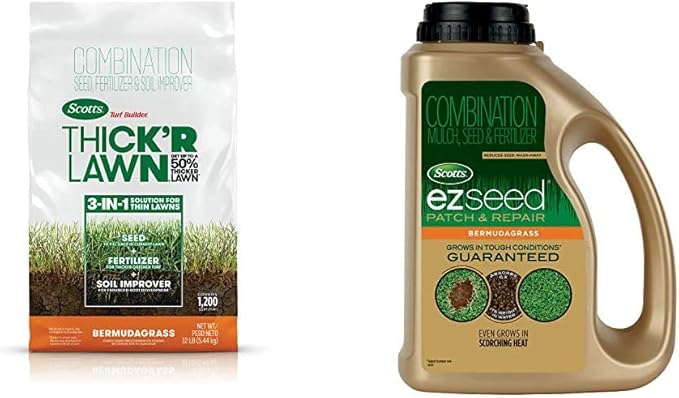
Scotts Turf Builder Bermudagrass
Scotts · Warm Season · $30-45 for 10 lbs
Why this seed for Hawaii: Bermuda is Hawaii's workhorse lawn grass — handles the tropical heat, recovers from heavy use, and tolerates the salt spray that reaches well inland on every island.
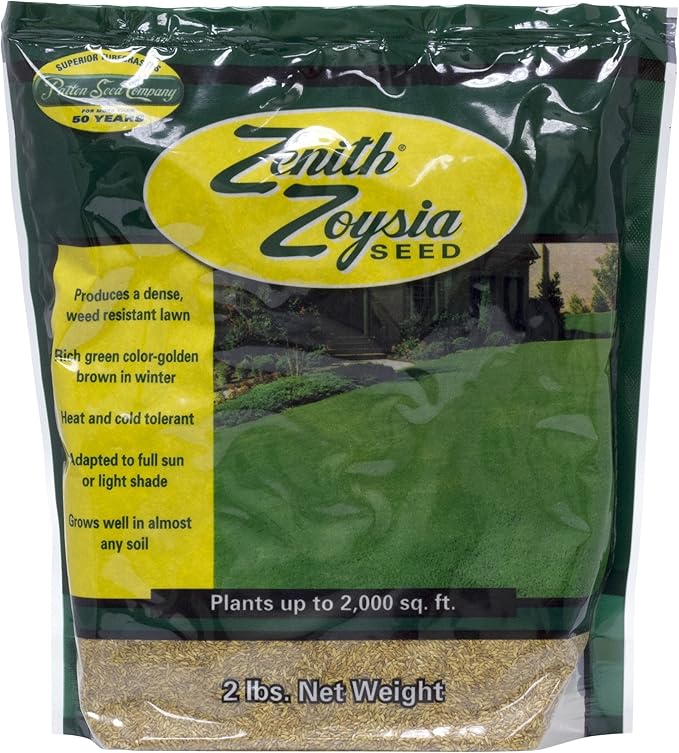
Pennington Zenith Zoysia Grass Seed & Mulch
Pennington · Warm Season · $25-35 for 2 lbs
Why this seed for Hawaii: Zenith zoysia creates that carpet-like luxury turf in Hawaii's filtered-light conditions. Better shade tolerance than bermuda makes it ideal for yards under palm and monkeypod canopy.
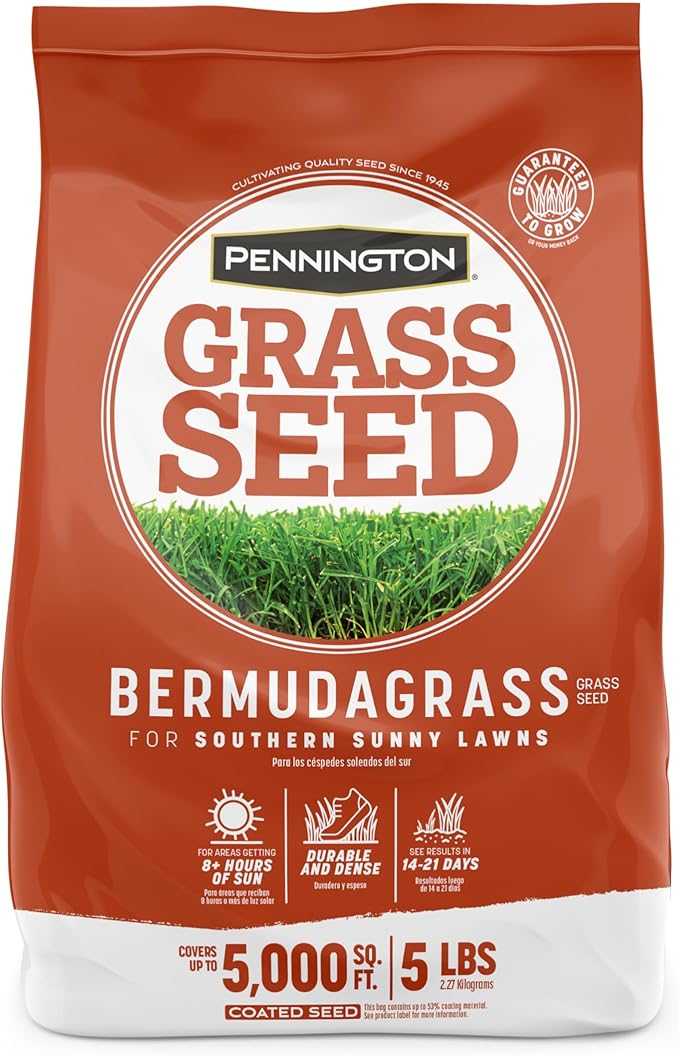
Pennington Smart Seed Bermudagrass
Pennington · Warm Season · $20-35 for 8.75 lbs
Why this seed for Hawaii: Smart Seed Bermuda's improved genetics deliver better color and density than common bermuda in Hawaii's year-round growing conditions. The coating technology helps establishment in volcanic soil.
Best Grass Seed by Region in Hawaii
Oahu / Honolulu
Oahu is home to roughly 70 percent of Hawaii's population, and its diverse microclimates create radically different lawn care environments within a 30-mile radius. Honolulu's urban core and the leeward south shore — Waikiki, Kahala, Hawaii Kai — receive 17 to 25 inches of annual rainfall, full sun exposure, and moderate salt spray from the prevailing trade winds. This is classic dry-tropical bermudagrass territory. Cross the Ko'olau Range to the windward side — Kailua, Kaneohe, Laie — and rainfall jumps to 50 to 80 inches annually, humidity stays above 80 percent year-round, and shade from tropical trees creates conditions more suited to zoysiagrass or shade-tolerant warm-season blends. The North Shore from Haleiwa to Kahuku occupies a middle ground with moderate rainfall and excellent growing conditions. Central Oahu — Mililani, Wahiawa, Schofield — has the famous red oxisol soil at its thickest and deepest, with pH values as low as 4.5 that require significant lime amendment. The Ewa plain on the west side (Ewa Beach, Kapolei, Ko Olina) is the driest and hottest part of the island, with just 15 to 20 inches of rain and summer temperatures that regularly hit 92 degrees — bermudagrass thrives here but irrigation is mandatory.
Top picks for this region:
- ✓On windward Oahu (Kailua, Kaneohe), fungal pressure from high humidity is the primary lawn challenge — avoid evening watering entirely and apply preventive fungicide during extended wet periods
- ✓Central Oahu's red oxisol soil needs lime to raise pH above 5.5 — apply 50 lbs of dolomitic lime per 1,000 sq ft annually and use a phosphorus-heavy starter fertilizer to overcome the soil's phosphorus-binding tendency
- ✓In Ewa Beach and Kapolei, bermudagrass needs mowing twice weekly during peak growth periods (May through October) — set your mower to 1 to 1.5 inches for bermuda or 2 inches for zoysia
- ✓Salt spray damage shows as brown leaf tips progressing inward — if you're within a quarter mile of the coast, rinse your lawn with fresh water after kona wind storms that drive heavy salt inland
Maui
Maui's lawn care landscape is defined by Haleakala's dramatic rain shadow effect. The leeward west side — Kihei, Wailea, Lahaina, Kaanapali — receives just 10 to 15 inches of annual rainfall and bakes under intense tropical sun with summer temperatures reaching 90-plus degrees. This is Hawaii's driest resort coast, and lawns here demand irrigation systems and heat-tolerant bermudagrass or zoysiagrass. Cross to the windward side and Haiku receives 40 to 60 inches annually, while Hana on the far east coast gets 80-plus inches. Upcountry Maui — Kula, Pukalani, Makawao — sits at 1,500 to 4,000 feet on Haleakala's slopes with cooler temperatures (60s to low 80s), moderate rainfall, and some of the best lawn-growing conditions in the state. The soil varies from young volcanic cinder on the upper slopes to deep red laterite in central Maui's former sugarcane fields. Maui's north shore communities (Paia, Spreckelsville) deal with persistent trade wind salt spray that demands salt-tolerant grass species. Water availability on Maui has been a contentious issue since the closure of the last sugar plantation, and irrigation water costs make drought-tolerant landscaping increasingly attractive.
Top picks for this region:
- ✓In Kihei and Wailea, irrigation is non-negotiable — bermudagrass needs 1 to 1.5 inches per week and rainfall provides almost none of it, so budget for significant water costs year-round
- ✓Upcountry Maui (Kula, Pukalani) is cool enough at elevation that zoysiagrass outperforms bermuda — the slower growth rate is actually an advantage, reducing mowing frequency at altitude where conditions are milder
- ✓Maui's north shore salt spray is aggressive — choose bermudagrass over zoysiagrass for properties in Paia and Spreckelsville, as bermuda handles salt stress better
- ✓Central Maui's former sugarcane land has compacted laterite soil from decades of heavy equipment use — deep ripping or core aeration at 4-inch depth twice annually is essential to break up the hardpan
Big Island / Hawaii Island
The Big Island is a lawn care laboratory spanning 8 of the world's 13 climate zones on a single island. The Kona coast on the west side receives 10 to 25 inches of annual rainfall depending on elevation, with young volcanic soil that ranges from raw lava rock to thin pockets of mineral soil between flows — homeowners in Kailua-Kona and Waikoloa may need to import soil and create planting beds on top of bare pahoehoe or aa lava. The Kohala coast resort areas (Mauna Lani, Waikoloa, Mauna Kea) maintain emerald-green bermuda and seashore paspalum lawns that exist only through intensive irrigation and maintenance programs. Cross to the Hilo side and annual rainfall exceeds 130 inches — Hilo is one of the wettest cities in the United States, and the challenge isn't growing grass but preventing it from drowning, developing fungal disease, or being overtaken by moss. Waimea (Kamuela) at 2,700 feet in the saddle between Mauna Kea and Kohala sits in a unique cool, misty climate zone that can grow both warm-season and some cool-season grasses. The Big Island's active volcanic heritage means soil age and composition change dramatically over short distances — properties in Kona subdivisions built on 19th-century lava flows have fundamentally different soil than those on 10,000-year-old flows just miles away.
Top picks for this region:
- ✓In Kona and Waikoloa, soil may be thin or nonexistent over lava rock — importing 6 to 12 inches of topsoil or cinder mix and building raised lawn areas is often the only option for establishing turf
- ✓In Hilo, drainage is the number one priority — the 130-plus inches of annual rain means standing water and waterlogged soil are constant threats, so ensure proper grading and consider French drains around lawn areas
- ✓Waimea's cooler microclimate (highs in the 70s to low 80s) supports zoysiagrass beautifully — the slower growth rate and shade tolerance work well in this misty, partially shaded ranch country environment
- ✓Volcanic cinder soil on the Kona side drains extremely fast and holds almost no nutrients — use slow-release fertilizers and topdress with compost twice annually to build organic matter and water-holding capacity
Kauai
Kauai, the Garden Isle, is Hawaii's wettest major island and presents unique challenges for lawn care. Mount Waialeale in the island's interior averages 400-plus inches of rainfall annually, making it one of the wettest spots on earth. Even the populated coastal areas receive significant moisture: Lihue averages 40 inches, Kapaa gets 50, and the north shore town of Hanalei receives 85 inches. Only Poipu on the dry south shore resembles the leeward Maui or Oahu conditions, with 30 to 35 inches of rain and reliable sunshine. Kauai's soils are among the oldest in the island chain (approximately 5 million years old), deeply weathered into red-orange laterite that's highly acidic (pH 4.5 to 5.5) and almost devoid of available phosphorus due to iron-oxide binding. The north shore's Princeville community, perched on sea cliffs above Hanalei Bay, deals with constant trade wind salt spray, heavy rainfall, and sloped terrain that makes lawn establishment and maintenance exceptionally challenging. Kauai's relatively small population and strong environmental ethic mean chemical lawn treatments are viewed with more skepticism here than on other islands — many homeowners opt for organic approaches out of concern for reef health.
Top picks for this region:
- ✓Kauai's acidic laterite soil needs regular liming — apply dolomitic lime at 50 to 75 lbs per 1,000 sq ft annually, split between spring and fall, to maintain pH above 5.5 for healthy grass growth
- ✓On the north shore (Hanalei, Princeville), choose zoysiagrass over bermuda — zoysia's density helps resist moss invasion in the wet, shaded conditions that bermuda struggles with
- ✓Fungal disease pressure on Kauai is year-round due to high humidity — improve air circulation by thinning overhanging trees and avoid watering in the late afternoon or evening
- ✓Poipu's dry south shore conditions are the exception on Kauai — bermudagrass performs well here with supplemental irrigation, and salt tolerance is essential given the direct ocean exposure
Hawaii Lawn Care Calendar
Spring
March - May
- •Apply a balanced slow-release fertilizer (16-4-8 or similar) in March to fuel the accelerating growth that comes with lengthening days and warming temperatures — even in Hawaii, spring brings a noticeable growth surge
- •Dethatch bermudagrass lawns if the thatch layer exceeds half an inch — bermuda builds thatch aggressively in Hawaii's year-round growing season, and spring is the best time to address it before peak summer growth
- •Core aerate compacted soils, especially on Oahu's central plain and Maui's former sugarcane land — the laterite clay in these areas compacts severely and restricts root development
- •Apply pre-emergent herbicide for summer annual weeds, particularly crabgrass and goosegrass, which germinate when soil temperatures reach 65 degrees — in Hawaii this can be as early as February in low-elevation leeward areas
- •Begin monitoring for armyworm caterpillars, which become active in spring — these are the most destructive lawn pest in Hawaii and can strip a bermudagrass lawn to bare soil in 48 hours if populations explode
- •Overseed thin areas of bermudagrass lawn while soil temperatures are consistently above 70 degrees — bermuda seed germinates rapidly in Hawaii's warmth and will establish quickly with consistent moisture
Summer
June - August
- •Increase mowing frequency to twice per week for bermudagrass during peak summer growth — maintain mowing height at 1 to 1.5 inches for bermuda and 1.5 to 2 inches for zoysiagrass
- •Water deeply once or twice per week on leeward sides (Ewa Beach, Kihei, Kona) — even tropical locations have dry sides that need irrigation during the summer dry season when trade winds are strongest
- •On windward sides (Kailua, Hilo, Hanalei), reduce or eliminate supplemental irrigation — natural rainfall is typically more than adequate, and overwatering promotes fungal disease in the high-humidity environment
- •Apply a light nitrogen application (0.5 lb N per 1,000 sq ft) in early June to sustain summer growth without pushing excessive top growth that requires even more frequent mowing
- •Monitor for chinch bug damage, particularly in bermudagrass on dry, sunny exposures — irregular brown patches that spread outward from a central point during hot, dry conditions are classic chinch bug symptoms
- •Rinse coastal lawns with fresh water after kona wind events or storms that deposit heavy salt spray — summer kona winds blow from the south/southwest and carry more salt than standard trade winds
Fall
September - November
- •Apply a fall fertilizer with moderate nitrogen and higher potassium (12-4-14 or similar) in September — potassium strengthens cell walls and improves stress tolerance heading into the wetter winter season
- •Overseed bermudagrass lawns in September or October while temperatures remain above 75 degrees — this is an excellent time to thicken thin areas before the cooler, wetter winter months
- •Address any thatch buildup that accumulated during summer's aggressive growth — vertical mowing or power raking in October gives the lawn time to recover before winter rains arrive
- •Begin reducing mowing frequency as growth slows slightly with shorter days — once-weekly mowing may be sufficient for bermuda from November onward in most locations
- •Apply lime to acidic soils in October — fall applications allow the lime to work into the soil profile during winter rains, raising pH before the next growing season's fertilization program
- •Inspect and repair irrigation systems before the winter rainy season — while you won't need irrigation during wet months on windward sides, leeward properties still need functioning systems
Winter
December - February
- •Reduce fertilization to one light application in January (0.25 to 0.5 lb N per 1,000 sq ft) — grass growth slows but doesn't stop in Hawaii's winter, and some nutrition is still needed
- •On windward sides, watch for standing water and poor drainage during heavy winter rains — if water pools on the lawn for more than 24 hours after rain, you have a drainage problem that needs addressing
- •Monitor for brown patch and large patch fungal diseases, which are most active during Hawaii's cooler, wetter winter months when nighttime temperatures drop into the 60s and humidity peaks
- •Continue mowing as needed, typically once per week — bermuda and zoysia slow down but don't go dormant in Hawaii's mild winters, so the mower never gets put away entirely
- •This is the best time for major lawn renovation projects — soil work, grading corrections, and complete re-establishment are easier when growth rates are lowest and rain provides natural irrigation
- •Treat for sedge weeds (nutsedge, kyllinga) which thrive in wet winter conditions — these are the most persistent weed challenges in Hawaiian lawns and require targeted herbicides specific to sedge species
Hawaii Lawn Tips You Won't Find on the Seed Bag
Phosphorus Lockup in Volcanic Soil Is Your Biggest Hidden Problem
Hawaiian volcanic soils — particularly the older, deeply weathered red laterites on Oahu, Kauai, and Maui — have an extraordinary capacity to bind phosphorus in forms that plants cannot access. The iron and aluminum oxides that give the soil its red color chemically react with phosphorus fertilizer within hours of application, locking it up in insoluble compounds. Your soil test might show adequate total phosphorus, but your grass is starving for it because none of that phosphorus is plant-available. CTAHR research has demonstrated that Hawaiian soils can bind 200 to 500 pounds of phosphorus per acre before any becomes available to plants — a phenomenon called phosphorus fixation capacity. The practical solution is twofold: maintain soil pH above 5.5 with regular lime applications (phosphorus binds more aggressively below pH 5.5), and apply phosphorus as a foliar spray or in bands near the root zone rather than broadcasting granular fertilizer across the surface. Starter fertilizers with high phosphorus content are essential when establishing new lawns, and CTAHR recommends application rates 2 to 3 times higher than mainland recommendations to overcome the fixation effect.
Armyworms Can Destroy Your Lawn Overnight — Be Ready
Armyworm caterpillars are the most devastating lawn pest in Hawaii, and unlike mainland states where they're seasonal, Hawaii's year-round warmth means armyworm populations can explode in any month, though spring and fall are peak periods. A severe armyworm infestation can strip a bermudagrass lawn to bare stems in 24 to 48 hours — the speed of destruction shocks homeowners who've never seen it before. The caterpillars feed at night and hide at the soil surface or in thatch during the day, so by the time you notice the damage, the population is already massive. Early detection is critical: look for birds feeding intensely on your lawn (they're eating the caterpillars), small green or brown caterpillars in the thatch when you part the grass by hand, and irregular patches where grass appears scalped despite not being recently mowed. At the first sign of armyworms, apply a bifenthrin or carbaryl-based insecticide in the late afternoon so it's active when the caterpillars begin feeding at dusk. CTAHR maintains an armyworm monitoring network that issues alerts when populations are building — sign up for their pest advisories to get advance warning.
Salt-Tolerant Grass Selection Is Not Optional Near the Coast
In Hawaii, 'near the coast' essentially means everywhere — the islands are narrow enough that trade wind salt spray reaches well inland on windward sides, and even leeward properties within a mile of the shoreline receive measurable salt deposition. Bermudagrass handles moderate salt exposure well, which is one reason it dominates Hawaiian lawns. Zoysiagrass has moderate salt tolerance — adequate for properties more than a quarter mile from the ocean but sometimes insufficient for beachfront lots. Seashore paspalum, the gold standard for salt tolerance, thrives in conditions that would kill bermuda or zoysia and can even be irrigated with brackish water. Hawaii's resort golf courses figured this out years ago — Kapalua's Plantation Course on Maui, Mauna Lani on the Big Island, and Poipu Bay on Kauai all use seashore paspalum for their fairways. For residential use, seashore paspalum seed is harder to source and more expensive, but for oceanfront properties it's worth the investment. The key maintenance practice for any grass species near the coast is periodic fresh-water rinsing after heavy salt events — a thorough irrigation cycle after a storm with onshore winds can wash accumulated salt off leaf surfaces and out of the root zone.
Hawaii's Year-Round Growing Season Means Year-Round Maintenance
Mainland lawn care has a rhythm: intense spring and fall, moderate summer, dormant winter. Hawaii doesn't follow this pattern. Your grass never stops growing, which means you never stop mowing, fertilizing, or managing weeds and pests. Bermudagrass in Hawaii needs mowing 40 to 50 times per year — not the 25 to 30 times typical of bermuda in Georgia or Texas. Fertilization should be split into 4 to 6 applications annually rather than the 2 to 3 that mainland schedules suggest, with total annual nitrogen running 4 to 6 pounds per 1,000 square feet for bermuda and 2 to 4 pounds for zoysia. Weed pressure is also year-round: tropical weeds don't die back in winter, and invasive species like wedelia, kyllinga, and tropical chickweed fill any gap in turf coverage within days. The upside of a year-round growing season is that grass recovers from damage quickly — a bare patch that would take 6 weeks to fill on the mainland fills in 3 weeks in Hawaii's warmth. But the maintenance demands are real, and homeowners accustomed to putting the mower away in October and not touching it until April face a significant adjustment when they move to the islands.
Understanding Windward vs. Leeward Changes Everything
The single most important variable in Hawaiian lawn care is whether your property is on the windward or leeward side of the nearest mountain range. Windward sides face the prevailing northeast trade winds and receive 2 to 5 times more rainfall than leeward sides — this fundamentally changes every aspect of lawn management. On windward Oahu (Kailua, Kaneohe), you rarely need to irrigate, but you fight constant fungal pressure, moss invasion, and soggy soil. On leeward Oahu (Ewa Beach, Kapolei), you irrigate heavily but enjoy lower disease pressure and better growing conditions for bermuda. On the Big Island, the contrast is even more extreme: Hilo's 130 inches of rain versus Kona's 15 inches. Your fertilizer program, irrigation schedule, mowing frequency, pest management, and even grass species selection all depend on which side of the mountain you live on. CTAHR publishes rainfall maps for each island that show the dramatic precipitation gradients — before you choose grass seed, look up your specific location's average annual rainfall. If it's above 60 inches, prioritize drainage and disease resistance. If it's below 25 inches, prioritize drought tolerance and plan for irrigation infrastructure.
Invasive Species Awareness Is a Hawaiian Lawn Care Responsibility
Hawaii's native ecosystems are among the most endangered on earth — over 400 plant and animal species are federally listed as endangered or threatened — and non-native turfgrasses, while necessary for functional residential lawns, carry real ecological risk when they escape into wild areas. Bermudagrass is already established as an invasive weed in Hawaiian coastal and lowland ecosystems. Seeding near natural areas, parks, or undeveloped land means accepting responsibility for containing your lawn's spread. Maintain clean edges between turf and natural areas. Never dump grass clippings in gulches, streams, or forested areas where seed or stolons can establish. When purchasing grass seed, buy only from reputable sources and check the Hawaii Department of Agriculture's prohibited species list — some grass species and cultivars that are legal on the mainland are restricted or prohibited in Hawaii. Herbicide use also requires extra caution: Hawaii's volcanic substrate is highly permeable, and chemicals applied to lawns can reach streams and nearshore reefs faster than in most mainland environments. Consider organic lawn care approaches where practical, and never apply herbicides within 100 feet of a stream, gulch, or storm drain that feeds into the ocean.
What Hawaii Lawn Pros Actually Plant
Bermudagrass
Most PopularBermudagrass is the dominant lawn grass across Hawaii, covering an estimated 60 to 70 percent of residential properties statewide. It thrives in Hawaii's year-round warmth, handles full tropical sun, tolerates moderate salt spray, and grows aggressively enough to outcompete most weeds once established. Common bermuda is the most widely planted variety — it's inexpensive, establishes quickly from seed, and produces a serviceable lawn with regular mowing at 1 to 1.5 inches. Hybrid bermudas like Tifway 419 are used on higher-end properties and golf courses for their finer texture and denser growth. The main drawback of bermuda in Hawaii is its relentless growth rate — during peak season, it needs mowing every 3 to 4 days to maintain a clean appearance, and it will invade flower beds, sidewalk cracks, and neighboring properties if not edged aggressively. Bermuda also struggles in shade, which limits its use on windward Oahu and in communities with dense tropical tree canopy. For leeward, sunny exposures across all islands, bermudagrass remains the most practical and cost-effective lawn choice.
Zoysiagrass
Growing RapidlyZoysiagrass — particularly Zenith zoysia, which can be established from seed — has gained significant popularity in Hawaii over the past decade as a premium alternative to bermudagrass. Zoysia's advantages in the Hawaiian environment are compelling: it tolerates partial shade (4 to 5 hours of direct sun), grows more slowly than bermuda (reducing mowing frequency to once per week), produces a dense, carpet-like turf with excellent weed resistance, and handles moderate salt exposure. It's become the grass of choice in upscale communities on Oahu's windward side, upcountry Maui, and in Waimea on the Big Island where cooler temperatures and partial shade favor zoysia over bermuda. The main limitations are establishment speed (zoysia takes 2 to 3 months from seed versus bermuda's 3 to 4 weeks) and cost (zoysia seed runs 3 to 4 times the price of bermuda seed). Zoysia also needs slightly more water than bermuda during dry periods and can develop large patch disease in areas with poor drainage and persistent moisture. For homeowners willing to invest in the slower establishment period, zoysia provides a lower-maintenance, more refined lawn than bermuda in most Hawaiian conditions.
Seashore Paspalum
Niche / Coastal & Golf CourseSeashore paspalum is the specialist grass of Hawaii — uncommon in residential lawns but exceptional in its niche. This species handles salt concentrations that would kill bermuda or zoysia, making it the only practical choice for oceanfront properties where direct salt spray is a daily occurrence. Hawaii's premier resort golf courses — Kapalua, Mauna Lani, Hualalai, Poipu Bay — use seashore paspalum precisely because it thrives under conditions that would destroy any other turfgrass. It can even be irrigated with recycled wastewater or brackish well water, a significant advantage on islands where fresh water is precious. The limitations for residential use are availability and maintenance requirements: seashore paspalum is typically established from sod or sprigs rather than seed, making it more expensive to install, and it requires precise fertility management to maintain quality. It also goes off-color more quickly than bermuda during cooler winter months. But for properties within 500 feet of the ocean on any Hawaiian island, seashore paspalum is worth serious consideration — no other grass can match its salt tolerance and aesthetic quality in coastal conditions.
St. Augustinegrass
Regional / Shade SpecialistSt. Augustinegrass fills a specific niche in Hawaiian lawns: shaded areas where bermuda thins out and zoysia grows too slowly. Its broad, coarse blades and aggressive stolon growth produce a dense, weed-resistant turf in conditions receiving just 3 to 4 hours of direct sun — less shade tolerance than zoysia is needed in the deep shade under mature monkeypod, banyan, or kukui trees that characterize older Hawaiian neighborhoods. St. Augustine is common in established neighborhoods in Manoa Valley on Oahu, Wailuku on Maui, and Hilo on the Big Island where large trees create heavy shade. The grass handles Hawaii's moisture well and tolerates moderate salt exposure. The downsides are significant: St. Augustine is coarse-textured, requires more water than bermuda, and is susceptible to chinch bugs — a devastating pest that can kill large sections of St. Augustine in weeks during hot, dry conditions. It must be established from sod or plugs as it doesn't produce viable seed. For heavily shaded lots where no other warm-season grass will survive, St. Augustine remains the practical choice.
Native and Low-Input Alternatives
Emerging / Eco-Conscious NicheA growing movement in Hawaii advocates for alternatives to traditional turfgrass lawns, driven by water conservation concerns, environmental stewardship, and a desire to reduce the maintenance intensity of year-round tropical lawn care. Native Hawaiian ground covers like akulikuli (Sesuvium portulacastrum) and pohinahina (Vitex rotundifolia) provide salt-tolerant, drought-resistant coverage for coastal properties without the mowing, fertilizing, and irrigation demands of bermuda or zoysia. Non-native but low-maintenance alternatives like dichondra and Philippine grass (Chrysopogon aciculatus) are also gaining traction in areas where a manicured lawn appearance is less important than reduced maintenance. Some Hawaiian homeowners, particularly on Kauai and the Big Island's Hilo side, have embraced managed wildflower and native plant areas as lawn replacements. The cultural shift is slow — HOAs in communities like Ko Olina and Princeville still mandate conventional turfgrass — but the environmental argument for reducing turfgrass coverage on ecologically sensitive islands is gaining mainstream acceptance, particularly among younger homeowners.
Hawaii Lawn Seeding Tips
Getting the best results from your grass seed in Hawaii comes down to timing, soil prep, and choosing the right variety for your specific conditions. Here are our top tips:
- Test your soil first. A $15 soil test from your Hawaii extension office tells you exact pH and nutrient levels. Most warm-season grasses prefer pH 6.0-6.5.
- Prep the seedbed properly. Rake or aerate to ensure good seed-to-soil contact. This single step improves germination rates more than any seed coating or starter fertilizer.
- Use a starter fertilizer. Apply a phosphorus-rich starter fertilizer at seeding time to promote root development. We recommend Scotts Starter Fertilizer or The Andersons Starter.
- Water correctly. Keep the seedbed consistently moist (not soaked) for the first 2-4 weeks. Light watering 2-3 times per day is better than one heavy soaking.
- Be patient. Warm-season grasses are slower to establish. Bermuda takes 7-14 days, but Zoysia and Centipede can take 3-4 weeks. Don't panic if you don't see results immediately.
Frequently Asked Questions
When is the best time to plant grass seed in Hawaii?
Year-round planting possible; April through September preferred for fastest establishment during warmest months
What type of grass grows best in Hawaii?
Hawaii is best suited for warm-season grasses like Bermuda, Zoysia, Centipede, and Bahia. These grasses thrive in heat, go dormant in winter, and grow most actively from late spring through early fall.
What are the biggest lawn care challenges in Hawaii?
The main challenges for Hawaii lawns include constant salt spray near coastlines, extreme rainfall variation by location, invasive weed species year-round, nematode pressure in tropical soil. Choosing the right grass variety that is adapted to these specific conditions is the single most important decision you can make for your lawn.
Can I grow Kentucky Bluegrass in Hawaii?
Kentucky Bluegrass is not recommended for Hawaii. KBG is a cool-season grass that will struggle with the heat and go dormant or die during Hawaii's hot summers. Stick with warm-season options like Bermuda or Zoysia for the best results.
How much does it cost to seed a lawn in Hawaii?
For a typical 5,000 sq ft lawn, expect to spend $150-$400 on seed alone depending on the variety. Premium seeds like Midnight Kentucky Bluegrass or Zenith Zoysia cost more per pound but deliver better results. Add $50-$100 for starter fertilizer and $20-$50 for soil amendments. The seed is the smallest part of your total investment — proper soil prep and consistent watering matter more than saving $50 on cheaper seed.
More Lawn Care Resources
Not in Hawaii?
We have state-specific grass seed guides for all 50 states.