
CT State Guide · Updated March 2026
Best Grass Seed for Connecticut
The best grass seeds for Connecticut lawns that handle rocky soil, cold winters, and coastal conditions. Expert picks for Hartford, Stamford, New Haven, and the Shoreline.
Disclosure: This article contains affiliate links. If you buy through our links, we may earn a commission at no extra cost to you. All opinions are our own. Learn more.
Connecticut is a small state with big lawn challenges, and most of them start about six inches below the surface. The glaciers that retreated 15,000 years ago left behind a geological mess: glacial till loaded with rocks, boulders, and cobbles mixed into clay and sand in a random, maddeningly inconsistent pattern. Dig a hole anywhere in Litchfield County, Danbury, or the northeastern hills and you'll hit rocks within a foot — sometimes granite boulders the size of a microwave sitting right in your root zone. The Connecticut River Valley from Hartford through Middletown to New Haven has the best soil in the state — deep, fertile alluvial loam deposited by the river over millennia — but it's a narrow corridor. The coastal strip from Stamford through Bridgeport to New Haven sits on sandy glacial outwash that drains fast and holds almost nothing. And everywhere across the state, the legendary New England stone walls that crisscross the landscape are testament to what generations of Connecticut farmers pulled out of the ground just to make the soil workable. Your first investment in a Connecticut lawn should be a soil test through UConn Extension — you need to know what the glaciers left you before you spend a dime on seed.
The good news is that Connecticut is firmly cool-season grass territory, and the climate is genuinely excellent for growing the classic northern lawn grasses. Zones 5b through 7a across the state support Kentucky bluegrass, tall fescue, fine fescue, and perennial ryegrass — the full cool-season lineup. Hartford averages 46 inches of rainfall distributed fairly evenly across the year, which means supplemental irrigation is a nice-to-have rather than a necessity for most Connecticut lawns. The growing season runs from mid-April through mid-November, with active growth peaking in May-June and again in September-October. Summer stress is real but manageable — Connecticut doesn't get the brutal, sustained heat that transition zone states deal with, though July and August can push into the 90s with Northeast humidity that makes it feel worse. The bottom line is that if you pick the right grass blend and time your maintenance correctly, Connecticut's climate wants to grow a nice lawn. The soil is the obstacle, not the weather.
What Connecticut homeowners deal with more than most northern states is shade. The state is 58% forested — predominantly hardwoods like oaks, maples, beeches, and hickories that create dense canopy shade from May through October. Drive through any established neighborhood in West Hartford, Glastonbury, Madison, or Ridgefield and you'll see mature trees that block 60 to 80% of available sunlight on the lawns below. This isn't the dappled, filtered shade of scattered pines — it's the heavy, solid shade of 80-foot sugar maples and red oaks with canopy spreads of 50 feet or more. Standard Kentucky bluegrass and perennial ryegrass can't maintain density under that kind of shade. Fine fescues (creeping red fescue, chewings fescue, hard fescue) are the shade specialists, tolerating as little as 3 to 4 hours of filtered light and maintaining reasonable density where other grasses thin to nothing. The best Connecticut lawn seed blends combine tall fescue or bluegrass for the sunny areas with fine fescues for the shaded zones, creating a mix that adapts to the varying light conditions across a typical Connecticut yard.
Salt damage is the uniquely Connecticut problem that nobody talks about until their lawn dies in strips along the driveway. Connecticut uses roughly 600,000 tons of road salt annually on its state highways and town roads, and that salt doesn't disappear when the snow melts — it washes onto roadsides, driveways, and front lawns, accumulating in the soil to levels that burn grass roots and kill sensitive species. The coastal towns from Greenwich through Stamford, Norwalk, Bridgeport, and New Haven deal with a double salt assault: road salt in winter plus salt spray from Long Island Sound year-round. Properties within 500 feet of the coast experience constant salt deposition on foliage and soil that limits grass choices to the most salt-tolerant species. Tall fescue and perennial ryegrass are the most salt-tolerant cool-season grasses, while Kentucky bluegrass is moderately tolerant and fine fescues vary by species. For roadside strips and coastal properties, choose seed blends heavy on tall fescue and flush the soil with clean water in early spring to leach accumulated sodium below the root zone.
Connecticut's lawn care calendar revolves around one critical window: September. The UConn Extension program has been hammering this message for years, and it's worth repeating — September is when you seed, overseed, aerate, fertilize, and do 80% of the work that determines how your lawn looks for the next twelve months. Soil temperatures in the 60 to 70 degree range, reliable rainfall, warm days, cool nights, and declining weed pressure create perfect germination conditions that don't exist at any other time of year. Spring seeding in Connecticut is possible but risky — late frosts can kill tender seedlings, and spring-seeded grass faces its first summer stress before roots are fully established. Homeowners who try to do everything in April end up fighting an uphill battle all year. Move your major lawn work to September, and Connecticut's climate does half the work for you. The UConn Turfgrass Program in Storrs provides excellent variety trial data specific to Connecticut conditions — their research plots test dozens of cultivars in Connecticut's actual climate and soil, which makes their recommendations far more valuable than generic seed bag marketing.
Quick Picks: Our Top 3 for Connecticut
Understanding Connecticut's Lawn Climate
Humid continental with cold winters and warm, humid summers. Connecticut's compact size masks notable climate variation — the coastal Fairfield County (Stamford, Greenwich) corridor has milder winters influenced by Long Island Sound, while the northwestern Litchfield Hills see significantly more snow and colder temperatures. Summers are warm and humid statewide with temperatures in the 80s and 90s. The growing season runs roughly mid-April through mid-October along the coast, shorter inland.
Key Challenges
Best Planting Time for Connecticut
Late August through mid-September (fall) for best results; mid-May through early June for spring planting
Our Top 3 Picks for Connecticut
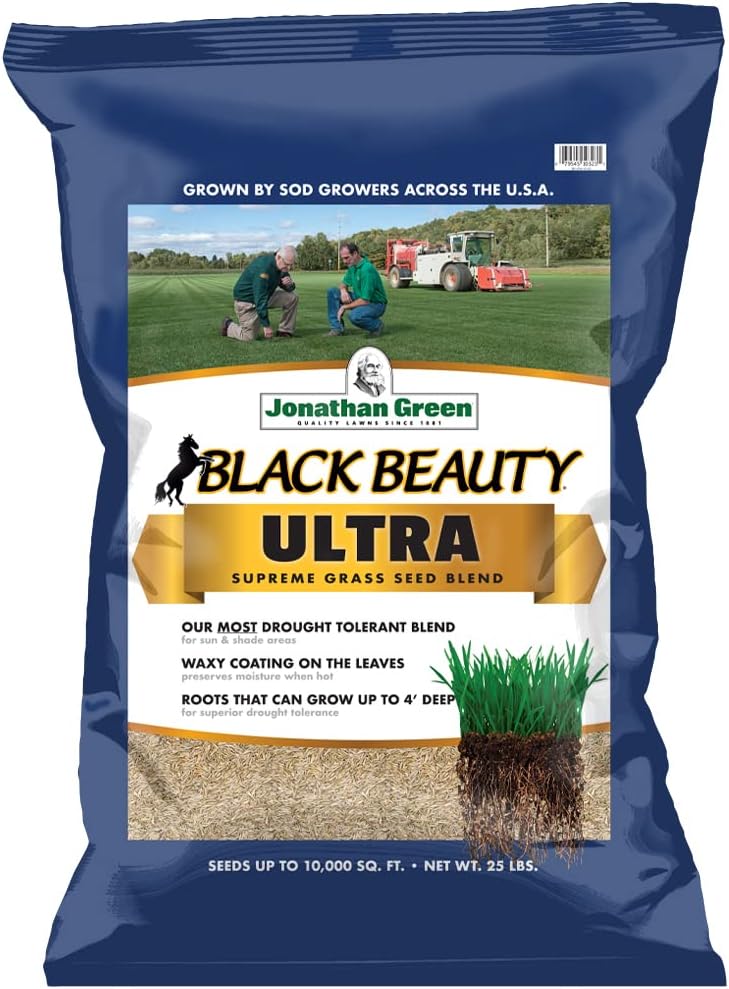
Jonathan Green Black Beauty Ultra
Jonathan Green · Cool Season · $28 (7 lbs) – $105 (25 lbs)
Why this seed for Connecticut: BBU's Northeast formulation is perfect for Connecticut's rocky glacial soil. Deep roots find moisture between the rocks, and the fescue/KBG blend handles shade from Connecticut's mature hardwood canopy.

Outsidepride Midnight Kentucky Bluegrass Seed
Outsidepride · Cool Season · $35 (5 lbs) – $300 (50 lbs)
Why this seed for Connecticut: For the CT homeowner in Fairfield County chasing that Greenwich/Darien-caliber lawn, Midnight KBG delivers the darkest, most premium color. Handles the coastal-moderated Zone 7 climate beautifully.
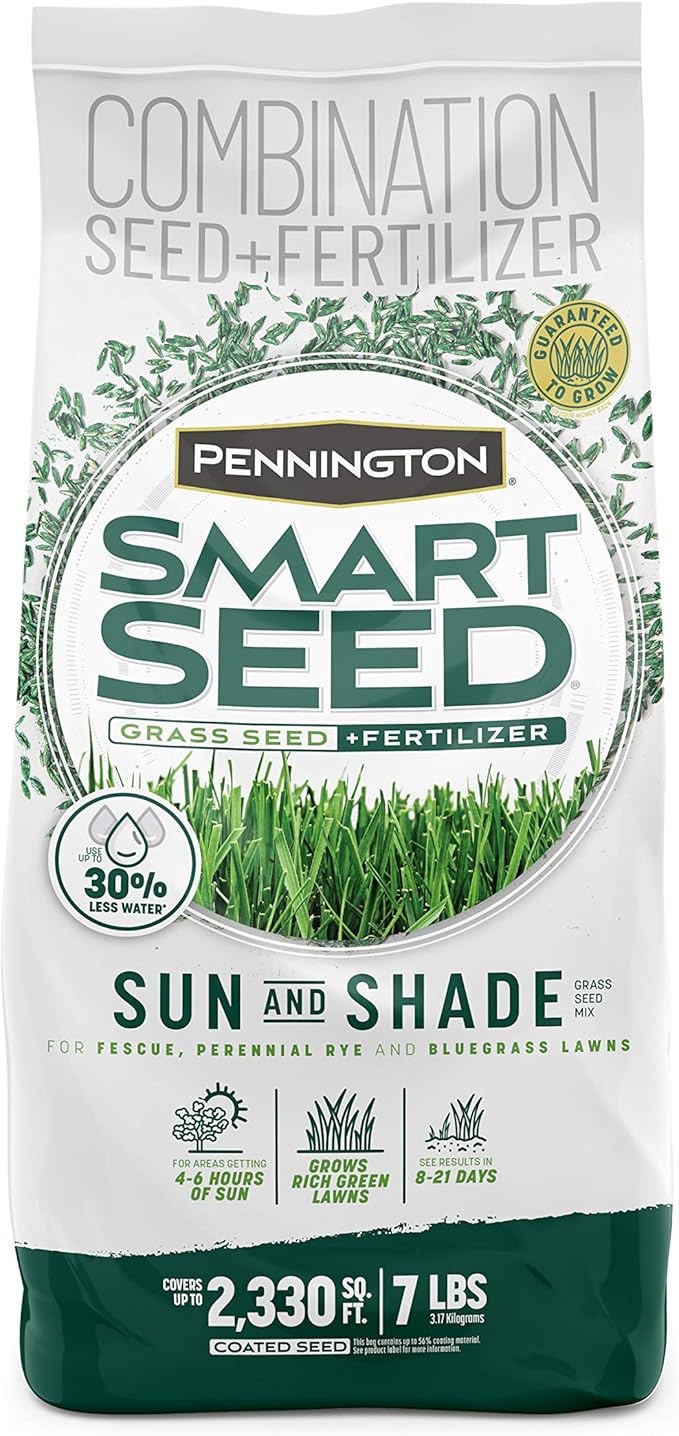
Pennington Smart Seed Sun & Shade
Pennington · Cool Season · $25-40 for 7 lbs
Why this seed for Connecticut: The best value for typical Connecticut suburban yards. Handles the mix of sun and shade in neighborhoods built among oaks and maples, with solid performance in rocky soil.
Best Grass Seed by Region in Connecticut
Connecticut River Valley / Hartford
The Connecticut River Valley — stretching from Hartford through Middletown to where the river meets Long Island Sound at Old Saybrook — has the best lawn-growing conditions in the state. The deep alluvial loam deposited by the Connecticut River is fertile, well-structured, and relatively stone-free compared to the glacial till that dominates the rest of the state. Zone 6a to 6b conditions deliver reliable cold (good for cool-season grass dormancy) without the extreme exposure of the northwestern hills. Hartford averages 46 inches of rain with good seasonal distribution. The Hartford metro — West Hartford, Glastonbury, Simsbury, Avon, Farmington — has some of the most well-maintained residential lawns in New England, supported by the valley's excellent soil and a homeowner culture that takes pride in curb appeal. The mature hardwood canopy in established neighborhoods like West Hartford Center and Glastonbury's older sections creates significant shade that demands shade-tolerant grass blends. The UConn main campus in Storrs, while slightly east of the valley proper, runs the turfgrass research program that informs lawn care recommendations across the state.
Top picks for this region:
- ✓Connecticut River Valley alluvial soil is Connecticut's best — it rarely needs heavy amendment, but a UConn Extension soil test will confirm pH and nutrient levels before you spend money on lime or fertilizer
- ✓West Hartford and Glastonbury's mature maple and oak canopy creates heavy shade in established neighborhoods — use a sun-and-shade blend that includes fine fescues for the shaded zones under canopy
- ✓Fall overseeding window in the Hartford area is September 1 through October 1 — soil temperatures are ideal and fall rainfall is typically reliable enough that you can seed without installing temporary irrigation
- ✓The valley floor can experience late frost through May 15 — resist the urge to apply heavy spring fertilizer during April warm spells that may be followed by damaging freezes
- ✓Grub damage from Japanese beetle larvae is significant in the Hartford suburbs — apply preventive grub control (chlorantraniliprole) in late May to early June before eggs are laid
Fairfield County / Gold Coast
Fairfield County — Stamford, Norwalk, Danbury, Bridgeport, Greenwich, Westport, Fairfield, and the surrounding towns — is Connecticut's most affluent and most densely populated region, sitting in Zone 7a along the coast and 6b inland around Danbury and Ridgefield. The Gold Coast communities along Long Island Sound face the state's most complex lawn challenges: salt spray from the Sound year-round, road salt damage from I-95 and the Merritt Parkway in winter, sandy glacial outwash soil that drains too fast and holds few nutrients, and intense development pressure that has compacted soil on most residential lots. Inland Fairfield County around Danbury, Ridgefield, and New Fairfield transitions to rocky glacial till with classic New England stone content. Despite the challenges, Fairfield County homeowners invest heavily in lawn care — professional landscape maintenance is a significant industry in the region, and the expectations for turf quality in towns like Greenwich, Darien, and New Canaan rival any affluent suburb in the country. Kentucky bluegrass and tall fescue blends dominate, with fine fescues critical for the heavily shaded lots under mature oaks and maples.
Top picks for this region:
- ✓Coastal salt spray along Long Island Sound damages sensitive grass species — choose tall fescue-heavy blends for properties within 1,000 feet of the water, as it's the most salt-tolerant cool-season grass
- ✓Sandy glacial outwash soil along the coast drains fast and leaches nutrients — topdress with compost annually and split fertilizer into three lighter applications rather than two heavy ones
- ✓Road salt damage along I-95, Route 7, and the Merritt Parkway kills grass in 3-to-5-foot strips along shoulders — flush these areas with clean water in early April and reseed with salt-tolerant tall fescue
- ✓Fairfield County's Zone 7a coastal microclimate allows earlier spring seeding (mid-March) and extends the fall growing season through November — take advantage of the longer season for overseeding and establishment
- ✓Professional lawn care is the norm in Gold Coast towns — if you're doing it yourself, follow UConn Extension guidelines rather than generic programs designed for the mid-Atlantic or Midwest
Northwest Hills / Litchfield County
The Northwest Hills — Litchfield, Torrington, Winsted, Salisbury, Sharon, Kent, and the surrounding towns — are Connecticut's coldest and most rural region, sitting in Zone 5b to 6a with winter lows that regularly reach minus 10 to minus 15 degrees. Elevations range from 600 to 2,380 feet at the top of Bear Mountain, the state's highest point. The soil is predominantly rocky glacial till — a chaotic mix of clay, sand, gravel, and rocks deposited by retreating glaciers, with granite and gneiss boulders scattered throughout. Many properties in the Northwest Hills have less than 8 inches of soil above ledge rock or boulder fields. The shorter growing season (late April through early October) and cooler summer temperatures make this the best cool-season grass territory in Connecticut — Kentucky bluegrass and fine fescues thrive here without the summer heat stress that challenges lawns in the Hartford valley and Fairfield County. The challenges are rocky soil that limits root depth, acidic conditions (pH 5.0 to 5.5 on untested sites), and a deer population that treats lawns as salad bars from November through March.
Top picks for this region:
- ✓Rocky glacial till soil in the Northwest Hills needs lime — apply pelletized lime at 40 to 50 lbs per 1,000 sq ft based on UConn Extension soil test results to bring pH from the typical 5.0-5.5 range up to 6.0-6.5
- ✓Thin soil over ledge rock limits root depth — raise mowing height to 3.5 to 4 inches and water more frequently in shorter cycles since the shallow profile dries out faster than deep valley soils
- ✓The shorter growing season means fall seeding should happen by September 15 in the Northwest Hills — waiting until October risks seedlings that haven't established enough root depth to survive winter
- ✓Fine fescues (creeping red fescue, hard fescue) thrive in the Northwest Hills' rocky, acidic, well-drained soil and tolerate the heavy shade from the region's dense hardwood forests
- ✓Deer browsing pressure is intense in Litchfield County — tall fescue and perennial ryegrass are less palatable than bluegrass, so emphasize these species in areas where deer feed regularly
Eastern Connecticut / Quiet Corner
Eastern Connecticut — the 'Quiet Corner' of Windham and Tolland counties, plus the shoreline from New London through Mystic to Stonington — is the state's least densely populated region and its most varied in terms of growing conditions. Inland areas around Storrs (home of UConn), Willimantic, and Putnam sit in Zone 6a with rocky glacial till soil similar to the Northwest Hills but at lower elevations. The shoreline communities from New London through Groton to Mystic and Stonington face coastal salt exposure from Long Island Sound and Block Island Sound, with sandy soil that drains quickly. The UConn Turfgrass Program's research plots in Storrs provide the most Connecticut-specific variety trial data available anywhere — their recommendations are based on actual performance in Connecticut's climate, soil, and disease conditions, not extrapolated from studies done in New Jersey or Ohio. The Quiet Corner's rural character means larger lots are common, and many homeowners mix lawn areas with meadow, wildflower, or naturalized zones that reduce the acreage requiring intensive maintenance.
Top picks for this region:
- ✓Visit the UConn Turfgrass Research plots in Storrs during their annual field day — seeing actual variety performance in Connecticut conditions is worth more than any seed bag marketing
- ✓Eastern Connecticut's inland soil is acidic glacial till similar to the Northwest Hills — lime applications of 40 to 50 lbs per 1,000 sq ft are typically needed to bring pH to the 6.0-6.5 range
- ✓Shoreline properties from New London to Stonington face salt spray and sandy soil — use tall fescue-heavy blends and amend with compost to improve water and nutrient retention in the sand
- ✓Larger rural properties in the Quiet Corner benefit from converting low-use areas to low-mow fine fescue or naturalized meadow — reduce your maintained lawn footprint to save time and money
- ✓The UConn Extension Master Gardener program offers free diagnostic clinics across eastern Connecticut — bring in a soil or turf sample for expert identification of disease, pest, or nutrient problems
Connecticut Lawn Care Calendar
Spring
March - May
- •Apply pre-emergent herbicide when forsythia blooms and soil temperatures reach 55 degrees — in coastal Fairfield County that's typically late March, in the Hartford valley early April, and in the Northwest Hills mid-to-late April
- •Submit a soil test through UConn Extension — Connecticut's glacial soils vary wildly in pH, nutrient content, and rock content from one property to the next, so testing is essential before applying lime or fertilizer
- •Clean up winter damage — rake out salt-damaged grass along driveways and roadways, and flush these areas with clean water to leach accumulated sodium below the root zone before reseeding
- •Apply pelletized lime based on soil test results — most Connecticut soils (outside the river valley) test acidic at pH 5.0 to 5.8 and need 40 to 60 lbs per 1,000 sq ft to reach the 6.0 to 6.5 range that bluegrass and fescue prefer
- •Apply a light spring fertilizer (0.5 lb nitrogen per 1,000 sq ft) in late April to early May once consistent growth is established — avoid heavy spring nitrogen that promotes disease and excessive top growth
- •Begin mowing when grass reaches 3.5 to 4 inches — cut to 3 inches for bluegrass and fescue blends, never removing more than one-third of the blade height in a single cut
Summer
June - August
- •Raise mowing height to 3.5 to 4 inches from June through August — taller grass shades the soil, reduces evaporation, and helps cool-season grass survive Connecticut's July and August heat
- •Water deeply and infrequently — deliver 1 to 1.25 inches per week in one or two early-morning sessions when rainfall is insufficient, targeting before 9 AM to let foliage dry before nightfall
- •Scout for grub damage from Japanese beetle and European chafer larvae in July and August — irregular brown patches that lift like carpet when pulled indicate active grub feeding below the surface
- •Apply preventive grub control (chlorantraniliprole) in late May to early June before adult beetles lay eggs — this is the most effective timing for season-long prevention in Connecticut
- •Monitor for red thread and dollar spot fungus during humid periods — these are Connecticut's most common summer lawn diseases, appearing as pink-tinged or straw-colored patches in under-fertilized or stressed turf
- •Avoid fertilizing from June through August — summer nitrogen on heat-stressed cool-season grass promotes disease and pushes soft growth that can't handle the stress
Fall
September - November
- •Overseed and aerate in September — this is the single most important lawn care month in Connecticut, with soil temperatures of 60 to 70 degrees, reliable rainfall, and ideal conditions for cool-season grass germination
- •Core aerate compacted areas before overseeding for best seed-to-soil contact — two passes in perpendicular directions on clay-heavy or rocky soils
- •Apply the primary fall fertilizer (1 lb nitrogen per 1,000 sq ft) at overseeding time in early-to-mid September to feed new seedlings and existing turf
- •Apply a winterizer fertilizer (1 lb nitrogen per 1,000 sq ft) in late October to early November after the last mowing — this builds root carbohydrate reserves for winter survival and early spring green-up
- •Mulch-mow fallen leaves rather than raking — Connecticut's heavy hardwood leaf drop is free organic matter when chopped into small pieces, adding nutrients and organic content to glacial soils that need it
- •Continue mowing at 3 inches through October and into November until grass stops growing — the last mow should leave grass at 2.5 to 3 inches to prevent snow mold during winter
Winter
December - February
- •Stay off frozen or snow-covered grass — walking on frozen turf crushes cell walls in the crowns and leaves brown trails that persist into spring
- •Mark lawn edges along driveways, sidewalks, and roads with stakes before snowfall so plow operators know where the lawn starts — plow blade damage to turf edges is extremely common in Connecticut
- •Minimize road salt application on your own driveway and walks — use calcium magnesium acetate (CMA) or sand on walkways adjacent to lawn areas to reduce salt damage to grass
- •Scout for vole damage under melting snow in late February — voles create surface tunnel networks under snow cover that damage grass crowns and leave visible trails when the snow recedes
- •Plan spring projects — drainage improvements, soil amendment strategies, and seed orders should be finalized in February before garden centers sell out of premium varieties
- •Service your mower in January or February — sharpen or replace blades, change oil, and replace the spark plug so you're ready when mowing starts in April
Connecticut Lawn Tips You Won't Find on the Seed Bag
Dealing with Connecticut's Rocky Glacial Soil
Connecticut's glacial till is the defining challenge of lawn care in the state. The glaciers that retreated 15,000 years ago left behind an unsorted mess of clay, sand, gravel, and rocks — from pea-sized cobbles to washing-machine-sized boulders — mixed together in no particular pattern. You might have 12 inches of decent soil in one spot and hit solid granite ledge 4 inches down ten feet away. This makes every lawn project unpredictable. Core aeration on rocky soil breaks tines and requires multiple passes. Grading for drainage runs into subsurface boulders that need to be removed with equipment. Even simple tasks like installing a sprinkler system become excavation projects. The practical approach is to work with what you have rather than against it: build soil up rather than digging down by topdressing with compost annually, raise mowing height to maximize root depth in whatever soil exists above the rocks, and choose fine fescues for areas with thin soil — they're the most rock-soil-tolerant grass species and thrive in the well-drained, acidic conditions that rocky till provides.
The Salt Problem — Roads and Coast
Connecticut uses approximately 600,000 tons of road salt annually on state and town roads, and the damage to roadside lawns is severe and cumulative. Salt spray from passing vehicles coats grass 3 to 5 feet from the road edge, and meltwater carries dissolved sodium directly into the root zone. Over years, sodium accumulates in the soil, breaking down clay structure, raising pH, and creating a toxic environment where grass roots simply cannot function. Coastal properties face a second salt source — Long Island Sound spray that deposits sodium on foliage and soil year-round, intensified during nor'easters and storm events. The remediation strategy is the same for both: flush affected areas with 2 to 4 inches of clean water in early spring to push sodium below the root zone, apply gypsum at 30 to 40 lbs per 1,000 sq ft to displace sodium from soil particles, and reseed damaged strips with salt-tolerant tall fescue. For chronic salt zones along busy roads, consider converting the affected strip to salt-tolerant ground cover or a gravel border rather than fighting a losing battle with grass every year.
Shade Management Under Connecticut's Hardwood Canopy
Connecticut is 58% forested, and most of that forest consists of deciduous hardwoods — red and white oaks, sugar and red maples, American beeches, and hickories — that create dense shade from May leaf-out through October leaf-drop. In established neighborhoods throughout West Hartford, Glastonbury, Ridgefield, Madison, and Guilford, mature trees with 50-foot canopy spreads block 60 to 80% of sunlight. Standard Kentucky bluegrass requires 6 hours of direct sun and simply cannot maintain density under this kind of canopy. The solution is fine fescues: creeping red fescue, chewings fescue, and hard fescue tolerate as little as 3 to 4 hours of filtered light and actually prefer the cooler, moister microclimate under trees. Use a sun-and-shade seed blend that combines tall fescue or bluegrass (for the sunny areas) with fine fescues (for the shade), and the mix naturally adapts as the fescue species dominate under canopy while the sun-loving species hold the open areas. Raise mowing height to 4 inches in shaded zones, reduce fertilizer by 50% under trees (the shade already reduces growth rate), and prune lower tree branches to 10 feet to admit more oblique light.
Grub Control Is Essential in Connecticut
White grubs — primarily Japanese beetle and European chafer larvae — are Connecticut's most damaging lawn pest, and the state's well-drained glacial soils provide ideal habitat for the beetles that lay the eggs. Adult Japanese beetles emerge in late June through July, feed on ornamental plants (roses, lindens, and Japanese maples are favorites), then lay eggs in sunny lawn areas. The eggs hatch in August, and the c-shaped white grubs feed on grass roots through September and October, creating irregular brown patches that lift like carpet when pulled. Untreated grub populations also attract skunks, raccoons, and crows that dig up turf to eat the grubs, compounding the damage exponentially. Prevention is straightforward and far more effective than treatment: apply a preventive grub control product containing chlorantraniliprole (sold as GrubEx or similar) in late May to early June, before the adult beetles begin laying eggs. This single application provides season-long control as the active ingredient remains in the root zone when eggs hatch weeks later. If you missed the preventive window and find grubs in August or September, apply a curative product containing trichlorfon — but curative control is less reliable and must be watered in immediately.
September Is Everything in Connecticut Lawn Care
If you only have one month to work on your Connecticut lawn, make it September. The UConn Extension program emphasizes this relentlessly because the science is clear: September provides the perfect convergence of conditions for cool-season grass establishment and improvement. Soil temperatures in the 60 to 70 degree range are ideal for seed germination. Nighttime temperatures drop into the 50s and 60s, reducing heat stress on tender seedlings. Fall rainfall typically returns after August's drier pattern. Weed germination slows dramatically as annual weeds complete their lifecycle. And the grass has 8 to 10 weeks of active growth before winter dormancy to establish roots. Every major lawn care task should be scheduled for September: core aeration, overseeding, primary fall fertilization, and renovation of thin or damaged areas. The fall fertilizer application (1 lb nitrogen per 1,000 sq ft) in September feeds both new seedlings and existing turf heading into the cool-season growth surge. Homeowners who shift their primary lawn effort from spring to fall consistently have better-looking lawns — it's not even close.
Choosing the Right Blend for Connecticut Conditions
No single grass species handles all of Connecticut's conditions, which is why the UConn Extension recommends blends rather than monocultures for residential lawns. The ideal Connecticut lawn seed blend combines multiple species and varieties that complement each other's strengths: tall fescue for heat tolerance, drought resistance, and salt tolerance; Kentucky bluegrass for self-repair (its rhizomes fill small gaps that bunch-type grasses can't), density, and winter color; and fine fescues for shade tolerance and performance in thin, rocky, acidic soil. A good Connecticut blend might be 50% tall fescue, 30% Kentucky bluegrass, and 20% fine fescue by weight — though the exact ratio should shift based on your specific conditions. Shady lots should increase fine fescue to 40%. Coastal or roadside properties should increase tall fescue to 60% for salt tolerance. Full-sun lots with good soil can increase bluegrass to 40% for that classic dense, dark green look. Pre-mixed sun-and-shade blends from quality seed companies are formulated with this multi-species approach in mind and are a solid starting point for most Connecticut homeowners.
What Connecticut Lawn Pros Actually Plant
Tall Fescue
Most PopularTall fescue has become the backbone grass for Connecticut lawns, prized for its deep root system, heat tolerance relative to other cool-season species, salt tolerance (critical along Connecticut's heavily salted roads and Long Island Sound coast), and adaptability to the state's variable soil conditions. Modern turf-type tall fescues like Black Beauty Ultra produce a fine-textured, dark green lawn that's nearly indistinguishable from bluegrass but significantly tougher in summer stress, drought, and salt exposure. Fescue's deep roots (12+ inches in good soil) access subsoil moisture that keeps it green during July dry spells when bluegrass goes dormant. It handles Connecticut's rocky glacial soil better than bluegrass because the deep root system finds its way around rocks and into soil pockets that shallow-rooted species can't reach. The one drawback is that tall fescue is a bunch-type grass — it doesn't spread via rhizomes, so bare spots don't self-repair. Annual fall overseeding compensates for this limitation.
Kentucky Bluegrass
Very PopularKentucky bluegrass is the classic New England lawn grass and remains the standard for homeowners who want the densest, most refined-looking turf possible. Improved varieties like Midnight produce an exceptionally dark green color and tight density that's the benchmark for premium residential lawns across Fairfield County, the Hartford suburbs, and the shoreline towns. Bluegrass's rhizomatous growth habit is its superpower — it spreads underground and fills gaps and divots on its own, reducing the need for patch seeding. In Connecticut, bluegrass performs best in the Connecticut River Valley's deep alluvial soil and in full-sun lots where it receives 6+ hours of direct light. It struggles in heavy shade, rocky thin soils, and salt-exposed areas, which is why most UConn Extension recommendations pair it with tall fescue and fine fescues in a blend rather than using it as a monoculture. Pure bluegrass lawns in Connecticut require more irrigation during summer dry spells than tall fescue and are more susceptible to grub damage.
Fine Fescue (Creeping Red, Chewings, Hard)
Very PopularFine fescues are the unsung heroes of Connecticut lawns — the species that thrive in the conditions where other grasses fail. Creeping red fescue, chewings fescue, and hard fescue all tolerate heavy shade (3 to 4 hours of filtered light), acidic rocky soil (they actually prefer pH 5.5 to 6.5), low fertility, and dry conditions. In a state where 58% forest cover creates shade on most residential lots, fine fescues are essential components of any realistic seed blend. They're especially valuable in the Northwest Hills and eastern Connecticut where thin, rocky, acidic glacial till is the norm — fine fescues evolved in similar conditions in Europe and are genetically adapted to perform where bluegrass and tall fescue struggle. The trade-off is that fine fescues are less wear-tolerant than tall fescue and less dense than bluegrass in full sun. They're blend components, not standalone lawn grasses for most Connecticut homeowners — the fine fescue handles the shade and poor soil, while tall fescue and bluegrass cover the sunnier, better-soil areas.
Perennial Ryegrass
Growing in PopularityPerennial ryegrass is the fast-germination specialist used in Connecticut for quick establishment, overseeding patches, and adding immediate green while slower-germinating bluegrass fills in over months. Ryegrass germinates in 5 to 7 days versus 14 to 21 for bluegrass, making it valuable for fall overseeding projects where you want visible results before winter. It's commonly included at 10 to 20% in Connecticut lawn seed blends for this quick-establishment role. Ryegrass produces a glossy, fine-textured leaf blade that looks excellent when freshly mowed. The limitations are real: perennial ryegrass is less heat-tolerant and less drought-tolerant than tall fescue, less cold-hardy than bluegrass (it can suffer winterkill in the Northwest Hills' Zone 5b), and it's a bunch-type grass that doesn't self-repair. It works best as a blend component rather than a primary species, providing quick cover while the fescue and bluegrass establish more slowly but more permanently.
Sun-and-Shade Blends
Most PopularPre-mixed sun-and-shade blends have become the most common retail seed purchase in Connecticut because they address the state's fundamental challenge: varying light conditions across a single yard. A typical Connecticut residential lot has full sun in the front yard, filtered shade from street trees along the sidewalk, and deep shade from mature oaks or maples in the back. No single grass species handles all three conditions. Quality sun-and-shade blends combine tall fescue and Kentucky bluegrass for the sunny areas with creeping red fescue and chewings fescue for the shade, creating a seed mix that self-selects — the shade-tolerant species dominate under canopy while the sun-lovers hold the open areas. Brands like Jonathan Green and Pennington Smart Seed offer Connecticut-appropriate blends that include multiple species and varieties calibrated for Northeast conditions. The convenience factor is significant: rather than buying three separate seed types and trying to match them to microclimates across your yard, a well-formulated blend handles the adaptation automatically.
Connecticut Lawn Seeding Tips
Getting the best results from your grass seed in Connecticut comes down to timing, soil prep, and choosing the right variety for your specific conditions. Here are our top tips:
- Test your soil first. A $15 soil test from your Connecticut extension office tells you exact pH and nutrient levels. Most cool-season grasses prefer pH 6.0-7.0.
- Prep the seedbed properly. Rake or aerate to ensure good seed-to-soil contact. This single step improves germination rates more than any seed coating or starter fertilizer.
- Use a starter fertilizer. Apply a phosphorus-rich starter fertilizer at seeding time to promote root development. We recommend Scotts Starter Fertilizer or The Andersons Starter.
- Water correctly. Keep the seedbed consistently moist (not soaked) for the first 2-4 weeks. Light watering 2-3 times per day is better than one heavy soaking.
- Be patient. Kentucky Bluegrass takes 14-28 days to germinate. Tall Fescue is faster at 7-14 days. Don't panic if you don't see results immediately.
- Consider pre-germinating KBG. If you're planting Kentucky Bluegrass, you can cut germination time from 30 days to under a week using the bucket-and-bubble pre-germination method. This is especially valuable for late-season seeding in Connecticut.
Frequently Asked Questions
When is the best time to plant grass seed in Connecticut?
Late August through mid-September (fall) for best results; mid-May through early June for spring planting
What type of grass grows best in Connecticut?
Connecticut is best suited for cool-season grasses like Kentucky Bluegrass, Tall Fescue, and Perennial Ryegrass. These grasses thrive in spring and fall, stay green longer into winter, and handle cold temperatures well.
What are the biggest lawn care challenges in Connecticut?
The main challenges for Connecticut lawns include rocky glacial soil — rocks surface constantly, road salt damage on lawns near streets, shade from mature hardwood forests, japanese beetle and european chafer grubs. Choosing the right grass variety that is adapted to these specific conditions is the single most important decision you can make for your lawn.
Can I grow Kentucky Bluegrass in Connecticut?
Absolutely — Kentucky Bluegrass is one of the best choices for Connecticut. It thrives in the cool-season climate, produces a beautiful dense lawn, and self-repairs through rhizome spread. Midnight KBG is our top pick for the darkest, most premium-looking lawn.
How much does it cost to seed a lawn in Connecticut?
For a typical 5,000 sq ft lawn, expect to spend $150-$400 on seed alone depending on the variety. Premium seeds like Midnight Kentucky Bluegrass or Zenith Zoysia cost more per pound but deliver better results. Add $50-$100 for starter fertilizer and $20-$50 for soil amendments. The seed is the smallest part of your total investment — proper soil prep and consistent watering matter more than saving $50 on cheaper seed.
More Lawn Care Resources
Not in Connecticut?
We have state-specific grass seed guides for all 50 states.