
ID State Guide · Updated March 2026
Best Grass Seed for Idaho
Top grass seeds for Idaho lawns that handle high desert heat, cold winters, and alkaline soil. Expert picks for Boise, Coeur d'Alene, Idaho Falls, and Twin Falls.
Disclosure: This article contains affiliate links. If you buy through our links, we may earn a commission at no extra cost to you. All opinions are our own. Learn more.
Idaho is a state of extremes that most people outside the intermountain west never fully appreciate. Boise's Treasure Valley sits at 2,700 feet in a high desert basin that receives just 12 inches of annual precipitation — less than Denver — yet homeowners in the North End and East Boise maintain Kentucky bluegrass lawns that could pass muster in suburban Indianapolis. Drive five hours north to Coeur d'Alene and you're in a completely different climate zone: Pacific Northwest moisture patterns push annual rainfall to 25 inches, Douglas fir forests shade residential lots, and the lawn care calendar looks more like western Washington than southern Idaho. Then there's Idaho Falls at 4,700 feet on the Snake River Plain, where winter temperatures plunge to minus 20 and the growing season barely stretches four months. The University of Idaho Extension offices across the state field vastly different questions depending on which office you call — Boise asks about drought stress and water rights, Moscow asks about moss and shade, and Idaho Falls asks if anything can survive. This diversity makes Idaho one of the most challenging states for blanket lawn care advice, and it's why understanding your specific region matters more here than in almost any other state.
Water defines lawn care in Idaho more profoundly than soil, climate, or any other single factor. Idaho operates under the prior appropriation water rights doctrine — first in time, first in right — and residential irrigation sits at the bottom of the priority stack behind agricultural users who have held senior water rights since the territorial days. In the Treasure Valley, the Boise Project Board of Control delivers canal water to many older neighborhoods at rates far below municipal water, but the system was built for flood irrigation of agricultural land, not residential sprinklers. Newer subdivisions in Meridian, Eagle, and Star rely entirely on municipal water at city rates, and summer water bills of $200 to $350 per month are standard for a quarter-acre bluegrass lawn. Twin Falls and the Magic Valley draw from the Snake River aquifer system, which has been declining for decades as agricultural pumping exceeds recharge. Idaho Power's hydroelectric operations on the Snake also affect water availability in ways that trickle down to residential users. The bottom line: if you're planting a lawn in southern Idaho, drought tolerance isn't aspirational — it's a financial and practical necessity.
The soil story in Idaho is volcanic, literally. The Snake River Plain that stretches from Boise through Twin Falls to Idaho Falls sits on ancient basalt lava flows, and the soil that has developed over these flows varies dramatically by location and age. In the Treasure Valley around Boise, you'll find silty loam to clay loam with pH typically running 7.0 to 8.0 — alkaline, similar to Colorado's Front Range, thanks to the arid climate that prevents calcium carbonate from leaching out. Iron chlorosis shows up in Boise lawns with frustrating regularity, particularly in newer subdivisions where developers scraped the topsoil and left homeowners planting into raw caliche-laden subsoil. Around Twin Falls and Jerome, the soil is often thin volcanic loam over fractured basalt — you'll hit rock at 6 to 18 inches in many locations, which limits root depth and water-holding capacity. Northern Idaho is a completely different story: the Palouse region around Moscow has some of the deepest, richest loess soil on earth — wind-deposited silt up to 200 feet deep — while the Coeur d'Alene and Sandpoint areas have glacial till soils that tend toward acidic pH from centuries of conifer needle decomposition. Always get a soil test through the UI Extension before committing to a seeding plan.
The University of Idaho Extension system is one of the more underutilized resources in the state, and their turf research at the Parma Research and Extension Center in the Treasure Valley produces data specifically calibrated to Idaho's growing conditions. Their variety trials test Kentucky bluegrass, tall fescue, and perennial ryegrass cultivars under Boise's alkaline soil and limited water conditions, and the results often diverge significantly from national recommendations. Midnight Kentucky bluegrass consistently tops their performance trials for color retention and drought recovery in the Treasure Valley. Their recommended mowing heights, fertilization rates, and irrigation schedules are tuned for Idaho's specific combination of alkaline soil, intense summer sun, low humidity, and extreme temperature swings — a 40-degree daily temperature range from overnight lows in the 50s to afternoon highs in the upper 90s is routine in Boise from June through August. If you're moving to Idaho from the Midwest or Pacific Northwest, throw out your old lawn care playbook and start with the UI Extension bulletins for your county.
What makes Idaho's lawn care culture genuinely distinct is the collision between agricultural pragmatism and suburban aspiration. This is a state where ranchers in the Magic Valley view turfgrass as a frivolous waste of irrigation water, while homeowners in Eagle's gated communities hire professional lawn services to maintain putting-green-quality bluegrass. Boise's rapid growth — the metro population has doubled since 2000 — has brought thousands of transplants from California, Washington, and the Midwest who expect green lawns but don't understand Idaho's water limitations. The tension plays out in HOA bylaws that mandate green lawns in subdivisions built on former sagebrush desert, in city council debates about water rates and outdoor irrigation schedules, and in the slow but growing acceptance that water-saver grass blends and xeriscaping aren't just for environmentalists — they're for anyone who's seen a $400 August water bill. Barenbrug's RTF Water Saver blend has become enormously popular in the Treasure Valley precisely because it lets homeowners maintain a green lawn appearance while cutting water use by 30 to 40 percent compared to traditional Kentucky bluegrass. It's the compromise grass for a state caught between its agricultural water heritage and its suburban future.
Quick Picks: Our Top 3 for Idaho
Understanding Idaho's Lawn Climate
Diverse climate split between the Pacific Northwest-influenced north and the high desert south. Boise's Treasure Valley is semi-arid with hot summers (100F+) and mild winters, while northern Idaho around Coeur d'Alene gets Pacific moisture with cooler, wetter conditions. Eastern Idaho around Idaho Falls is high elevation with brutal winters (-25F) and short growing seasons. Volcanic soil in the Snake River Plain is alkaline and well-draining. Irrigation is essential across most of the state.
Key Challenges
Best Planting Time for Idaho
Late August through mid-September in Boise/Treasure Valley; late August in northern ID; mid-August in eastern ID mountain communities
Our Top 3 Picks for Idaho
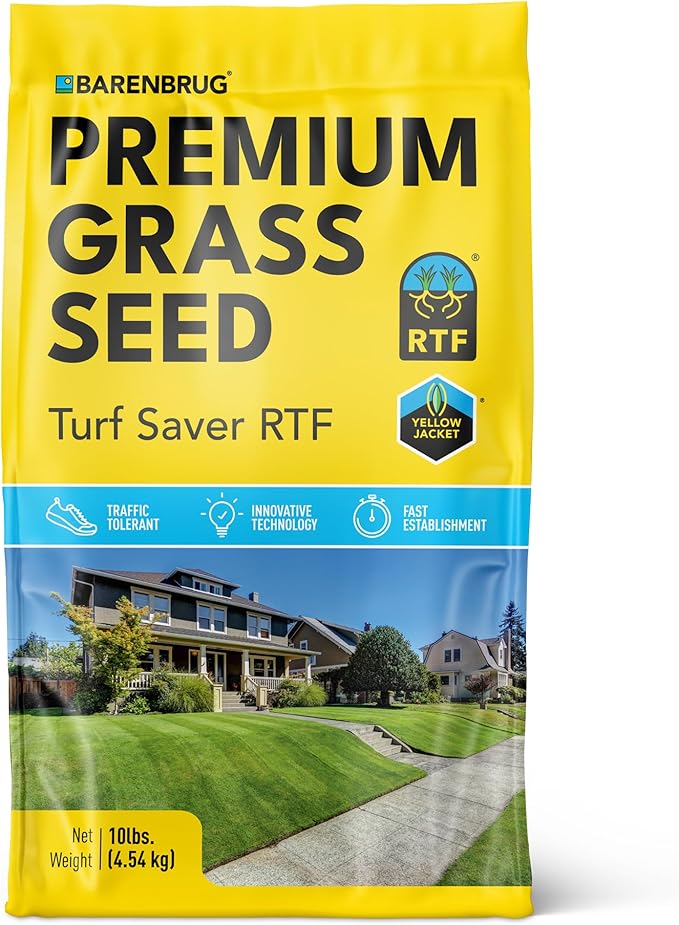
Barenbrug RTF Water Saver
Barenbrug · Cool Season · $40-55 for 5 lbs
Why this seed for Idaho: RTF is the smart choice for Boise and the Treasure Valley where irrigation costs matter. Deep roots and self-repair reduce water demand by 30% compared to standard fescue.

Outsidepride Midnight Kentucky Bluegrass Seed
Outsidepride · Cool Season · $35 (5 lbs) – $300 (50 lbs)
Why this seed for Idaho: KBG is Idaho's most popular lawn grass, and Midnight handles the alkaline volcanic soil, intense summer sun, and cold winters across the Snake River Plain.
Outsidepride Combat Extreme Northern Zone
Outsidepride · Cool Season · $25-35 for 5 lbs
Why this seed for Idaho: For northern Idaho and mountain communities where winters hit -25F, Combat Extreme's cold-hardy blend provides insurance against winterkill that single-species lawns can't match.
Best Grass Seed by Region in Idaho
Treasure Valley / Boise
The Treasure Valley — encompassing Boise, Meridian, Nampa, Caldwell, Eagle, and Star — is Idaho's population center and its most active lawn care market. Sitting at 2,700 feet in Zone 6b to 7a, the valley is high desert with just 12 inches of annual precipitation, 90-plus days above 90 degrees, and intense summer sun that bakes lawns from June through September. The Boise River corridor and older neighborhoods in Boise's North End benefit from mature tree canopy and slightly cooler microclimates, while the explosive growth areas in south Meridian, west Eagle, and Star are treeless subdivisions on former farmland where new lawns face unrelenting sun exposure. Soil across the valley is predominantly silty loam to clay loam with alkaline pH (7.0 to 8.0), and newer construction sites frequently have topsoil stripped during grading, leaving homeowners to establish lawns on compacted, nutriite-poor subsoil. Canal irrigation from the Boise Project is available in some older areas at low cost, but most newer subdivisions rely on municipal water at rates that make summer irrigation the largest household utility expense.
Top picks for this region:
- ✓Boise's alkaline soil causes iron chlorosis in bluegrass — apply EDDHA chelated iron as a foliar spray every 4 to 6 weeks from May through September for consistent green color
- ✓If your neighborhood has canal water rights through the Boise Project, use that for irrigation instead of municipal water — the cost difference over a summer can exceed $500
- ✓In newer Meridian and Star subdivisions where topsoil was scraped, invest in 4 to 6 inches of quality compost-amended topsoil before seeding — raw subsoil won't support a healthy lawn regardless of seed quality
- ✓Set irrigation to run between 4 and 7 AM — Boise's afternoon humidity drops below 15 percent in July and August, and midday watering loses 30 to 40 percent to evaporation
Northern Idaho / Coeur d'Alene
Northern Idaho — including Coeur d'Alene, Post Falls, Sandpoint, Moscow, and Lewiston — is climatically a different state from southern Idaho. Pacific weather systems push through the gaps in the Cascades and Bitterroots, delivering 25 to 30 inches of annual precipitation to the Coeur d'Alene area and even more in the higher elevations around Sandpoint. Zone 5b to 6b conditions mean milder summers (highs rarely exceed 95) but cold winters with significant snowfall — Coeur d'Alene averages 50 inches of snow annually. The soils are glacial till in the lake regions, acidic and rocky with pH typically running 5.5 to 6.5 from centuries of conifer decomposition — a stark contrast to southern Idaho's alkalinity. Shade is the primary challenge here, as tall Ponderosa pines, Douglas firs, and western red cedars canopy residential lots in ways that Boise homeowners never contend with. The Palouse region around Moscow has spectacularly deep, fertile loess soil but a colder Zone 5a climate. Lewiston, sitting at the bottom of a canyon at just 738 feet elevation, enjoys Idaho's mildest climate in Zone 7a and can grow things that would freeze solid in Coeur d'Alene 100 miles north.
Top picks for this region:
- ✓Northern Idaho's acidic soils (pH 5.5 to 6.5) benefit from lime applications — apply 50 lbs of pelletized lime per 1,000 sq ft in fall and retest in spring to gauge adjustment
- ✓Shade from conifers is the top lawn challenge in Coeur d'Alene — use fine fescue or dense shade blends under trees, and accept that areas under mature cedars may never support turf
- ✓Snow mold (both pink and gray) is common in areas with heavy, persistent snow cover — apply a preventive fungicide in late October before the first lasting snowfall
- ✓The Palouse region around Moscow has incredible soil but a short growing season — overseed by August 20th to give grass adequate establishment time before the October freeze
Eastern Idaho / Idaho Falls
Eastern Idaho — centered on Idaho Falls, Rexburg, Pocatello, and Blackfoot — is the cold heart of the state. Idaho Falls sits at 4,700 feet on the upper Snake River Plain in Zone 4b to 5a, where winter lows routinely hit minus 15 to minus 25 degrees and the growing season is just 100 to 120 days from late May through mid-September. Rexburg, home to BYU-Idaho, is even colder and frequently among the coldest cities in the lower 48 during winter arctic blasts. The soil is volcanic-derived sandy loam to loam over basalt, with pH running 7.0 to 7.5 and generally better structure than the Treasure Valley's clay. However, the thin soil over fractured basalt limits rooting depth in many areas, and the combination of high elevation, low humidity, and strong afternoon winds creates evapotranspiration rates that demand disciplined irrigation scheduling. Frost can occur in any month — yes, even July in the coldest hollows near the Yellowstone Plateau. Kentucky bluegrass is the default lawn grass, and it handles the cold admirably, but cultivar selection for cold hardiness is critical in a region where minus 20 isn't unusual.
Top picks for this region:
- ✓In Idaho Falls and Rexburg, choose only cold-hardy KBG cultivars rated for Zone 4 — generic big-box seed blends often include cultivars that winterkill at minus 20
- ✓The growing season is tight — overseed by August 15th at the latest, as first frost can arrive by September 10th in cold years and seedlings need 4 weeks of growth to survive winter
- ✓Wind desiccation in spring is a major seedling killer on the Snake River Plain — cover new seed with straw mulch or erosion blankets and water frequently until establishment
- ✓Volcanic soil drains fast but is often thin over basalt rock — if you hit rock at less than 12 inches, consider raised bed lawn areas or heavy topdressing to build soil depth for root development
Magic Valley / Twin Falls
The Magic Valley — Twin Falls, Jerome, Burley, and the surrounding agricultural communities — sits at 3,700 to 4,200 feet on the Snake River Plain in Zone 5b to 6a. This is one of Idaho's most productive agricultural regions, powered by Snake River irrigation, and the farming culture heavily influences attitudes toward residential lawn care. Average annual precipitation is just 9 to 11 inches, making this effectively semi-arid steppe, and summer temperatures frequently exceed 100 degrees. The soil is thin volcanic loam over basalt, often with caliche (calcium carbite hardpan) layers at 12 to 24 inches that resist root penetration and create drainage problems. Twin Falls itself is perched on the rim of the Snake River Canyon, and properties near the rim deal with extreme wind exposure and rocky, shallow soil. Water for irrigation comes from the canal systems fed by the Snake River, and the ongoing decline of the Eastern Snake Plain Aquifer has created increasing tension between agricultural and residential water users. Lawns here need to be tough, drought-tolerant, and deep-rooted — tall fescue and water-saver blends outperform traditional bluegrass in most Magic Valley conditions.
Top picks for this region:
- ✓Caliche hardpan layers are common at 12 to 24 inches — if your soil test or digging reveals a white, cement-like layer, you may need to mechanically break through it or build up soil above it for adequate root depth
- ✓Canal irrigation water in the Magic Valley is often high in dissolved minerals — monitor soil salt accumulation with annual soil tests and flush with a deep watering in fall if salts are building
- ✓Wind exposure near the Snake River Canyon rim desiccates lawns rapidly — consider a tall fescue or water-saver blend rather than bluegrass, as the deeper root systems handle wind-driven moisture loss far better
- ✓In Jerome and Wendell where summer temps exceed 100 degrees regularly, water deeply in the pre-dawn hours and avoid any irrigation after 9 AM — the combination of heat and surface moisture promotes fungal disease
Idaho Lawn Care Calendar
Spring
March - May
- •Resist early irrigation startup during March warm spells — Boise often sees 60-degree days in March followed by hard freezes, and premature watering wastes water and encourages shallow root growth
- •Apply pre-emergent herbicide when soil temperatures at 4-inch depth sustain 55 degrees — in the Treasure Valley this is typically mid to late April, later in eastern Idaho and northern regions
- •Core aerate in late April once soil is workable — Idaho's silty loam and clay loam soils compact over winter, and aeration improves water infiltration in the critical pre-summer window
- •Begin irrigation in early May using cycle-and-soak scheduling — Boise's silty clay absorbs water slowly, so two 15-minute cycles separated by 30 minutes outperform one continuous run
- •Apply a balanced fertilizer (20-10-10 or similar) in early May when soil temps sustain 55 degrees and grass is actively growing — avoid fertilizing before the lawn has been mowed twice
- •Seed bare patches in mid to late May once overnight lows consistently stay above 45 degrees — in eastern Idaho and northern regions, delay seeding until late May or early June
Summer
June - August
- •Raise mowing height to 3 to 3.5 inches across all Idaho regions — the intense summer sun at Idaho's latitudes and elevations burns grass mowed below 2.5 inches, especially in the Treasure Valley
- •Water deeply two to three times per week, targeting 1 to 1.5 inches total — in Boise's extreme heat (regularly above 95), bluegrass may need the higher end of this range to avoid dormancy
- •Apply chelated iron (EDDHA formulation) every 4 to 6 weeks in the Treasure Valley and Magic Valley where alkaline soils cause iron chlorosis — northern Idaho's acidic soils rarely need this
- •Watch for billbug and sod webworm damage in June and July — brown patches that pull up easily at the crown indicate billbug larvae feeding on stems below the soil surface
- •Avoid fertilizing with nitrogen after July 4th in the Treasure Valley and Magic Valley — pushing top growth during the hottest period increases water demand and heat stress on the plant
- •Monitor for summer patch disease in Kentucky bluegrass during extended periods above 95 degrees — irregular brown rings that don't respond to watering indicate a fungal issue, not drought
Fall
September - October
- •Fall is Idaho's prime seeding and overseeding window — soil is warm, air is cooling, and September precipitation provides supplemental moisture in most regions
- •In the Treasure Valley, seed or overseed by September 15th — first frost typically arrives between October 5th and October 15th, and seedlings need 3 to 4 weeks of growth before dormancy
- •In eastern Idaho, the window closes earlier — seed by September 1st, as first frost can arrive by mid-September in Idaho Falls and Rexburg
- •Core aerate in early September and topdress with compost — this is the most impactful aeration timing for Idaho lawns, as grass is actively growing and can fill cores before winter
- •Apply a winterizer fertilizer high in potassium (such as 8-2-14) in early to mid-October to harden grass for winter — potassium strengthens cell walls against freeze damage
- •Lower mowing height to 2.5 inches for the final two cuttings to reduce snow mold risk — this is especially important in northern Idaho and eastern Idaho where snow cover persists for months
Winter
November - February
- •Blow out irrigation systems by mid-October in the Treasure Valley, earlier in eastern Idaho — a hard freeze with water in the lines will crack pipes and shatter backflow preventers
- •In northern Idaho, apply a preventive snow mold fungicide before the first lasting snowfall, typically in early to mid-November — the persistent snow cover in Coeur d'Alene creates ideal conditions for gray snow mold
- •Avoid walking on frozen or frost-covered grass — cellular damage from foot traffic on frozen turf creates brown spots that won't recover until spring green-up
- •In Idaho Falls and Rexburg, where snow cover is intermittent, watch for winter desiccation on exposed turf — if the ground is bare and dry for more than 3 weeks, run one deep irrigation cycle on a day above 40 degrees
- •Plan your spring soil amendment program in January and order supplies early — UI Extension recommends sulfur for the Treasure Valley's alkaline soils and lime for northern Idaho's acidic soils
- •Service mower blades, sharpen tools, and schedule spring aeration with your local provider — Idaho lawn care services book up quickly by March, especially in the booming Treasure Valley market
Idaho Lawn Tips You Won't Find on the Seed Bag
Understanding Idaho's Water Rights and What They Mean for Your Lawn
Idaho's prior appropriation water rights system — first in time, first in right — directly impacts your ability to irrigate a residential lawn. Senior agricultural water rights holders get their full allocation before junior rights holders (including most residential users) receive anything. During drought years, the Idaho Department of Water Resources can issue curtailment orders that shut off junior water rights entirely, leaving homeowners on well water unable to irrigate. In the Treasure Valley, neighborhoods with access to Boise Project canal water have a significant advantage: canal water is delivered at flat seasonal rates far below what municipal systems charge per gallon. If you're buying a home in the Boise area, ask specifically about irrigation water rights — properties with canal water access can save $500 to $1,000 per summer in irrigation costs. In the Magic Valley and eastern Idaho, groundwater rights tied to the Eastern Snake Plain Aquifer have been subject to increasing curtailment as the aquifer declines. The practical takeaway: plant drought-tolerant grass varieties so your lawn can survive irrigation restrictions without dying.
Volcanic Soil Is Not Like Anything You've Dealt With Before
If you've moved to Idaho from the Midwest, Southeast, or Northeast, the volcanic-derived soils across the Snake River Plain will challenge every assumption you have about lawn care. In the Magic Valley, you may hit fractured basalt at 6 to 18 inches below the surface — there's no deep root zone to develop, no subsoil moisture reservoir to tap. In the Treasure Valley, the soil is better but often laden with caliche — a calcium carbonate hardpan that forms in arid climates and is essentially natural concrete. Caliche blocks root penetration, prevents drainage, and creates waterlogged conditions above the hardpan even in desert climates. If you find caliche, you have two options: mechanically break through it (expensive but permanent) or build soil depth above it with imported topsoil and compost. Across all of southern Idaho, the soils are low in organic matter — typically 1 to 2 percent versus the 3 to 5 percent common in Midwestern soils. Annual compost topdressing at a half-inch to one inch in spring and fall will gradually build organic matter, improve water retention, and support the microbial life that healthy turf depends on.
The Treasure Valley's Extreme Temperature Swings Demand Smart Timing
Boise experiences daily temperature swings of 30 to 40 degrees routinely from June through September — overnight lows in the mid-50s followed by afternoon highs in the upper 90s or low 100s. This diurnal range is larger than most U.S. cities and creates unique lawn care timing requirements. Irrigation should always run in the pre-dawn hours (4 to 6 AM) when temperatures are lowest and humidity is at its daily peak — this minimizes evaporation and gives water time to soak in before the heat arrives. Fertilizer applications should also happen in the early morning or evening, never in the heat of the day when granules sitting on sun-baked blades can burn the grass. Mowing in the afternoon heat stresses turf that's already under thermal pressure — mow in the morning when dew has dried or in the evening after temperatures drop below 85. Even herbicide applications are timing-sensitive: most post-emergent herbicides should not be applied when temperatures exceed 85 degrees, which eliminates most of the afternoon hours from June through August in the Treasure Valley.
Northern Idaho Is Pacific Northwest Lawn Care, Not Intermountain West
Homeowners in Coeur d'Alene, Sandpoint, and Moscow need to mentally detach from southern Idaho's lawn care advice and look west toward Spokane and the Pacific Northwest for relevant guidance. Northern Idaho receives 25 to 30 inches of annual precipitation, has acidic soils from conifer decomposition, deals with significant shade challenges, and faces moss and fungal issues that Boise homeowners never encounter. Lime applications to raise pH, shade-tolerant grass blends, and fungicide programs for snow mold and red thread are standard practice here — none of which are relevant in the Treasure Valley. The UI Extension office in Moscow produces northern-Idaho-specific lawn care bulletins that account for these differences. The one exception is Lewiston, which sits in a deep canyon at 738 feet and enjoys the mildest climate in Idaho — Zone 7a with hot, dry summers that feel more like the Treasure Valley than the surrounding Palouse hills. If you're in Lewiston, follow Boise lawn care advice; if you're anywhere else in northern Idaho, follow Spokane or western Washington guidance.
Why RTF Water-Saver Blends Are Becoming the Default Treasure Valley Lawn
The economics of lawn irrigation in the Treasure Valley have tipped decisively toward water-saving grass varieties. Municipal water rates in Meridian, Eagle, and Star have climbed 40 to 60 percent over the past decade, and a typical quarter-acre Kentucky bluegrass lawn now costs $1,200 to $2,000 per summer to irrigate at current rates. Barenbrug's RTF Water Saver blend — which develops a deep root system reaching 3 to 4 feet compared to KBG's 6-inch roots — reduces irrigation needs by 30 to 40 percent. That translates to $400 to $800 in annual savings for a typical Treasure Valley lot. The grass maintains acceptable green color with twice-weekly deep watering where bluegrass demands three times weekly, and it recovers from drought dormancy faster than KBG when water is restored. Local Treasure Valley sod farms have responded to demand and now stock RTF sod alongside traditional bluegrass. The visual trade-off is real — RTF has a slightly coarser texture than premium bluegrass — but for the majority of Boise-area homeowners, the water savings and reduced maintenance make it the practical choice in 2026.
Timing Your Overseeding Window in a State With Three Different Climates
Idaho's regional climate variation means there is no single overseeding date for the state. In the Treasure Valley (Boise, Meridian, Nampa), the optimal fall overseeding window runs from September 1st through September 15th — soil is still warm from summer, air temperatures are moderating, and first frost typically arrives between October 5th and 15th. In northern Idaho (Coeur d'Alene, Moscow), the window opens earlier and closes earlier: seed from August 15th through September 5th, as first frost can arrive by late September. In eastern Idaho (Idaho Falls, Rexburg), the window is the tightest in the state: seed between August 10th and September 1st, because first frost can hit by mid-September and the short fall doesn't give seedlings much establishment time. Spring seeding is possible in all regions but carries higher risk because Idaho's rapid transition from cool spring to scorching summer (especially in the Treasure Valley) can stress young seedlings before they've developed adequate root systems. If you must seed in spring, do it by mid-April in the Treasure Valley and by late May in eastern and northern Idaho.
What Idaho Lawn Pros Actually Plant
Kentucky Bluegrass
Most PopularKentucky bluegrass remains the dominant lawn grass across Idaho, covering an estimated 70 percent of residential properties in the Treasure Valley and even higher percentages in eastern Idaho where its cold hardiness is essential. Idaho's climate is actually well-suited to KBG — the cold winters provide necessary dormancy, the dry summers mean less fungal pressure than eastern states, and the intense sun produces dense, dark stands when irrigation is adequate. Midnight Kentucky bluegrass is the premium choice, with its exceptional color retention under UV stress and strong performance in UI Extension trials at the Parma Research Center. The challenge in Idaho is entirely about water: KBG needs 1 to 1.5 inches per week through Boise's rainless summers, and every drop comes from irrigation. In eastern Idaho where summer temperatures are more moderate and occasional thunderstorms provide supplemental moisture, KBG is more sustainable. But across the Treasure Valley and Magic Valley, rising water costs are slowly shifting the calculus away from pure KBG and toward water-saver blends.
Tall Fescue / Water-Saver Blends
Growing RapidlyTall fescue and RTF (rhizomatous tall fescue) water-saver blends have exploded in popularity across the Treasure Valley over the past five years. Barenbrug's RTF Water Saver is the most widely planted blend, available in both seed and sod from local suppliers like Franz Witte Landscape and Zamzows. The deep root system — 3 to 4 feet versus KBG's 6 inches — makes these blends dramatically more drought-tolerant, and they maintain green color with 30 to 40 percent less irrigation than straight bluegrass. The grass handles the Treasure Valley's alkaline soil without major issues, tolerates the summer heat reasonably well, and stays dense enough to resist weed invasion. The trade-off is texture: RTF fescue has a coarser blade than Kentucky bluegrass, and the difference is noticeable side-by-side. But for the majority of Boise homeowners tired of $300 July water bills, the coarser texture is an easy concession. These blends are also gaining ground in Twin Falls and the Magic Valley, where water scarcity makes traditional bluegrass maintenance increasingly impractical.
Fine Fescue Blends
Regional Favorite (Northern Idaho)Fine fescues — creeping red fescue, chewings fescue, and hard fescue — are the go-to grass for northern Idaho's shaded residential lots. In Coeur d'Alene, Sandpoint, and Moscow, where mature Ponderosa pines and Douglas firs create dense canopy cover, fine fescues are often the only turfgrass that will maintain a stand in 60 to 70 percent shade. They also thrive in northern Idaho's acidic soils (pH 5.5 to 6.5) where bluegrass would struggle without lime amendments. Fine fescues need less water and fertilizer than KBG, making them a low-maintenance option for mountain properties and lake cabin lots in the McCall and Cascade areas. In the Treasure Valley, fine fescues are limited to deeply shaded areas under mature trees — they struggle with the summer heat and full sun exposure. Outsidepride's Creeping Red Fescue is a popular choice in northern Idaho, both as a standalone lawn and as the shade component in sun-shade blends.
Perennial Ryegrass
Supporting Role / Blending ComponentPerennial ryegrass plays a supporting role in Idaho lawns rather than starring on its own. It's commonly included in bluegrass blends at 10 to 20 percent to provide quick germination and early cover while the slower-establishing KBG fills in — ryegrass germinates in 5 to 7 days versus bluegrass's 14 to 21. It's also the top choice for quick repairs of bare spots in fall when there isn't enough time for bluegrass to establish before frost. In the Boise area, perennial ryegrass handles the summer heat reasonably well but needs more water than fescue blends, limiting its appeal as a primary lawn grass. In northern Idaho's cooler climate, it performs better and is sometimes used as a primary lawn grass in Moscow and Lewiston. The main limitation is winter hardiness — in eastern Idaho's Zone 4b conditions, perennial ryegrass can winterkill during severe cold snaps, so it should be used cautiously in Idaho Falls and Rexburg.
Native Prairie / Xeriscape Blends
Emerging / Eco-Conscious NicheNative grass and xeriscape blends are an emerging trend in southern Idaho, driven by the same water cost pressures that are pushing the RTF revolution. In the Magic Valley, where 9 to 11 inches of annual precipitation is the norm, homeowners are increasingly opting for low-water native blends that require little to no supplemental irrigation once established. Blue grama, buffalo grass, and western wheatgrass blends create a naturalistic lawn look that's consistent with Idaho's high desert landscape. The City of Boise's Suez Water utility has begun offering rebates for turf replacement with water-wise landscaping, though the programs are newer and less generous than Colorado's. In planned communities like Harris Ranch in Boise, native grass common areas are now standard. The main barriers are aesthetics (native grasses go dormant and turn brown from October through May) and establishment time (native blends can take two full growing seasons to achieve full coverage). But for second homeowners, vacation properties, and anyone tired of the irrigation treadmill, native blends are a rational choice in Idaho's arid southern half.
Idaho Lawn Seeding Tips
Getting the best results from your grass seed in Idaho comes down to timing, soil prep, and choosing the right variety for your specific conditions. Here are our top tips:
- Test your soil first. A $15 soil test from your Idaho extension office tells you exact pH and nutrient levels. Most cool-season grasses prefer pH 6.0-7.0.
- Prep the seedbed properly. Rake or aerate to ensure good seed-to-soil contact. This single step improves germination rates more than any seed coating or starter fertilizer.
- Use a starter fertilizer. Apply a phosphorus-rich starter fertilizer at seeding time to promote root development. We recommend Scotts Starter Fertilizer or The Andersons Starter.
- Water correctly. Keep the seedbed consistently moist (not soaked) for the first 2-4 weeks. Light watering 2-3 times per day is better than one heavy soaking.
- Be patient. Kentucky Bluegrass takes 14-28 days to germinate. Tall Fescue is faster at 7-14 days. Don't panic if you don't see results immediately.
- Consider pre-germinating KBG. If you're planting Kentucky Bluegrass, you can cut germination time from 30 days to under a week using the bucket-and-bubble pre-germination method. This is especially valuable for late-season seeding in Idaho.
Frequently Asked Questions
When is the best time to plant grass seed in Idaho?
Late August through mid-September in Boise/Treasure Valley; late August in northern ID; mid-August in eastern ID mountain communities
What type of grass grows best in Idaho?
Idaho is best suited for cool-season grasses like Kentucky Bluegrass, Tall Fescue, and Perennial Ryegrass. These grasses thrive in spring and fall, stay green longer into winter, and handle cold temperatures well.
What are the biggest lawn care challenges in Idaho?
The main challenges for Idaho lawns include semi-arid conditions requiring irrigation, extreme temperature range across the state, alkaline volcanic soil in southern id, short growing season at elevation. Choosing the right grass variety that is adapted to these specific conditions is the single most important decision you can make for your lawn.
Can I grow Kentucky Bluegrass in Idaho?
Absolutely — Kentucky Bluegrass is one of the best choices for Idaho. It thrives in the cool-season climate, produces a beautiful dense lawn, and self-repairs through rhizome spread. Midnight KBG is our top pick for the darkest, most premium-looking lawn.
How much does it cost to seed a lawn in Idaho?
For a typical 5,000 sq ft lawn, expect to spend $150-$400 on seed alone depending on the variety. Premium seeds like Midnight Kentucky Bluegrass or Zenith Zoysia cost more per pound but deliver better results. Add $50-$100 for starter fertilizer and $20-$50 for soil amendments. The seed is the smallest part of your total investment — proper soil prep and consistent watering matter more than saving $50 on cheaper seed.
More Lawn Care Resources
Not in Idaho?
We have state-specific grass seed guides for all 50 states.