CA State Guide · Updated March 2026
Best Grass Seed for California
Top-rated grass seeds for California lawns that survive drought, water restrictions, and summer heat. Our expert picks for Los Angeles, San Francisco, San Diego, and Sacramento.
Disclosure: This article contains affiliate links. If you buy through our links, we may earn a commission at no extra cost to you. All opinions are our own. Learn more.
Growing a lawn in California is an exercise in contradiction. You live in one of the most beautiful places on earth, your neighbors have pristine turf that looks like Augusta National, and your water bill already makes you wince every month. The Golden State spans USDA zones 7 through 10 and encompasses everything from the foggy, temperate coast of San Francisco to the scorching desert floor of the Coachella Valley. There is no single 'California lawn' — there are dozens of microclimates, each demanding a completely different approach to grass selection, irrigation, and maintenance.
Water is the defining issue for California lawns, and it has been for decades. The Metropolitan Water District of Southern California (MWDSC) and the Department of Water Resources (DWR) have imposed increasingly strict outdoor watering rules, and most local water districts — from LADWP in Los Angeles to EBMUD in the East Bay — enforce their own tiered pricing and irrigation schedules. Many districts limit residential watering to two or three days per week, and during drought emergencies, the State Water Resources Control Board can impose statewide restrictions that ban watering altogether for new landscaping. If you are planting a lawn in California in 2026, you need to pick a grass that can survive on less water, period.
Then there is the HOA factor. In master-planned communities across Irvine, Santa Clarita, Rancho Cucamonga, and the sprawling developments of the Inland Empire, homeowners are caught between CC&R requirements that mandate green front yards and state laws that protect the right to replace turf with drought-tolerant landscaping. Assembly Bill 1572 banned HOAs from requiring turf in common areas watered with potable supplies, but many associations still expect front lawns to look green. The result is a strange arms race: homeowners installing warm-season grasses that stay green on minimal water, or mixing in drought-tolerant fescues that can survive on deep, infrequent irrigation cycles.
Culturally, California has shifted more than any other state toward accepting alternatives to traditional lawns. Turf buyback programs — like the MWDSC's rebate of up to $2 per square foot for replacing grass with native landscaping — have convinced millions of homeowners to rip out their front lawns entirely. But plenty of Californians still want real grass, especially in backyards where kids and dogs play. The key is choosing the right grass for your specific microclimate: Bermudagrass dominates the hot interior valleys and deserts, tall fescue holds its own in the cooler coastal and Northern California zones, and zoysia is quietly gaining a reputation as the best compromise between aesthetics and water savings.
Whether you are maintaining a backyard patch in a San Diego suburb, overseeding a tired lawn in Sacramento, or establishing turf around a new build in Bakersfield, this guide breaks down what actually works in California — region by region, season by season, and grass by grass. No generic advice. Just what we have learned from years of growing lawns in a state that makes it harder than anywhere else.
Quick Picks: Our Top 3 for California
Understanding California's Lawn Climate
Hugely diverse climate ranging from Mediterranean along the coast to arid desert inland and alpine conditions in the Sierra Nevada. Coastal areas enjoy mild year-round temperatures, while the Central Valley bakes in summer heat exceeding 105F. Southern California receives as little as 10 inches of rain annually, while the North Coast can see 60+ inches. Most precipitation falls between November and March, leaving summers bone-dry statewide.
Key Challenges
Best Planting Time for California
Mid-March through May (spring) for warm-season grasses; September through November (fall) for cool-season grasses in Northern California
Our Top 3 Picks for California
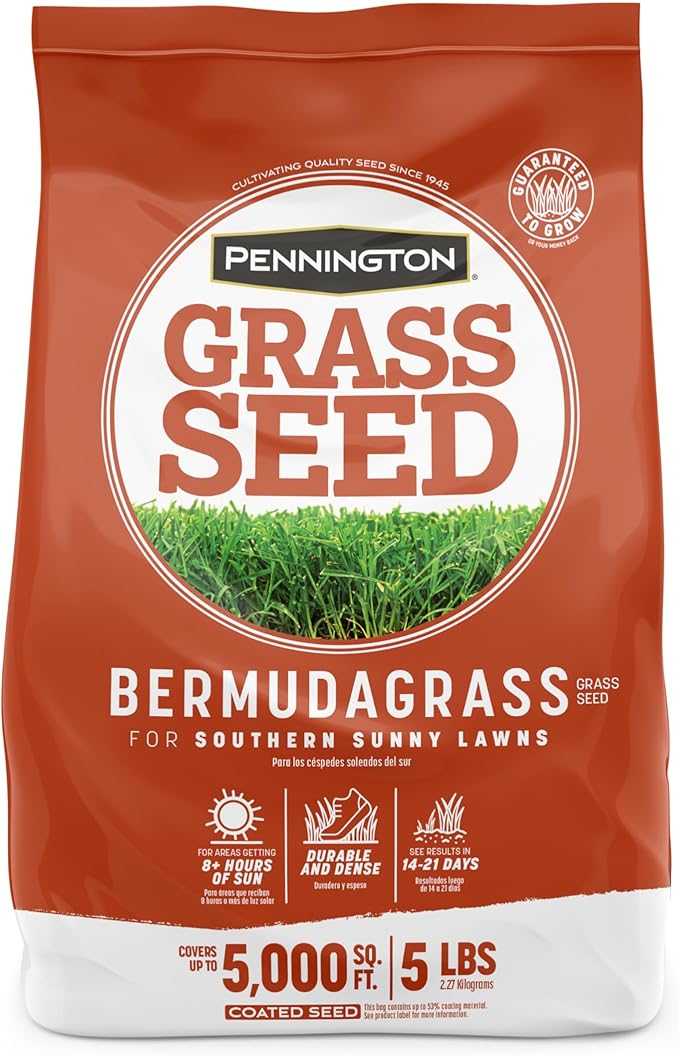
Pennington Smart Seed Bermudagrass
Pennington · Warm Season · $20-35 for 8.75 lbs
Why this seed for California: Bermuda thrives in California's intense sun and handles drought like a champion. The WaterSmart coating is especially valuable given California's strict water restrictions.
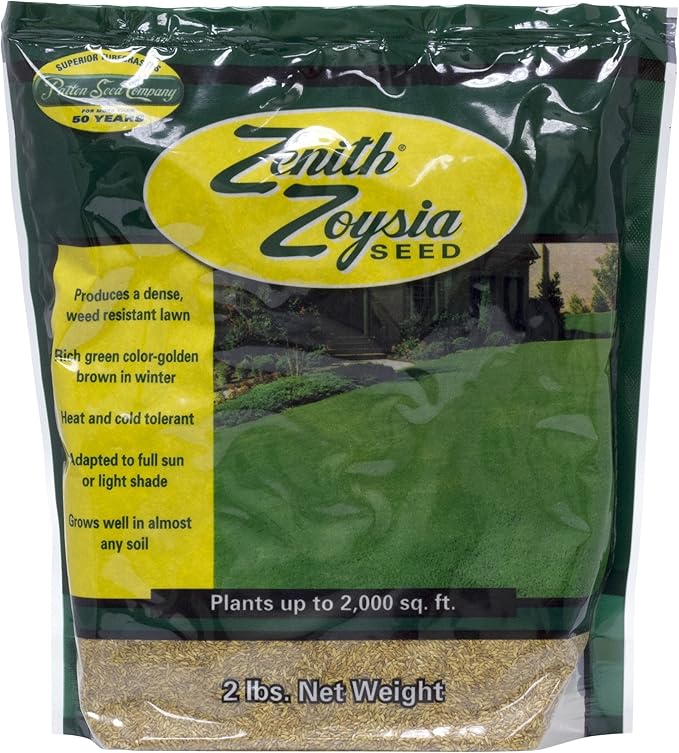
Pennington Zenith Zoysia Grass Seed & Mulch
Pennington · Warm Season · $25-35 for 2 lbs
Why this seed for California: Zoysia creates a thick, carpet-like lawn that's drought-tolerant and stays green longer than bermuda in coastal California's mild winters.
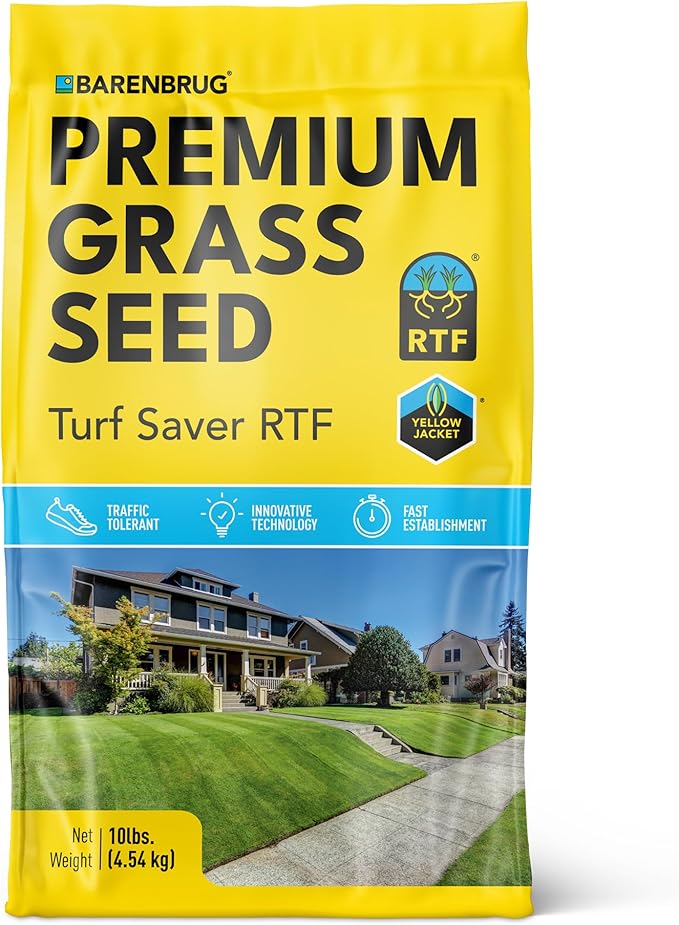
Barenbrug RTF Water Saver
Barenbrug · Cool Season · $40-55 for 5 lbs
Why this seed for California: For Northern California homeowners who prefer cool-season turf, RTF's self-repairing rhizomes and deep roots handle the dry summers while giving you that lush green look.
Best Grass Seed by Region in California
Northern California (Bay Area & Sacramento Valley)
Northern California is split between the mild, fog-influenced Bay Area (zones 9b-10a) and the hotter, drier Sacramento Valley (zones 9a-9b). Bay Area lawns deal with heavy adobe clay soil in the East Bay foothills and sandy loam near the coast, while Sacramento Valley homeowners face brutal 100-degree summers paired with cool, foggy winters. This is classic transition zone territory — both cool-season and warm-season grasses can work depending on your exact location and microclimate.
Top picks for this region:
- ✓In the Bay Area, amend heavy East Bay clay soil with 3-4 inches of gypsum and compost before planting — the adobe clay in cities like Walnut Creek, Concord, and Pleasanton is nearly impenetrable without soil prep.
- ✓Sacramento Valley homeowners should strongly consider Bermudagrass for full-sun areas. Tall fescue can work but will need significantly more water to survive July and August when temps exceed 105 degrees.
- ✓EBMUD and SFPUC both offer turf replacement rebates — check current rates before deciding whether to keep or replace your lawn, as rebates can offset the cost of warm-season grass installation.
- ✓If you are in the fog belt (Sunset District, Daly City, Pacifica), cool-season fescue actually thrives because summer temps rarely break 70 degrees. Do not plant Bermuda here — it will go dormant for six months.
Southern California (Los Angeles, San Diego & Inland Empire)
Southern California is the epicenter of the lawn-versus-drought debate. Coastal areas from Malibu to La Jolla enjoy mild year-round temperatures in the 60s and 70s, but the Inland Empire (Riverside, San Bernardino, Rancho Cucamonga) regularly hits 110 degrees in summer. Water restrictions from LADWP and the MWDSC are the strictest in the state, and most SoCal water districts enforce mandatory watering schedules with real fines for overuse.
Top picks for this region:
- ✓Bermudagrass is king in SoCal for a reason — it thrives in full sun, handles the heat, and uses 30-40% less water than tall fescue. Common Bermuda is cheap, but hybrid varieties like Celebration or Tifway 419 give a much finer texture.
- ✓If your HOA requires a green lawn year-round, Zoysia is the play. It stays green longer into fall than Bermuda and greens up earlier in spring, reducing the brown dormancy window that drives HOA complaints.
- ✓Inland Empire soil is often rocky and alkaline with poor drainage. Get a soil test from your local UC Cooperative Extension office before planting — you may need sulfur amendments to lower pH below 8.0.
- ✓LADWP offers rebates for smart irrigation controllers. Pair a weather-based controller with Bermudagrass and you can maintain a green lawn on surprisingly little water — we have seen SoCal homeowners get by on 60% of ET replacement.
Central Valley (Fresno, Bakersfield, Stockton, Modesto)
The Central Valley is California's furnace. Summer highs routinely exceed 105 degrees in Fresno and Bakersfield, while winter nights can dip below freezing in the northern Valley around Redding and Chico. The soil is predominantly clay loam — heavy and slow-draining — and the region gets less than 12 inches of rain per year. This is warm-season grass territory without question, and Bermudagrass dominates residential lawns from Stockton to Bakersfield.
Top picks for this region:
- ✓Do not fight the heat with cool-season grass in the Central Valley. Tall fescue lawns here require nearly double the irrigation of Bermudagrass and still look stressed by August. Plant Bermuda and embrace the winter dormancy.
- ✓Central Valley clay soil compacts severely in summer heat. Core aerate twice per year — once in late spring and once in early fall — to keep water and nutrients reaching the root zone.
- ✓Water early in the morning (before 6 AM) to minimize evaporation. In Bakersfield, afternoon irrigation can lose 40-50% of applied water to evaporation when temps hit triple digits.
- ✓Overseeding Bermuda with annual ryegrass in October gives you a green lawn through winter if dormant brown turf bothers you. Just be prepared to scalp it low in April when the Bermuda wakes up.
Central Coast (Santa Barbara, San Luis Obispo, Monterey)
The Central Coast is California's Mediterranean sweet spot for lawns. Moderate temperatures year-round (rarely above 85 or below 40), consistent ocean breezes, and relatively lower water stress compared to SoCal make this one of the few California regions where cool-season grasses genuinely thrive. The catch is coastal fog, salt spray exposure near the ocean, and sandy soil that drains too quickly and holds few nutrients.
Top picks for this region:
- ✓Sandy coastal soil drains fast and does not hold nutrients. Top-dress with compost annually and consider a slow-release organic fertilizer program to prevent nitrogen from washing straight through the root zone.
- ✓Salt spray is real within a mile of the coast. Barenbrug RTF Water Saver and certain tall fescue cultivars have better salt tolerance than Kentucky bluegrass — avoid KBG in oceanfront properties.
- ✓The Central Coast is one of the few California regions where you can get away with a beautiful tall fescue lawn on reasonable water. The mild summers mean fescue rarely goes into heat stress the way it does in the Central Valley.
- ✓Morning fog drip can contribute meaningful moisture to your lawn in summer. Factor this into your irrigation schedule — many Central Coast homeowners overwater because they do not account for fog.
Desert (Palm Springs, Coachella Valley, Lancaster, Victorville)
The California desert is the most extreme lawn environment in the state. Summer highs routinely exceed 115 degrees in Palm Springs and the Coachella Valley, rainfall is under 5 inches per year, and the soil is sandy, alkaline, and nutrient-poor. Water here comes from the Colorado River Aqueduct and local groundwater basins — both under increasing pressure. If you are going to have a lawn in the desert, it needs to be Bermudagrass, it needs to be small, and it needs to be irrigated with surgical precision.
Top picks for this region:
- ✓Keep your lawn as small as functionally possible. Many desert homeowners maintain a small backyard turf area for pets and kids while using decomposed granite, gravel, and native plants in the front yard.
- ✓Bermudagrass is the only realistic option for a traditional lawn in the desert. Even Bermuda needs deep irrigation 3-4 times per week in peak summer — program your controller for short cycle-and-soak runs to prevent runoff on sandy soil.
- ✓Desert soil pH often exceeds 8.5. Apply granular sulfur or acidifying fertilizer (ammonium sulfate) to bring pH closer to 7.0, which dramatically improves nutrient uptake and grass color.
- ✓Coachella Valley Water District (CVWD) and Desert Water Agency both enforce strict water budgets. Know your allocation before planting — a lawn that pushes you into penalty-tier pricing can cost hundreds extra per month in summer.
California Lawn Care Calendar
Spring
March - May
- •Apply pre-emergent herbicide by mid-February in SoCal and mid-March in NorCal to prevent crabgrass — California's long growing season means weeds germinate earlier than in most states.
- •Begin mowing warm-season lawns (Bermuda, Zoysia) as they green up in March and April. Scalp Bermuda to 0.5 inches in late March to remove dead material and encourage faster green-up.
- •Start your irrigation system and check for broken heads, clogged emitters, and leaks. Adjust run times to match spring ET rates — typically 70-80% of summer peak in most California regions.
- •Overseed thin tall fescue lawns in Northern California and the Central Coast. Spring overseeding works in California's mild climate, though fall is still preferred for fescue.
- •Apply a balanced slow-release fertilizer (16-4-8 or similar) to warm-season grasses once soil temps consistently exceed 65 degrees — usually mid-April in the Central Valley, early May in NorCal.
Summer
June - August
- •Raise mowing height on all grass types to reduce water stress. Bermuda to 1.5-2 inches, tall fescue to 3.5-4 inches, Zoysia to 2-2.5 inches.
- •Water deeply and infrequently — twice per week for Bermuda, three times for fescue — within your local water district's allowed schedule. Water before 8 AM to comply with most district rules and reduce evaporation.
- •Watch for grub damage (irregular brown patches that peel up like carpet) in July and August. Apply beneficial nematodes or a grub control product like GrubEx if you find more than 5 grubs per square foot.
- •Do NOT fertilize cool-season grasses (fescue, bluegrass) during summer heat. This pushes top growth when roots are already stressed. Save fertilizer for fall.
- •Monitor for Bermudagrass invasion in cool-season lawns. Summer heat gives Bermuda a competitive advantage — hand-pull stolons at lawn edges or use targeted herbicide to keep it from taking over your fescue.
Fall
September - November
- •September through October is the prime window for overseeding tall fescue lawns in NorCal and the Central Coast. Soil is still warm, air is cooling, and fall rains help with establishment.
- •Apply a fall fertilizer with higher potassium (e.g., 10-0-10) to all grass types in October. Potassium strengthens cell walls and improves drought and cold tolerance heading into winter.
- •Core aerate compacted clay soils — especially in the Bay Area foothills and Central Valley — before overseeding. This is the single most impactful thing you can do for a struggling California lawn.
- •Reduce irrigation gradually as temperatures drop and fall rains arrive. Many California homeowners waste enormous amounts of water by leaving summer irrigation schedules running into November.
- •Apply a post-emergent broadleaf herbicide in October when weeds like clover, dandelion, and oxalis are actively growing but before they go dormant. Fall weed control is far more effective than spring in California.
Winter
December - February
- •Bermudagrass and Zoysia will go dormant (turn brown) once nighttime temps drop below 50 degrees. This is normal — do not increase watering to try to keep warm-season grass green in winter.
- •If dormant brown Bermuda bothers you, overseed with annual or perennial ryegrass in October for a green winter lawn. This is extremely common in the Central Valley and desert regions.
- •Reduce mowing frequency to every 2-3 weeks for cool-season lawns. In NorCal, tall fescue stays green but grows slowly in winter — avoid scalping during this period.
- •Sharpen mower blades and service your irrigation system during the slow season. Clean and inspect backflow preventers, which are required by most California water districts.
- •Plan your spring lawn strategy now. Order seed, schedule aeration, and check your local water district's website for any updated irrigation rules or rebate programs before the growing season starts.
California Lawn Tips You Won't Find on the Seed Bag
Take Advantage of Turf Rebate Programs Before Planting
Before you spend money on grass seed, check whether your water district offers turf replacement rebates. MWDSC offers up to $2/sq ft for SoCal residents, EBMUD covers portions of lawn removal in the East Bay, and dozens of other districts run seasonal programs. Even if you want to keep a lawn, some homeowners strategically remove front yard turf for the rebate and reinvest that money in a better backyard lawn with drought-tolerant grass.
Amend Adobe Clay Before You Plant Anything
Bay Area foothills (Walnut Creek, Danville, Pleasanton) and parts of Sacramento are notorious for dense adobe clay that turns to concrete in summer and waterlogged soup in winter. Work in 4-6 inches of gypsum and quality compost to a depth of 6-8 inches before seeding or sodding. Skipping this step is the number one reason new lawns fail in these areas — roots simply cannot penetrate unimproved adobe.
Bermuda Invasion Is Real — Manage Your Lawn Borders
If you have a cool-season lawn (fescue or bluegrass) anywhere in California south of Sacramento, Bermudagrass will try to invade from neighboring properties, medians, and sidewalk cracks. Install deep edging (at least 4 inches below soil level) and be vigilant about pulling stolons. Once Bermuda establishes in a fescue lawn, removing it without killing everything is nearly impossible.
Use the CIMIS System to Dial In Your Irrigation
California's Irrigation Management Information System (CIMIS) provides free, station-by-station evapotranspiration data across the state. Look up the ET rate for your nearest station and set your irrigation to replace 60-80% of ET for warm-season grasses. This approach consistently produces healthier lawns on less water than guessing or following a generic schedule.
Coastal Salt Spray Limits Your Grass Options
Within half a mile of the ocean, salt spray and saline irrigation water become real factors. Bermudagrass and certain tall fescue cultivars (like RTF Water Saver) handle moderate salinity well, but Kentucky bluegrass and fine fescues struggle. If your irrigation source is reclaimed water — increasingly common in coastal SoCal — choose salt-tolerant varieties and leach the soil monthly with a deep watering to flush accumulated salts.
Smart Controllers Pay for Themselves in One Season
Weather-based smart irrigation controllers (Rachio, Hunter Hydrawise, RainMachine) are eligible for rebates from most California water districts and can cut lawn water use by 20-30% compared to a basic timer. In a state where water bills can run $150-300/month in summer, the payback period is typically one season. Pair a smart controller with properly spaced rotary nozzles for the best efficiency.
What California Lawn Pros Actually Plant
Bermudagrass
Most PopularThe undisputed king of California lawns south of Sacramento. Bermuda handles extreme heat, thrives in full sun, and uses significantly less water than any cool-season alternative. Common Bermuda is cheap to seed and fills in aggressively, while hybrid varieties (Celebration, Tifway 419) provide a finer, more manicured look for homeowners willing to invest in sod. The tradeoff is winter dormancy — Bermuda turns brown from November through March in most of the state — but most Californians consider that a fair price for a lawn that survives summer on minimal water.
Tall Fescue
Very PopularThe go-to cool-season grass for Northern California, the Central Coast, and shaded SoCal yards. Modern turf-type tall fescue cultivars are a huge improvement over the old K-31 pasture grass — they are finer-textured, darker green, and significantly more drought-tolerant thanks to deeper root systems. NorCal homeowners love fescue because it stays green year-round without the dormancy period of Bermuda. The catch is that fescue needs more water than warm-season grasses, especially inland where summer temps climb past 100 degrees.
Zoysiagrass
Growing in PopularityZoysia is quietly becoming the premium choice for California homeowners who want a warm-season lawn with a more refined look than Bermuda. It is denser, softer underfoot, and stays green longer into fall and earlier in spring than Bermuda. Zenith Zoysia can be grown from seed (unlike most zoysia varieties that require sod or plugs), which has made it increasingly accessible. The main complaint is that zoysia establishes slowly — it can take a full season to fill in from seed — but once mature, it forms an incredibly thick, weed-resistant turf that needs less mowing than Bermuda.
Buffalograss
Niche ChoiceThe ultimate low-water, low-maintenance option for homeowners willing to accept a different aesthetic. Buffalograss is native to the Great Plains and survives on as little as 1 inch of water per month once established, making it the most drought-tolerant turf grass available. It is gaining traction in California's inland valleys and desert edges where water budgets are tight. The grass has a fine, blue-green appearance and grows only 3-4 inches tall, reducing mowing frequency. However, it does not tolerate shade, heavy foot traffic, or competition from Bermuda — and it is a niche choice that most lawn purists find too sparse-looking compared to traditional turf.
Perennial Ryegrass (Winter Overseed)
Very PopularNot a permanent lawn grass in California, but widely used as a winter overseed on dormant Bermuda lawns. In the Central Valley, Inland Empire, and desert communities, overseeding with perennial or annual ryegrass in October gives homeowners a green lawn through the winter months when Bermuda is brown. Many golf courses, sports fields, and HOA-governed neighborhoods make ryegrass overseeding a standard practice. It germinates in 5-7 days, provides a lush green cover by Thanksgiving, and dies off naturally as Bermuda greens up in spring.
California Lawn Seeding Tips
Getting the best results from your grass seed in California comes down to timing, soil prep, and choosing the right variety for your specific conditions. Here are our top tips:
- Test your soil first. A $15 soil test from your California extension office tells you exact pH and nutrient levels. Most warm-season grasses prefer pH 6.0-6.5.
- Prep the seedbed properly. Rake or aerate to ensure good seed-to-soil contact. This single step improves germination rates more than any seed coating or starter fertilizer.
- Use a starter fertilizer. Apply a phosphorus-rich starter fertilizer at seeding time to promote root development. We recommend Scotts Starter Fertilizer or The Andersons Starter.
- Water correctly. Keep the seedbed consistently moist (not soaked) for the first 2-4 weeks. Light watering 2-3 times per day is better than one heavy soaking.
- Be patient. Warm-season grasses are slower to establish. Bermuda takes 7-14 days, but Zoysia and Centipede can take 3-4 weeks. Don't panic if you don't see results immediately.
- Consider pre-germinating KBG. If you're planting Kentucky Bluegrass, you can cut germination time from 30 days to under a week using the bucket-and-bubble pre-germination method. This is especially valuable for late-season seeding in California.
Frequently Asked Questions
When is the best time to plant grass seed in California?
Mid-March through May (spring) for warm-season grasses; September through November (fall) for cool-season grasses in Northern California
What type of grass grows best in California?
California sits in the transition zone, making it one of the trickiest states for lawn care. Both cool-season grasses (Tall Fescue, KBG) and warm-season grasses (Bermuda, Zoysia) can work depending on your specific location and microclimate.
What are the biggest lawn care challenges in California?
The main challenges for California lawns include drought, water restrictions, diverse microclimates, extreme summer heat inland. Choosing the right grass variety that is adapted to these specific conditions is the single most important decision you can make for your lawn.
Can I grow Kentucky Bluegrass in California?
It depends on where you are in California. In the cooler northern regions, KBG can work well. In the warmer southern areas, it may struggle during peak summer heat. Tall Fescue is often a safer bet for transition zone lawns because it handles both heat and cold better than pure KBG.
How much does it cost to seed a lawn in California?
For a typical 5,000 sq ft lawn, expect to spend $150-$400 on seed alone depending on the variety. Premium seeds like Midnight Kentucky Bluegrass or Zenith Zoysia cost more per pound but deliver better results. Add $50-$100 for starter fertilizer and $20-$50 for soil amendments. The seed is the smallest part of your total investment — proper soil prep and consistent watering matter more than saving $50 on cheaper seed.
More Lawn Care Resources
Not in California?
We have state-specific grass seed guides for all 50 states.