
NM State Guide · Updated March 2026
Best Grass Seed for New Mexico
Top grass seeds for New Mexico lawns that survive desert aridity, alkaline soil, and water restrictions. Expert picks for Albuquerque, Santa Fe, Las Cruces, and Rio Rancho.
Disclosure: This article contains affiliate links. If you buy through our links, we may earn a commission at no extra cost to you. All opinions are our own. Learn more.
New Mexico is the state where the American lawn meets its most fundamental question: should you even have one? With statewide average annual rainfall of just 14 inches — and as little as 8 inches in the southern Rio Grande Valley around Las Cruces — water is not just expensive in New Mexico, it is existentially scarce. The Rio Grande, the lifeblood of the state's most populated corridor from Santa Fe through Albuquerque to Las Cruces, has run dry in stretches during recent drought years. Elephant Butte Reservoir, which stores irrigation water for southern New Mexico and west Texas, has dropped to single-digit percentage of capacity. Municipal water systems from Albuquerque to Santa Fe to Las Cruces have implemented tiered pricing, watering restrictions, and rebate programs specifically designed to reduce outdoor water use. In this context, a traditional Kentucky bluegrass lawn is not just impractical — it is increasingly viewed as irresponsible. Yet lawns exist in New Mexico, and they can work, provided you radically recalibrate your expectations about what a lawn looks like, how much of your property it covers, and which grasses you are willing to grow.
The soil beneath every New Mexico lawn shares a common curse: caliche. This calcium carbonate hardpan forms a concrete-like layer at variable depths — sometimes 6 inches below the surface, sometimes 3 feet — across nearly the entire state. Caliche is impermeable to roots and water alike, and it creates a perched water table effect during irrigation where water pools on top of the hardpan, drowns roots for hours, then drains laterally and leaves the soil bone-dry by the next day. In Albuquerque's Northeast Heights and the Rio Rancho mesa, caliche deposits are extensive and often 2 to 3 feet thick. Santa Fe's soil adds another layer of complexity — decomposed granite and clay mixed with caliche at elevations above 7,000 feet where the pH runs 7.5 to 8.5 and organic matter is essentially zero. New Mexico State University Extension in Las Cruces is the authoritative resource for soil management in these conditions, and their number-one recommendation before any lawn installation is a caliche assessment — probe the soil, map the hardpan, and decide whether to break through it, build above it, or abandon the lawn plan in that location entirely.
Elevation is the hidden variable that makes New Mexico lawn care advice almost impossible to generalize. Albuquerque sits at 5,300 feet. Santa Fe is at 7,200 feet. Las Cruces is at 3,900 feet. Ruidoso is at 6,900 feet. Clovis is at 4,300 feet on the eastern plains. These elevation differences translate into USDA zones ranging from 4b in the mountains to 7b in the southern desert, with every zone in between represented somewhere in the state. A lawn grass that thrives in Las Cruces (bermuda, requiring 115-degree heat tolerance) would be winter-killed in Santa Fe (which sees minus-15 and genuine snow cover). A cool-season grass that works in Santa Fe (tall fescue or bluegrass) would be cooked alive in a Las Cruces July. Even within the Albuquerque metro, the difference between the Rio Grande Valley floor (Zone 7a) and the Sandia Mountain foothills at 6,500 feet (Zone 6a) creates a full zone's worth of climate variation across a 15-minute drive. Knowing your elevation and zone is not optional in New Mexico — it is the first decision point for every grass choice you will make.
The water math in New Mexico is brutally simple and every lawn owner should do it. A bermuda grass lawn needs approximately 1 inch of water per week during the growing season to stay green — that is 620 gallons per 1,000 square feet per week. A 3,000-square-foot lawn needs roughly 1,860 gallons per week, or about 7,400 gallons per month from May through September. At Albuquerque Water Utility Authority's current tiered rates, that lawn pushes most households into the third or fourth pricing tier where rates double or triple compared to baseline. Santa Fe Water Division charges even more, with some of the highest residential water rates in the western United States specifically designed to discourage outdoor irrigation. Buffalo grass — a native grass that survives on 12 to 15 inches of annual rainfall — cuts that water requirement by 50 to 75 percent. A xeriscaped yard with native grasses, gravel mulch, and drip-irrigated native plants can reduce outdoor water use by 80 percent compared to a traditional lawn. These are not tree-hugger talking points; they are financial calculations that affect your monthly budget in a state where water literally costs more every year.
And yet, there is a version of the New Mexico lawn that genuinely belongs here. Buffalo grass evolved on the Great Plains and the eastern New Mexico prairies near Clovis and Roswell. Blue grama grass is the state grass of New Mexico, native to every county and capable of surviving on rainfall alone across most of the state. These native grasses do not look like a Midwest bluegrass lawn — they grow in clumps, turn golden-tan during dormancy, and have a prairie aesthetic rather than a manicured one. But they are honest grasses for this place, adapted over millennia to alkaline soil, minimal water, intense UV radiation at altitude, and the brutal temperature swings that define high-desert life. NMSU Extension has been promoting native grass lawns and xeriscape principles for decades, and the cultural tide is turning. Albuquerque's rebate program pays homeowners to remove traditional turf and replace it with water-wise landscaping. Santa Fe's building codes in some areas require xeriscape-compliant landscapes for new construction. The homeowner who embraces a small patch of buffalo grass surrounded by native plantings and gravel mulch is not settling — they are building a landscape that actually makes sense for the land it sits on.
Quick Picks: Our Top 3 for New Mexico
Understanding New Mexico's Lawn Climate
High desert and mountain climate — the fifth-driest state with only 14 inches of average annual precipitation. Albuquerque sits at 5,300 feet with 300+ days of sunshine, hot summers, and mild winters. Santa Fe at 7,200 feet has genuine four-season weather with cold winters. Las Cruces in the south approaches El Paso desert conditions with 110F+ summer heat. Water is the defining constraint — the Rio Grande is over-allocated, groundwater is declining, and municipal water restrictions are increasingly strict. Caliche hardpan and alkaline soil complicate turf establishment across most of the state.
Key Challenges
Best Planting Time for New Mexico
September for cool-season in Santa Fe and mountain areas; late May through June for buffalo grass and native mixes in Albuquerque and southern NM
Our Top 3 Picks for New Mexico

Outsidepride Xeriscape Native Prairie Grass Mix
Outsidepride · Warm Season · $25 (1 lb) – $175 (25 lbs)
Why this seed for New Mexico: In a state that gets 9 inches of rain annually, native prairie grass is the responsible choice. This mix establishes a functional, drought-proof lawn that respects New Mexico's water reality.
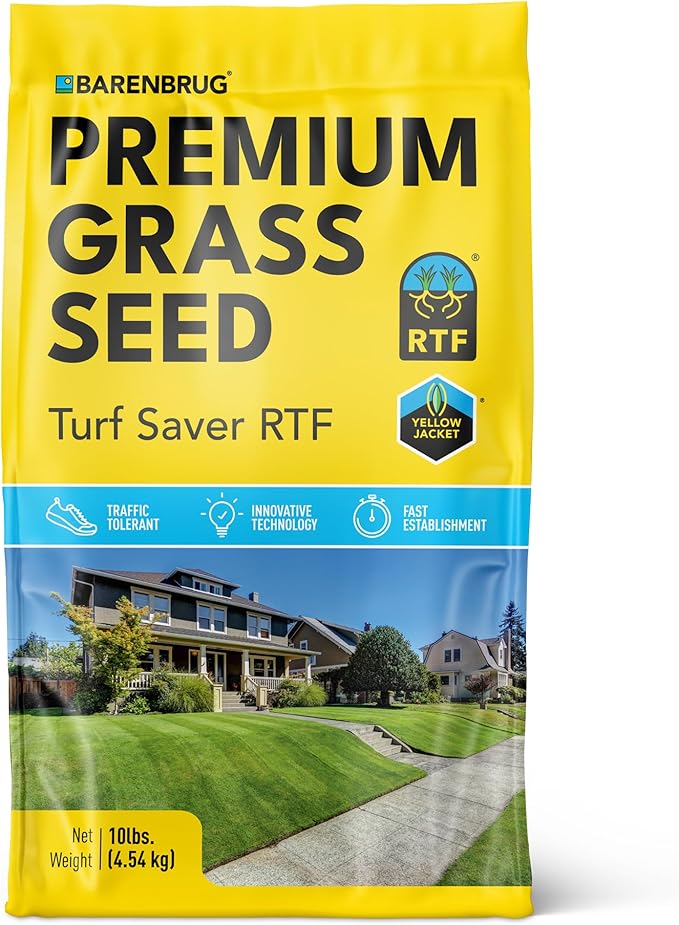
Barenbrug RTF Water Saver
Barenbrug · Cool Season · $40-55 for 5 lbs
Why this seed for New Mexico: For Albuquerque and Santa Fe homeowners who want traditional turf, RTF uses 30% less water than standard fescue. Deep roots penetrate the caliche layer that stops other grasses cold.
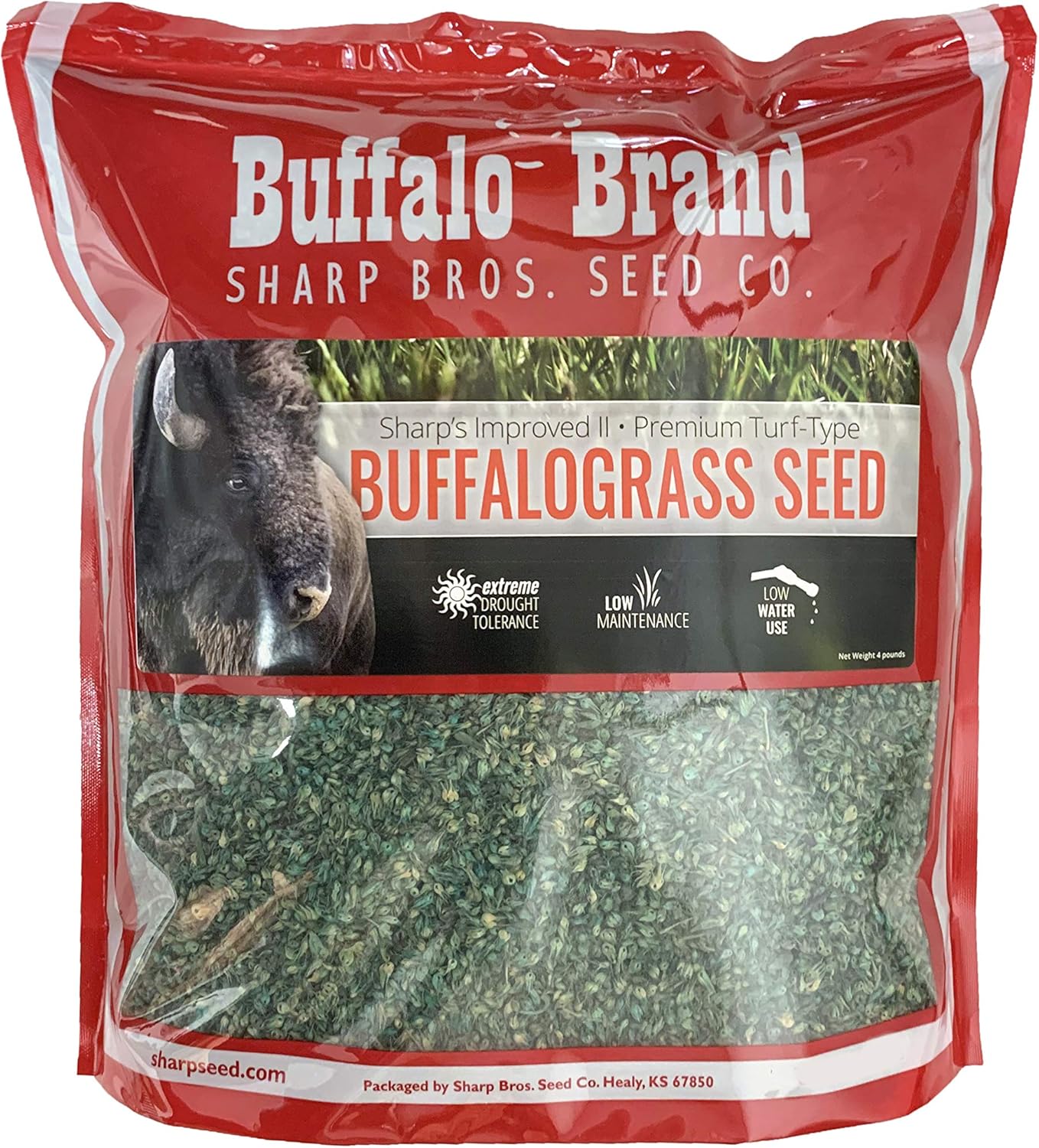
Sharp's Improved II Buffalo Grass
Sharp Bros. Seed Co. · Warm Season · $24 (3 lbs)
Why this seed for New Mexico: Buffalo grass is native to New Mexico and evolved for exactly these conditions — alkaline soil, minimal rainfall, and intense UV. Once established, it survives on rainfall alone in most years.
Best Grass Seed by Region in New Mexico
Albuquerque / Rio Grande Valley
Albuquerque sprawls across the Rio Grande Valley at 5,300 feet, with neighborhoods climbing from the river bottoms up the West Mesa and into the Sandia Mountain foothills. Zone 7a in the valley floor grades to Zone 6a in the foothills above 6,000 feet. Annual rainfall is just 9 to 10 inches, virtually all of it falling during the July-September monsoon season in intense afternoon thunderstorms. The soil is sandy alkaline loam (pH 7.5 to 8.5) underlain by caliche at variable depths — the Northeast Heights and Rio Rancho mesa have particularly thick caliche deposits. Albuquerque Water Utility Authority's tiered pricing structure makes large irrigated lawns increasingly expensive, with rates climbing steeply above baseline allocations. The city's Water Conservation Rebate program offers cash incentives for turf removal and xeriscape conversion. Bermuda grass dominates existing lawns in the valley floor, while buffalo grass and native grass installations are increasingly common in new construction and xeriscape conversions. In the Sandia foothills above 6,000 feet, cool-season grasses become viable with irrigation.
Top picks for this region:
- ✓Probe for caliche depth before any lawn installation — Albuquerque's Northeast Heights and Rio Rancho often have hardpan within 12 inches of the surface that blocks roots and drainage completely
- ✓Water between midnight and 5 AM to minimize evaporation — Albuquerque's daytime relative humidity regularly drops to 10 percent, and midday irrigation loses 40 to 60 percent of applied water before it reaches roots
- ✓Take advantage of ABCWUA's turf removal rebate — reduce your lawn to a functional 500-to-1,000-square-foot play area and xeriscape the rest with native grasses, gravel, and drip-irrigated desert plants
- ✓Apply iron sulfate monthly during summer to combat iron chlorosis caused by the alkaline soil — chelated iron (EDDHA form) is the only formulation that remains available to plants above pH 7.5
Santa Fe / Northern New Mexico
Santa Fe sits at 7,200 feet in the Sangre de Cristo Mountain foothills — a full 2,000 feet higher than Albuquerque, which drops it into Zone 5b to 6a territory with genuine winters, average January lows around 15 degrees, and 30 to 40 inches of annual snowfall. The growing season is short — roughly 150 frost-free days — and the soil is decomposed granite mixed with clay and caliche, extremely low in organic matter, and alkaline (pH 7.5 to 8.0). Annual rainfall is slightly better than Albuquerque at 14 inches, but Santa Fe Water Division charges some of the highest residential water rates in the American West, making lawn irrigation a luxury that directly impacts your monthly budget. Despite the elevation, the aridity is extreme — relative humidity regularly drops below 15 percent, and the intense UV radiation at altitude stresses grass in ways that do not occur at lower elevations. Taos, at 7,000 feet, and Los Alamos, at 7,300 feet, share similar conditions. Cool-season grasses can work in Santa Fe with irrigation, but buffalo grass and native blends are the water-responsible choice.
Top picks for this region:
- ✓Santa Fe's short growing season means fall seeding must happen by September 1 — soil temperatures drop fast at 7,200 feet and seedlings need 6 weeks of growth before first hard freeze in mid-October
- ✓Use water-saver grass varieties that need 30 to 40 percent less irrigation than standard bluegrass — at Santa Fe water rates, the savings on a 2,000-square-foot lawn can exceed $50 per month during summer
- ✓Amend the decomposed granite soil with 3 to 4 inches of compost before any lawn installation — native Santa Fe soil has virtually zero organic matter and cannot support grass without significant amendment
- ✓The intense UV radiation at 7,200 feet bleaches grass faster than at lower elevations — maintain mowing height at 3.5 to 4 inches to protect lower leaf tissue from sun damage and reduce moisture loss
Las Cruces / Southern New Mexico
Las Cruces sits at 3,900 feet in the Mesilla Valley along the Rio Grande, firmly in Zone 7b to 8a territory — the warmest and most arid lawn environment in New Mexico. Summer temperatures exceed 100 degrees regularly from June through August, annual rainfall is a paltry 8 to 9 inches, and the Chihuahuan Desert setting means relative humidity routinely drops into single digits during spring wind events. The soil is alkaline sandy loam (pH 8.0 to 8.5) with extensive caliche deposits, and the irrigation water from the Rio Grande and local wells carries high dissolved salts that accumulate in the soil over time. This is bermuda grass territory — the only turfgrass that genuinely thrives in Las Cruces conditions — but water availability is the overriding concern. Elephant Butte Irrigation District allocations have been cut repeatedly during drought years, and Las Cruces Utilities has implemented permanent watering restrictions. NMSU's main campus is here, and their turfgrass research program provides the most relevant guidance for southern New Mexico lawn management. Buffalo grass is emerging as a lower-water alternative for homeowners who want green ground cover without the irrigation demand of bermuda.
Top picks for this region:
- ✓Bermuda is the only traditional turfgrass that thrives in Las Cruces heat — but even bermuda needs 1 to 1.5 inches of water per week during summer, which translates to real money at Las Cruces water rates
- ✓Leach salts from the root zone monthly during summer by running irrigation for double the normal duration once per month — Las Cruces irrigation water carries 800-plus ppm dissolved salts that accumulate and poison roots
- ✓Buffalo grass is a credible alternative to bermuda in Las Cruces — it survives on half the water, tolerates the alkaline caliche soil, and produces acceptable turf maintained at 3 to 4 inches
- ✓Plant bermuda from seed in May when soil temperatures exceed 70 degrees — Las Cruces soil warms faster than Albuquerque due to lower elevation, giving a longer establishment window through June
Eastern Plains / Clovis-Roswell
Eastern New Mexico — Clovis, Roswell, Portales, and Tucumcari — sits on the Llano Estacado and the Pecos Valley between 3,500 and 4,400 feet. Zone 6b to 7a conditions bring hot summers (upper 90s), cold winters (lows in the teens with occasional dips below zero), and just 15 to 18 inches of annual rainfall — barely enough to sustain native shortgrass prairie without irrigation. The soil is caliche-laden clay loam, strongly alkaline (pH 7.8 to 8.5), and the landscape is flat and exposed to constant wind from the west and southwest. The Ogallala Aquifer underlies this region, providing groundwater for irrigation, but aquifer levels have been declining for decades and the long-term sustainability of pump-dependent lawns is questionable. This is the part of New Mexico where native grasses make the most ecological and economic sense — blue grama and buffalo grass are native to these plains and evolved to thrive in exactly these conditions. Irrigated bermuda lawns exist in Clovis and Roswell but require well water or municipal supply that is becoming increasingly expensive as aquifer levels drop.
Top picks for this region:
- ✓Native grass blends of buffalo grass and blue grama are the most honest lawn choice for eastern New Mexico — they survive on rainfall alone in average years and require mowing only 3 to 4 times per season
- ✓Wind protection is essential for lawn establishment on the eastern plains — newly seeded areas need straw mulch or erosion blankets to prevent seed from blowing away in the constant 20-mph winds
- ✓If maintaining an irrigated lawn, use the Ogallala aquifer water judiciously — the aquifer is declining and every gallon pumped for lawn irrigation is a gallon not available for agriculture or future drinking water
- ✓Apply gypsum at 50 lbs per 1,000 square feet annually to improve the dense alkaline clay — gypsum loosens clay structure and helps flush sodium from the root zone without altering pH
New Mexico Lawn Care Calendar
Spring
March - May
- •In southern New Mexico (Las Cruces, Deming), bermuda begins greening up in late March as soil temperatures hit 60 degrees — scalp dormant bermuda to 0.75 inches to expose stolons to sunlight and promote lateral spread
- •Apply pre-emergent herbicide for summer weeds (spurge, puncturevine, sandbur) in early March in Las Cruces, mid-March in Albuquerque, and late April in Santa Fe — timing depends on soil temperature reaching 55 degrees
- •Begin irrigation in April as soil dries from winter moisture — start with once-weekly deep watering and increase frequency as temperatures climb through May
- •Seed bermuda grass in Las Cruces and Albuquerque in May once soil temperatures are consistently above 70 degrees — the window between spring warm-up and monsoon season is the ideal establishment period
- •In Santa Fe and northern New Mexico, cool-season lawns emerge from dormancy slowly — do not fertilize or mow until consistent growth appears in late April or early May at the earliest
- •Apply slow-release fertilizer to established bermuda in late April (southern NM) or late May (Albuquerque) once the lawn is fully green and actively growing — never fertilize dormant or transitioning turf
Summer
June - September
- •Water deeply but infrequently, delivering 1 to 1.5 inches per week split across 2 to 3 early-morning irrigations — New Mexico's extreme daytime heat and low humidity make midday watering wasteful
- •Reduce irrigation by 30 to 50 percent during monsoon season (typically mid-July through mid-September) and rely on storm moisture — overwatering during monsoon promotes root rot on caliche-perched water tables
- •Maintain bermuda at 1.5 to 2 inches and buffalo grass at 3 to 4 inches — resist the urge to mow shorter in summer; height protects roots from the intense UV radiation at New Mexico's elevation
- •Apply a light nitrogen feeding (0.5 lb N per 1,000 sq ft) in early June, then hold off through monsoon — New Mexico's alkaline soil benefits more from iron supplements than additional nitrogen during heat stress
- •Watch for Bermuda mites in June and July in southern New Mexico — rosetting damage is common in Las Cruces and Albuquerque; treat with abamectin at first sign of witch's broom deformation
- •In Santa Fe, this is the prime growing season for cool-season grasses — fertilize in early June, water consistently through the dry pre-monsoon weeks, and plan fall seeding projects for late August
Fall
October - November
- •In Santa Fe and northern New Mexico, complete all cool-season seeding by September 10 — the short high-elevation growing season leaves no margin for late starts
- •Apply winterizer fertilizer with high potassium to cool-season grasses in Santa Fe and northern areas by mid-October to harden grass for winter dormancy that begins in November
- •Bermuda lawns in Albuquerque and Las Cruces will begin going dormant as nighttime temperatures drop below 50 degrees — reduce irrigation gradually as the grass browns to avoid waterlogging dormant roots
- •Consider winter overseeding bermuda with perennial ryegrass in Las Cruces and Albuquerque for winter color — seed in early October at 10 to 12 lbs per 1,000 square feet, though this doubles winter water costs
- •Blow out irrigation systems by late October in Santa Fe and northern New Mexico, by mid-November in Albuquerque — the first hard freeze can crack pipes and backflow preventers overnight
- •Rake and remove fallen cottonwood and elm leaves promptly — matted leaves on dormant grass trap moisture and promote fungal disease during the mild fall days that precede winter dormancy
Winter
December - February
- •Bermuda lawns are completely dormant and brown from November through March in New Mexico — no irrigation, fertilizer, or maintenance is needed during this period
- •Cool-season lawns in Santa Fe and northern New Mexico are under snow or fully dormant — leave them alone and focus on equipment maintenance and spring planning
- •If overseeded with ryegrass, water dormant bermuda/ryegrass lawns once every 7 to 10 days during the mild Albuquerque and Las Cruces winters to keep the ryegrass alive
- •Plan spring lawn projects during winter downtime — submit soil samples to NMSU Extension for testing and use the results to plan amendment applications before the growing season begins
- •Watch for rabbit and jackrabbit browse on dormant lawns in suburban areas adjacent to open desert — New Mexico's wildlife will graze exposed turf crowns when native forage is scarce in winter
- •Review water budget and consider reducing lawn square footage — winter is the time to design xeriscape conversion projects that can be installed in spring before the next irrigation season begins
New Mexico Lawn Tips You Won't Find on the Seed Bag
Caliche — The Concrete Under Every New Mexico Lawn
Caliche is the single most important soil factor in New Mexico lawn care, and it is everywhere — Albuquerque, Santa Fe, Las Cruces, Roswell, practically every community in the state. This calcium carbonate hardpan forms a cement-like layer at variable depths, typically 6 to 24 inches below the surface, and it is functionally impermeable. Roots cannot penetrate it. Water cannot drain through it. During monsoon storms, water pools on top of the caliche and drowns roots; two days later, the thin soil above it is completely dry. Every lawn installation in New Mexico should begin with a caliche probe — push a steel rod into the soil every 5 to 10 feet across the yard and map where you hit resistance. Thin deposits (under 4 inches) can be fractured with a pickaxe or rented jackhammer. Thick deposits require either mechanical removal or building up — import 8 to 12 inches of quality topsoil-compost mix above the caliche and install it as a raised lawn bed. In Albuquerque's Northeast Heights, caliche is so thick and extensive that many homeowners abandon the in-ground approach entirely and build raised planting areas above the hardpan.
Water Math — What Your Lawn Actually Costs in New Mexico
Every New Mexico lawn owner should sit down with their water bill and a calculator before deciding how much turf to maintain. A bermuda grass lawn needs approximately 1 inch of water per week during the growing season — that is 620 gallons per 1,000 square feet per week, or roughly 2,480 gallons per month for a modest 1,000-square-foot lawn section. In Albuquerque, the Water Utility Authority's tiered pricing charges progressively higher rates as usage increases, and outdoor irrigation is the factor that pushes most households into expensive upper tiers. Santa Fe Water Division charges even more — among the highest residential water rates in the western U.S. — with rates specifically structured to discourage outdoor use. Buffalo grass cuts the water requirement roughly in half compared to bermuda. A fully xeriscaped yard with native grasses and drip-irrigated plants reduces outdoor water use by 70 to 80 percent. Both Albuquerque and Santa Fe offer rebate programs for turf removal — typically $1 to $2 per square foot of grass removed and replaced with water-wise landscaping. Do the math on your own property, because in New Mexico, the lawn you can afford to water is almost certainly smaller than the lawn you currently have.
Buffalo Grass and Blue Grama — The Grasses That Actually Belong Here
Blue grama is the state grass of New Mexico. Buffalo grass is native to the eastern plains from Clovis to Tucumcari and throughout the Great Plains grassland ecosystem. These are not exotic imports or experimental alternatives — they are grasses that evolved over thousands of years to survive exactly the conditions that make traditional lawn care so difficult in New Mexico: alkaline soil, minimal rainfall, extreme temperature swings, intense UV radiation, and relentless wind. Sharp's Improved buffalo grass produces a fine-textured, blue-green turf that looks surprisingly good maintained at 3 to 4 inches. It survives on 12 to 15 inches of annual water — achievable with minimal supplemental irrigation in most of New Mexico. Blue grama, typically included in xeriscape prairie mixes, grows in distinctive bunches that create a natural prairie appearance. Neither grass produces the dense, manicured carpet of a Kentucky bluegrass lawn, and both go dormant and turn golden in fall. But they are honest grasses for this place. NMSU Extension has been promoting native grass lawns for decades, and the homeowners who adopt them typically report that once established, they spend one-tenth the time, money, and water that their bermuda-growing neighbors invest.
Alkaline Soil and Iron Chlorosis — The Yellow Lawn Mystery Explained
The persistent yellowing of New Mexico lawns is almost never a nitrogen deficiency — it is iron chlorosis caused by the state's alkaline soil locking iron into forms that grass roots cannot absorb. At pH values above 7.5, which describes virtually every lawn site in New Mexico, iron becomes chemically bound to calcium and carbonate ions in the soil and is unavailable to plants regardless of how much iron exists in the ground. The symptoms are distinctive: yellowing between leaf veins while the veins themselves remain green, progressing to overall pale yellow in severe cases. Adding more nitrogen fertilizer actually makes chlorosis worse by pushing top growth that the iron-starved plant cannot support. The fix is threefold: apply chelated iron in the EDDHA form (not EDTA or DTPA, which break down above pH 7.0) as a foliar spray for quick green-up; use ammonium sulfate as your nitrogen source to gradually acidify the root zone; and incorporate sulfur at 5 to 10 pounds per 1,000 square feet each spring and fall to slowly lower soil pH over multiple seasons. Iron chlorosis management is not a one-time fix in New Mexico — it is an ongoing maintenance practice as long as you grow grass on alkaline soil.
NMSU Extension — The Desert Lawn Authority
New Mexico State University Cooperative Extension Service in Las Cruces is the definitive resource for lawn care in arid and semi-arid New Mexico conditions. Their turfgrass research program, based at the main NMSU campus, has been testing grass varieties under Chihuahuan Desert conditions for decades and produces recommendations that are directly calibrated to New Mexico's unique combination of alkaline soil, extreme aridity, high elevation, and intense solar radiation. NMSU Extension county offices are located throughout the state — Bernalillo County (Albuquerque), Santa Fe County, and Dona Ana County (Las Cruces) all have staffed offices with agents who understand local conditions. Their soil testing service provides specific amendment recommendations based on New Mexico soil chemistry, and their publication library includes fact sheets on caliche management, buffalo grass establishment, water-wise landscaping, and salt management that are written for New Mexico homeowners rather than generic national audiences. The NMSU Master Gardener program is particularly strong in Albuquerque and Las Cruces, with trained volunteers staffing clinics at farmers' markets and garden centers during the growing season.
The Monsoon Pivot — Adjusting Irrigation When the Rains Finally Come
New Mexico's monsoon season, typically mid-July through mid-September, delivers roughly half of the state's annual rainfall in intense afternoon and evening thunderstorms. In Albuquerque, monsoon storms can drop half an inch to an inch of rain in 30 minutes, then the sun comes out and everything starts drying again immediately. This feast-or-famine moisture pattern requires a complete irrigation adjustment. Before monsoon (April through mid-July), you are the sole water source for your lawn and must irrigate to schedule. Once monsoon establishes, reduce irrigation by 30 to 50 percent and monitor soil moisture daily — overwatering during monsoon is the number-one cause of root rot on caliche-perched soils, because storm water pools on top of the impermeable layer and cannot drain. Smart irrigation controllers with rain sensors are worth every dollar in New Mexico — they automatically skip scheduled watering after monsoon storms and resume when the soil dries. After monsoon ends in mid-September, resume regular irrigation immediately because the transition from daily monsoon moisture to zero rainfall happens abruptly and can desiccate unirrigated turf within a week.
What New Mexico Lawn Pros Actually Plant
Buffalo Grass
Growing Rapidly (Water-Conscious Choice)Buffalo grass is the grass that makes sense in New Mexico, and its adoption is accelerating as water costs climb and xeriscaping culture takes hold. Sharp's Improved buffalo grass produces a fine-textured, blue-green turf that survives on 12 to 15 inches of annual water — roughly half what bermuda demands. It tolerates the alkaline caliche soil without amendment, handles the temperature extremes from 105-degree summer days to zero-degree winter nights, and requires mowing only once every two to three weeks during the growing season. Buffalo grass goes dormant and turns golden-tan from October through April, which is a trade-off that New Mexico homeowners increasingly accept as the price of a water-responsible lawn. Establishment from seed is slow — plant in May and expect full coverage by the following spring — but once established, buffalo grass is essentially self-sustaining with minimal irrigation. It works best in full sun at all New Mexico elevations from Las Cruces to Santa Fe and across the eastern plains where it is native.
Bermuda Grass
Most Common Traditional Lawn GrassBermuda grass remains the most widely planted traditional lawn grass in New Mexico's lower elevations — Albuquerque, Las Cruces, Roswell, and the Rio Grande Valley from Socorro south. It thrives in the extreme heat, tolerates the alkaline soil, and has the aggressive growth habit needed to recover from the stress that New Mexico's climate inflicts on turf. Common bermuda and improved seeded varieties like Yukon Bermuda establish readily from seed planted in May when soil temperatures exceed 70 degrees. The problem is water. Bermuda needs 1 to 1.5 inches of irrigation per week during the growing season — achievable but expensive at New Mexico water rates, and increasingly difficult to justify as drought restrictions tighten. Bermuda also goes completely dormant from November through March, turning straw-brown for five months. The homeowners who maintain bermuda in New Mexico are typically those willing to invest in irrigation infrastructure and monthly water bills that can exceed $150 during peak summer.
Native Grass Blends (Blue Grama and Prairie Mix)
Growing (Xeriscape and Native Landscapes)Native grass blends combining blue grama (New Mexico's state grass), buffalo grass, and other prairie species represent the most ecologically appropriate lawn option for New Mexico. Xeriscape prairie mixes are designed to establish a low-maintenance ground cover that survives on rainfall alone once established — no irrigation, no fertilizer, minimal mowing. Blue grama grows in distinctive clumps with eyelash-like seed heads that give it a distinctive prairie charm. These blends do not produce a traditional manicured lawn appearance — they are naturalistic, prairie-style ground covers that work best on larger properties, HOA common areas, and as transition zones between irrigated lawn areas and native desert landscape. NMSU Extension actively promotes native grass installations, and both Albuquerque and Santa Fe offer rebate incentives for homeowners who replace traditional turf with native plantings. Establishment requires patience — native grasses germinate and fill in slowly over two growing seasons — but the long-term maintenance savings are dramatic.
Tall Fescue
Common (Santa Fe and High Elevation)Tall fescue fills a specific niche in New Mexico — the higher-elevation communities of Santa Fe, Los Alamos, Ruidoso, and Taos where winter cold eliminates bermuda as an option but homeowners still want a traditional green lawn. At 7,000-plus feet, the cool nights, shorter growing season, and Zone 5 to 6 conditions are within tall fescue's comfort zone, and improved water-saver varieties like Barenbrug RTF reduce the irrigation demand compared to Kentucky bluegrass. Tall fescue's deep root system (12 to 18 inches in amended soil) provides better drought tolerance than bluegrass, which matters in Santa Fe where water rates are among the highest in the western U.S. The trade-off is that tall fescue still needs supplemental irrigation — roughly 1 inch per week during summer — and it does not spread via runners, requiring overseeding to maintain density. For Santa Fe homeowners who want a conventional green lawn and are willing to pay the water premium, tall fescue is the most practical cool-season option.
Kentucky Bluegrass
Niche (High Elevation Only)Kentucky bluegrass works in New Mexico only at the highest elevations — Santa Fe, Taos, Angel Fire, Ruidoso — where cool summers and Zone 5 to 6 conditions provide the climate it needs. Midnight Kentucky Bluegrass, with its improved heat tolerance and deep green color, is the cultivar most commonly planted in northern New Mexico's high-elevation communities. Bluegrass produces the dense, self-repairing carpet that most homeowners picture when they think of a lawn, and in Santa Fe's 7,200-foot microclimate with cool summer nights in the 50s, it can look stunning from May through October. The problems are water demand and winter dormancy — bluegrass needs consistent irrigation (1 to 1.5 inches per week) at Santa Fe water rates that make it a genuinely expensive choice, and it goes dormant from November through April at elevation. Below 6,000 feet, bluegrass cannot survive New Mexico summers regardless of irrigation — the combination of heat, aridity, and alkaline soil overwhelms it. This is a grass for a specific New Mexico niche, not a statewide recommendation.
New Mexico Lawn Seeding Tips
Getting the best results from your grass seed in New Mexico comes down to timing, soil prep, and choosing the right variety for your specific conditions. Here are our top tips:
- Test your soil first. A $15 soil test from your New Mexico extension office tells you exact pH and nutrient levels. Most cool-season grasses prefer pH 6.0-7.0.
- Prep the seedbed properly. Rake or aerate to ensure good seed-to-soil contact. This single step improves germination rates more than any seed coating or starter fertilizer.
- Use a starter fertilizer. Apply a phosphorus-rich starter fertilizer at seeding time to promote root development. We recommend Scotts Starter Fertilizer or The Andersons Starter.
- Water correctly. Keep the seedbed consistently moist (not soaked) for the first 2-4 weeks. Light watering 2-3 times per day is better than one heavy soaking.
- Be patient. Kentucky Bluegrass takes 14-28 days to germinate. Tall Fescue is faster at 7-14 days. Don't panic if you don't see results immediately.
- Consider pre-germinating KBG. If you're planting Kentucky Bluegrass, you can cut germination time from 30 days to under a week using the bucket-and-bubble pre-germination method. This is especially valuable for late-season seeding in New Mexico.
Frequently Asked Questions
When is the best time to plant grass seed in New Mexico?
September for cool-season in Santa Fe and mountain areas; late May through June for buffalo grass and native mixes in Albuquerque and southern NM
What type of grass grows best in New Mexico?
New Mexico is best suited for cool-season grasses like Kentucky Bluegrass, Tall Fescue, and Perennial Ryegrass. These grasses thrive in spring and fall, stay green longer into winter, and handle cold temperatures well.
What are the biggest lawn care challenges in New Mexico?
The main challenges for New Mexico lawns include extreme aridity — 8-14 inches rainfall in most areas, caliche hardpan blocks root penetration, highly alkaline soil (ph 7.5-8.5), intense uv at high elevation. Choosing the right grass variety that is adapted to these specific conditions is the single most important decision you can make for your lawn.
Can I grow Kentucky Bluegrass in New Mexico?
Absolutely — Kentucky Bluegrass is one of the best choices for New Mexico. It thrives in the cool-season climate, produces a beautiful dense lawn, and self-repairs through rhizome spread. Midnight KBG is our top pick for the darkest, most premium-looking lawn.
How much does it cost to seed a lawn in New Mexico?
For a typical 5,000 sq ft lawn, expect to spend $150-$400 on seed alone depending on the variety. Premium seeds like Midnight Kentucky Bluegrass or Zenith Zoysia cost more per pound but deliver better results. Add $50-$100 for starter fertilizer and $20-$50 for soil amendments. The seed is the smallest part of your total investment — proper soil prep and consistent watering matter more than saving $50 on cheaper seed.
More Lawn Care Resources
Not in New Mexico?
We have state-specific grass seed guides for all 50 states.