
VT State Guide · Updated March 2026
Best Grass Seed for Vermont
Top grass seeds for Vermont lawns that handle harsh winters, acidic soil, and short growing seasons. Expert picks for Burlington, Montpelier, Brattleboro, and the Green Mountains.
Disclosure: This article contains affiliate links. If you buy through our links, we may earn a commission at no extra cost to you. All opinions are our own. Learn more.
Vermont is a state where lawn care intersects with a deep cultural commitment to the land, and that shapes everything from the grass you choose to how you manage it. The Green Mountain State spans Zones 3b to 5b, from the frigid Northeast Kingdom near the Canadian border to the relatively mild Champlain Valley along the western edge, and the terrain is almost never flat. Rolling hills, rocky glacial soil, dense hardwood forests, and elevation changes within a single property are the norm. Burlington in the Champlain Valley enjoys Zone 5a conditions with a growing season of 140 to 155 days, while Montpelier sits at Zone 4a with 120 to 130 days, and the Northeast Kingdom around St. Johnsbury and Newport drops to Zone 3b with barely 110 days of reliable growth. Your lawn strategy in Vermont depends as much on elevation and aspect as it does on your town's zip code — a south-facing slope in Stowe can be a full zone warmer than the north-facing yard across the street.
Vermont soil tells the story of glacial retreat. When the ice sheets pulled back 12,000 years ago, they left behind a landscape of till, outwash, and lake-bottom clay. In the Champlain Valley, you'll find heavy Vergennes clay deposited on the floor of ancient Lake Vermont — thick, poorly drained stuff that compacts severely and turns to slippery muck in spring. Up in the Green Mountains and the central hill towns, the soil is thin, rocky glacial till sitting on bedrock, sometimes only 6 to 8 inches deep before you hit granite or schist. The Connecticut River Valley on the eastern border has deeper alluvial soil from centuries of river deposition, but it floods regularly. Across most of Vermont, the soil is naturally acidic — pH 5.0 to 6.0 is common — due to the granite and gneiss bedrock, the heavy precipitation of 36 to 42 inches per year leaching calcium from the soil profile, and the decomposition of maple, birch, and conifer leaves and needles that acidify the surface. Regular liming based on soil tests from the UVM Extension soil testing lab is not optional — it's a foundational requirement for Vermont lawn care.
Shade is the inescapable reality of Vermont landscapes. The state is roughly 75 percent forested, the most heavily forested state east of the Mississippi by some measures, and residential properties across Vermont sit within or adjacent to dense hardwood and mixed forests. Sugar maple, red maple, white birch, American beech, and eastern hemlock create canopy conditions that filter out 60 to 80 percent of available sunlight on many lawns. The famous Vermont fall foliage — the sugar maples turning orange and gold that draw millions of tourists — dumps enormous quantities of leaves onto lawns every October, and uncleared leaves smother turf, promote disease, and create the matted conditions that encourage snow mold under winter snow cover. The shade issue has a direct grass selection implication: Kentucky bluegrass needs 4 to 6 hours of direct sun to maintain density, and many Vermont properties don't provide that. Fine fescue blends — creeping red, hard fescue, and chewings fescue — are the practical answer for shaded Vermont lawns, and UVM Extension has long recommended them for properties with less than four hours of direct sunlight.
Vermont has a distinctive lawn care culture that leans heavily toward organic and low-input approaches, and this isn't just lifestyle marketing — it reflects genuine values and practical economics. The state banned cosmetic use of neonicotinoid insecticides, and the broader cultural attitude favors minimal chemical inputs, composting, and working with natural systems rather than against them. Many Vermont homeowners use corn gluten meal as a pre-emergent, apply only organic fertilizers, and tolerate clover and other broadleaf plants in their lawn rather than treating them as weeds. The UVM Extension program reinforces this approach with publications that emphasize soil health, proper pH management, and grass species selection as the foundation of lawn care rather than chemical intervention. This doesn't mean Vermont lawns are neglected — some of the best-maintained lawns in New England sit in Burlington's Hill Section, Shelburne, Stowe, Woodstock, and Manchester. They're maintained differently, with an emphasis on building healthy soil rather than treating symptoms with products.
Snow is Vermont's great lawn insulator, and understanding its role separates experienced Vermont lawn caretakers from newcomers. The state receives 60 to 100 inches of snowfall annually, with the higher elevations in the Green Mountains getting 120 inches or more. This snow cover, when it arrives before the ground freezes deeply, acts as an insulating blanket that keeps soil temperature at 28 to 32F even when air temperatures plummet to -20F. Grass crowns under consistent snow cover are dramatically better protected than exposed crowns on windswept slopes or plowed areas. Snow mold — both gray (Typhula) and pink (Microdochium) — is the trade-off: the same insulating snow creates a moist, cold environment that fungi exploit. Prevention follows the same protocol as everywhere in the snow belt: mow short for the final fall cut, stop nitrogen by mid-September, clear all leaves, and avoid piling snow onto lawn areas. The UVM Plant Diagnostic Clinic can identify snow mold species if you're seeing damage that doesn't match typical patterns, and their recommendations are tailored to Vermont's specific climate conditions.
Quick Picks: Our Top 3 for Vermont
Understanding Vermont's Lawn Climate
Northern New England climate with cold, snowy winters and a moderate growing season. Burlington and the Champlain Valley are the mildest areas at Zone 5a, while the Green Mountains and Northeast Kingdom drop to Zone 3b. Heavy snowfall (60-100+ inches) provides excellent winter insulation for turf. The growing season is 120-150 days. Vermont's culture leans heavily toward organic and natural lawn care — chemical-free approaches are more popular here than in most states. Acidic soil from granite bedrock and conifer forests is universal.
Key Challenges
Best Planting Time for Vermont
Mid-August through early September in Champlain Valley; early-to-mid August in Green Mountains and Northeast Kingdom
Our Top 3 Picks for Vermont
Outsidepride Combat Extreme Northern Zone
Outsidepride · Cool Season · $25-35 for 5 lbs
Why this seed for Vermont: Vermont's Zone 3-5 climate demands cold-hardy seed, and Combat Extreme delivers. The multi-species blend recovers from snowmold damage every spring — a fact of life in the Green Mountains.
Outsidepride Midnight Kentucky Bluegrass Seed
Outsidepride · Cool Season · $35 (5 lbs) – $300 (50 lbs)
Why this seed for Vermont: For the Champlain Valley and southern Vermont, Midnight KBG delivers premium dark green color. Its self-repairing rhizomes fill damage from ice, snowmold, and the spring mud season.
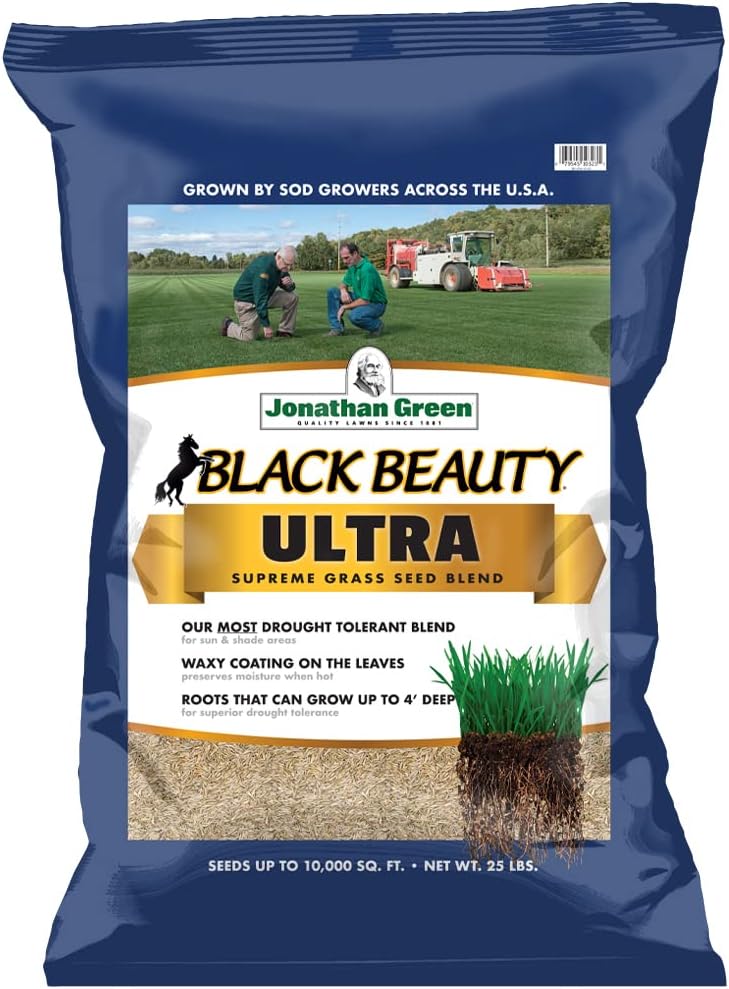
Jonathan Green Black Beauty Ultra
Jonathan Green · Cool Season · $28 (7 lbs) – $105 (25 lbs)
Why this seed for Vermont: Black Beauty Ultra's shade-tolerant tall fescue handles Vermont's dense maple canopy and acidic glacial soil. Deep roots navigate the rocky subsoil that stops shallow-rooted grasses.
Best Grass Seed by Region in Vermont
Burlington / Champlain Valley
The Champlain Valley — Burlington, South Burlington, Shelburne, Williston, Essex, and the communities stretching south through Middlebury to Rutland — is Vermont's mildest lawn-growing region. Zone 5a to 5b conditions along Lake Champlain give a growing season of 140 to 155 days, the longest in the state. The lake effect moderates winter extremes and extends fall warmth, creating conditions more comparable to southern New Hampshire or coastal Maine than to inland Vermont. The soil is predominantly heavy Vergennes clay deposited as lake-bottom sediment in ancient Lake Vermont — fertile but poorly drained, prone to severe compaction, and challenging to work when wet. Burlington's Hill Section, the Old North End, and the established neighborhoods of South Burlington and Shelburne feature mature sugar maple canopy that creates beautiful fall color but dense summer shade. The Burlington area has the most active lawn care community in Vermont, with homeowners who maintain impeccable bluegrass lawns alongside those who embrace the organic, clover-friendly approach that Vermont's culture encourages.
Top picks for this region:
- ✓Vergennes clay is your biggest challenge — core aerate every fall without exception and topdress with compost to build organic matter in the heavy lake-bottom clay that dominates the Champlain Valley
- ✓Lake Champlain moderates your temperatures enough for Kentucky bluegrass to thrive, but shaded properties under mature sugar maples should transition to fine fescue in areas receiving less than four hours of direct sunlight
- ✓Soil pH in the Champlain Valley typically runs 5.5 to 6.5 — lime based on UVM soil test results every two to three years to maintain the 6.5 to 7.0 range that Kentucky bluegrass prefers
- ✓Fall overseeding window runs August 20 through September 15, the most generous window in Vermont — take advantage of the lake effect's extended warmth to establish new grass before winter
Central Vermont / Montpelier-Barre
Central Vermont — Montpelier, Barre, Waterbury, Stowe, and the hill towns of the Green Mountain spine — is Zone 4a to 4b territory with a growing season of 120 to 135 days. Elevation dominates everything: Montpelier at 525 feet elevation is Zone 4b, but properties up the road in Stowe at 700 feet or on the mountain slopes above 1,500 feet drop to Zone 4a or colder. The soil is thin, rocky glacial till over bedrock — you'll hit granite, gneiss, or schist with a shovel at 6 to 12 inches on many properties, and surface rocks are an annual harvest for Vermont gardeners. The soil is acidic, typically pH 5.0 to 5.8, from the granite parent material and the heavy conifer and hardwood leaf litter. Shade is intense under the sugar maple, beech, and hemlock forests that surround most central Vermont properties. Stowe and Waterbury, with their tourism-driven economies, have beautiful maintained properties where lawn care is taken seriously, but the terrain and soil make it harder than the Champlain Valley. Fine fescue blends are the practical workhorse for most central Vermont lawns, with Kentucky bluegrass reserved for the sunnier, flatter properties that have enough topsoil depth.
Top picks for this region:
- ✓Thin, rocky soil is your defining constraint — build topsoil depth by topdressing with compost annually rather than trying to amend the glacial till, which is more rock than soil on many central Vermont properties
- ✓Acidic soil (pH 5.0 to 5.8) requires regular liming — apply pelletized lime at rates indicated by UVM soil tests every one to two years, as the high precipitation continually leaches calcium from the soil profile
- ✓Fine fescue shade blends are the realistic choice for most central Vermont properties — the dense sugar maple and hemlock canopy filters out too much light for Kentucky bluegrass on all but the most open lots
- ✓Stowe and mountain-town homeowners: adjust your calendar for elevation — add one week to every recommended timing for each 500 feet of elevation above the valley floor
Southern Vermont / Brattleboro-Bennington
Southern Vermont — Brattleboro, Bennington, Manchester, and the Connecticut River Valley towns from Springfield south — offers the most diverse growing conditions in the state. The Connecticut River Valley along the eastern border has Zone 5a conditions with deeper alluvial soil from centuries of river deposition, making it some of the best lawn-growing terrain in Vermont. Brattleboro, at the confluence of the Connecticut and West Rivers, benefits from the valley's milder microclimate and richer soil. Bennington on the western side sits in the Valley of Vermont between the Green Mountains and the Taconics at Zone 4b to 5a, with limestone-influenced soil that runs closer to neutral pH — a welcome change from the acidic granite soils elsewhere in the state. Manchester, a tourism and second-home community, has well-maintained properties where lawn care reflects both local pride and the investment of seasonal residents from New York and Boston. The higher elevation hill towns between the valleys — Newfane, Grafton, Londonderry — revert to Zone 4a conditions with thin, acidic, rocky soil typical of central Vermont. Southern Vermont's longer growing season (135 to 150 days in the valleys) gives more flexibility for fall overseeding and spring renovation than anywhere else in the state.
Top picks for this region:
- ✓Connecticut River Valley homeowners in Brattleboro and Springfield: your alluvial soil is the best in Vermont for lawns — take advantage of the deeper, richer topsoil with Kentucky bluegrass blends that would struggle on thin soil elsewhere in the state
- ✓Bennington-area soil has limestone influence that brings pH closer to neutral (6.5 to 7.0) — lime less aggressively here than in central or northern Vermont and let soil tests guide your application rates
- ✓Manchester and the resort communities: second-home lawns that get inconsistent summer attention should lean toward fine fescue blends that tolerate irregular mowing and less water rather than bluegrass that needs weekly care
- ✓Spring flooding along the Connecticut River can deposit silt on valley lawns — let deposits dry completely, rake thin, and overseed damaged areas in late August rather than fighting the river's annual contribution
Vermont Lawn Care Calendar
Spring
March - May
- •Assess snow mold damage as snowmelt reveals the lawn — rake matted gray or pink patches lightly with a leaf rake to lift compressed blades, promote air circulation, and accelerate drying of the turf surface
- •Stay off saturated soil until it firms up — Vermont's clay soils in the Champlain Valley and thin rocky soils in the hills are both easily damaged by foot traffic during the spongy spring thaw period
- •Apply pelletized lime based on fall soil test results once the ground is workable — most Vermont soil needs regular liming to counteract the natural acidity from granite bedrock and acidic leaf litter
- •Apply pre-emergent crabgrass control when soil at 2 inches reaches 55F — typically the last week of April in southern Vermont, first week of May in Burlington, and second week of May in central and northern Vermont
- •Begin mowing when grass reaches 3.5 to 4 inches, usually early to mid-May in the Champlain Valley — set mower to 3 inches and avoid scalping thin, rocky soils where crowns are close to the surface
- •Corn gluten meal can serve as an organic pre-emergent option for homeowners following Vermont's low-input lawn care philosophy — apply at 20 lbs per 1,000 sq ft when forsythia blooms
Summer
June - August
- •Mow at 3 to 3.5 inches throughout summer — Vermont's adequate rainfall (36 to 42 inches annually) and cool nights support steady growth without the drought stress common in the Midwest
- •Water supplementally only during extended dry spells — most Vermont lawns receive adequate rainfall, but thin rocky soils on hillside properties drain quickly and may need irrigation during two-week dry stretches in July
- •Apply a moderate summer fertilizer application (0.5 lb N per 1,000 sq ft) in early June — organic options like Milorganite or composted poultry manure align with Vermont's low-input culture and feed soil biology
- •Spot-treat broadleaf weeds in June when they're actively growing — or embrace clover, violets, and other broadleaf plants as part of a diverse Vermont lawn ecosystem, which many homeowners here consciously choose
- •Scout for Japanese beetle grubs in late July on southern Vermont properties — damage increases as the beetle's range expands northward, and more than 5 grubs per square foot warrants preventive treatment
- •Begin planning fall overseeding by mid-July: order seed, schedule aerator rental for mid-August, and source compost for topdressing
Fall
September - November
- •Execute fall overseeding between August 20 and September 15 in the Champlain Valley and August 15 through September 5 in central and northern Vermont — this is your most important lawn care event of the year
- •Core aerate annually, especially on Champlain Valley clay — compaction from heavy clay and the freeze-thaw cycles of Vermont winters demand consistent mechanical relief to maintain root health
- •Apply winterizer fertilizer in mid to late October with a high-potassium formula — this builds cell wall strength and cold hardiness for the five months of winter ahead
- •Clear all leaves before the first lasting snowfall — Vermont's famous fall foliage dumps massive quantities of sugar maple, birch, and beech leaves that smother turf and promote snow mold if left in place
- •Final mow to 2 to 2.5 inches before dormancy — shorter than summer height, this is critical for snow mold prevention under Vermont's 60 to 100 inches of annual snowfall
- •Apply fall lime application if spring application was skipped — Vermont's acidic soil benefits from liming in either season, and fall applications have all winter to react with the soil
Winter
December - February
- •Avoid piling shoveled snow onto lawn areas — concentrated snow piles create snow mold hot spots and the extended thaw of deep piles delays spring green-up in those areas by weeks
- •Use sand or calcium chloride for walkway traction instead of rock salt — Vermont soil is already acidic and sodium from rock salt further degrades soil structure, especially in the Champlain Valley clay
- •Stay off frozen lawns — foot traffic on frozen grass crowns causes damage that appears as dead footpath patterns at spring green-up
- •Tap season note: if you're tapping sugar maples for syrup (as many Vermonters do), minimize equipment traffic across the lawn during the March thaw when soil is saturated
- •Use the quiet months to review UVM Extension lawn care publications and plan spring amendments based on fall soil test results
- •Order grass seed in January or February — preferred cultivars for Vermont conditions sell out as spring approaches and demand peaks across New England
Vermont Lawn Tips You Won't Find on the Seed Bag
Vermont Soil Is Acidic — Lime Is Not Optional
The single most impactful thing you can do for a Vermont lawn is maintain proper soil pH through regular liming. Vermont's granite and gneiss bedrock, 38 inches of annual precipitation leaching calcium from the soil profile, and decades of acidic leaf litter decomposition from maple, birch, and conifer forests combine to push soil pH to 5.0 to 5.8 across most of the state. Kentucky bluegrass and fine fescues both perform best at pH 6.0 to 7.0, and the difference between a lawn on pH 5.5 soil and one on pH 6.5 soil is dramatic — better nutrient availability, thicker growth, deeper green color, and stronger disease resistance. Get a soil test from UVM Extension's Agricultural and Environmental Testing Lab, apply pelletized lime at the recommended rate (typically 50 to 75 lbs per 1,000 sq ft initially), and retest every two to three years. This one practice transforms more Vermont lawns than any seed, fertilizer, or weed treatment.
Shade Management Is Lawn Management in Vermont
With 75 percent forest cover, most Vermont properties deal with significant shade from sugar maple, beech, hemlock, birch, and spruce. The romantic vision of a Vermont home under a canopy of maples is beautiful but challenging for grass. Less than four hours of direct sunlight means Kentucky bluegrass will thin progressively no matter how much you fertilize or water. The honest answer is fine fescue: creeping red fescue, hard fescue, and chewings fescue all perform well in partial shade and tolerate the acidic, rocky soil that accompanies most Vermont forest settings. Selectively limbing up lower branches to raise the canopy and increase filtered light makes a measurable difference. And in areas with less than two hours of sun, accept that moss, ground covers, or mulch beds are more appropriate than fighting a losing battle with grass seed.
Vermont's Organic Lawn Culture Is Backed by Science, Not Just Sentiment
Vermont's preference for organic and low-input lawn care isn't just a lifestyle choice — it's supported by UVM Extension research showing that building soil health through compost, proper pH, and diverse grass species produces resilient lawns that need fewer interventions over time. Corn gluten meal applied at forsythia bloom provides pre-emergent weed control. Compost topdressing after aeration adds organic matter, beneficial microbes, and slow-release nutrients without synthetic inputs. Clover in the lawn fixes nitrogen from the air, reducing fertilizer needs. Mowing high at 3 to 3.5 inches suppresses weeds naturally. These practices take two to three years to show their full effect — a synthetic program delivers faster cosmetic results — but the long-term trajectory favors the organic approach on Vermont's thin, acidic soil where building biological activity is the most sustainable path to a healthy lawn.
The Leaf Problem Is Bigger Than You Think
Vermont's fall foliage is world-famous, and the same sugar maples that draw leaf-peeper tourists to Stowe, Woodstock, and Manchester drop staggering quantities of leaves onto your lawn every October. A single mature sugar maple can drop 200,000 leaves, and most Vermont properties have multiple large hardwoods. Those leaves, if left in place, mat down under the first lasting snow and create the perfect environment for snow mold fungi — moist, dark, and cold. They also physically smother grass crowns, blocking light and air circulation that turf needs for fall hardening before winter. Clear every leaf before the first lasting snowfall. Mulch-mowing works for light coverage, but when you're dealing with 4 to 6 inches of leaf cover — which is common under a mature maple canopy — you need to rake or blow them off entirely. Compost the leaves for spring garden use, completing the Vermont cycle of waste nothing.
Rocky Soil Is a Permanent Condition — Build On Top of It
Central and northern Vermont homeowners face thin glacial till with rocks at 6 to 12 inches over bedrock. You cannot amend your way to deep topsoil through rocky Vermont hillside — the rocks are there to stay, and new ones surface every spring after frost heave does its annual work. The productive approach is to build soil depth from the top down: topdress with half an inch of compost after fall aeration every year, leave clippings on the lawn to decompose and add organic matter, and gradually create a thicker growing medium above the rock layer. After three to five years of consistent topdressing, you'll have measurably deeper topsoil. Accept that your lawn will never have the same root depth as a lawn on Champlain Valley alluvial soil, and select grass varieties — fine fescues especially — that perform well in shallow, acidic conditions rather than demanding deep, rich loam.
What Vermont Lawn Pros Actually Plant
Kentucky Bluegrass
Most PopularKentucky bluegrass thrives in the Champlain Valley and southern Vermont's river valleys where the growing season exceeds 140 days, soil depth is adequate, and properties receive enough sunlight. Burlington, Shelburne, and the established neighborhoods around Middlebury showcase KBG lawns with the classic dense, dark-green appearance that bluegrass delivers at its best. Improved cultivars like Midnight and Bewitched have sufficient cold hardiness for Vermont's Zone 4a to 5a conditions, and the rhizomatous growth habit means bluegrass self-repairs from snow mold damage and winter thinning. The caveats in Vermont are shade (bluegrass needs 4-plus hours of direct sun), soil acidity (requires consistent liming to maintain pH above 6.0), and soil depth (thin rocky hillside soil doesn't support bluegrass's aggressive root system). On the right site — sunny, adequately deep soil, properly limed — bluegrass is the premium choice. On the wrong site, it's a frustrating money pit.
Fine Fescue Blends
Very PopularFine fescue blends combining creeping red, hard, and chewings fescue are the practical workhorse of Vermont lawn care, especially on the shaded, acidic, rocky properties that characterize most of the state outside the Champlain and Connecticut River valleys. These blends handle shade under Vermont's dense hardwood canopy, tolerate the thin, acidic glacial soil, require less fertilizer and water than bluegrass, and survive the Zone 3b to 4a conditions of the Green Mountains and Northeast Kingdom. UVM Extension specifically recommends fine fescue blends for low-input Vermont lawns, and the state's organic lawn care culture aligns perfectly with a grass that performs well without intensive management. The fine texture and lighter green color is a different aesthetic than bluegrass, but it's an attractive, appropriate look that suits Vermont's landscape character.
Tall Fescue (Turf-Type)
GrowingTurf-type tall fescue is gaining a foothold in southern Vermont and the Champlain Valley, where Zone 5a conditions and longer growing seasons support newer cultivars with improved cold tolerance. Jonathan Green's Black Beauty Ultra performs well in the Brattleboro, Bennington, and Burlington areas, offering deeper root systems that handle dry spells better than straight bluegrass and a dark green color that satisfies the aesthetic expectations of homeowners accustomed to bluegrass. The risk in Vermont is winter survival in the colder zones — a Zone 4a winter in central Vermont with minimal snow cover can thin tall fescue stands significantly. It's best used in the milder southern tier and Champlain Valley or blended with bluegrass rather than planted as a monoculture statewide.
White Clover (in lawn mixes)
Culturally EmbracedWhite clover occupies a unique position in Vermont lawn culture. While most states treat clover as a weed, many Vermont homeowners deliberately include Dutch white clover in their lawn mix or simply welcome the clover that naturalizes on its own. Clover fixes atmospheric nitrogen, reducing fertilizer needs — a significant advantage for organic lawn programs. It stays green during summer dry spells when grass goes dormant, provides pollinator forage, and fills in thin spots in shaded areas where grass struggles. UVM Extension materials acknowledge clover as a beneficial lawn component rather than a problem to be eliminated. The clover-inclusive lawn aligns with Vermont's environmental values and produces a functional, attractive mixed-species ground cover that requires fewer inputs than a pure grass lawn.
Perennial Ryegrass (in blends)
Common in BlendsPerennial ryegrass appears in Vermont lawn seed blends at 10 to 20 percent as a fast-germinating nurse grass that provides quick ground cover while Kentucky bluegrass and fine fescues take 14 to 21 days to establish. Its 5 to 7 day germination time is valuable during Vermont's fall overseeding window, where establishment time before the first hard freeze is limited. Ryegrass also provides good wear tolerance for high-traffic areas and a fine-textured appearance in the blend. Winter hardiness is adequate for Vermont's Zone 4b to 5a areas but marginal in the Northeast Kingdom's Zone 3b, where severe winters can kill ryegrass components. Keep it below 20 percent in any blend to prevent excessive stand loss during a harsh winter from thinning the lawn beyond what the slower-establishing bluegrass and fescue can compensate for.
Vermont Lawn Seeding Tips
Getting the best results from your grass seed in Vermont comes down to timing, soil prep, and choosing the right variety for your specific conditions. Here are our top tips:
- Test your soil first. A $15 soil test from your Vermont extension office tells you exact pH and nutrient levels. Most cool-season grasses prefer pH 6.0-7.0.
- Prep the seedbed properly. Rake or aerate to ensure good seed-to-soil contact. This single step improves germination rates more than any seed coating or starter fertilizer.
- Use a starter fertilizer. Apply a phosphorus-rich starter fertilizer at seeding time to promote root development. We recommend Scotts Starter Fertilizer or The Andersons Starter.
- Water correctly. Keep the seedbed consistently moist (not soaked) for the first 2-4 weeks. Light watering 2-3 times per day is better than one heavy soaking.
- Be patient. Kentucky Bluegrass takes 14-28 days to germinate. Tall Fescue is faster at 7-14 days. Don't panic if you don't see results immediately.
- Consider pre-germinating KBG. If you're planting Kentucky Bluegrass, you can cut germination time from 30 days to under a week using the bucket-and-bubble pre-germination method. This is especially valuable for late-season seeding in Vermont.
Frequently Asked Questions
When is the best time to plant grass seed in Vermont?
Mid-August through early September in Champlain Valley; early-to-mid August in Green Mountains and Northeast Kingdom
What type of grass grows best in Vermont?
Vermont is best suited for cool-season grasses like Kentucky Bluegrass, Tall Fescue, and Perennial Ryegrass. These grasses thrive in spring and fall, stay green longer into winter, and handle cold temperatures well.
What are the biggest lawn care challenges in Vermont?
The main challenges for Vermont lawns include short growing season (120-150 days), very acidic soil requiring regular liming, rocky glacial soil with shallow topsoil, heavy shade from maple and conifer canopy. Choosing the right grass variety that is adapted to these specific conditions is the single most important decision you can make for your lawn.
Can I grow Kentucky Bluegrass in Vermont?
Absolutely — Kentucky Bluegrass is one of the best choices for Vermont. It thrives in the cool-season climate, produces a beautiful dense lawn, and self-repairs through rhizome spread. Midnight KBG is our top pick for the darkest, most premium-looking lawn.
How much does it cost to seed a lawn in Vermont?
For a typical 5,000 sq ft lawn, expect to spend $150-$400 on seed alone depending on the variety. Premium seeds like Midnight Kentucky Bluegrass or Zenith Zoysia cost more per pound but deliver better results. Add $50-$100 for starter fertilizer and $20-$50 for soil amendments. The seed is the smallest part of your total investment — proper soil prep and consistent watering matter more than saving $50 on cheaper seed.
More Lawn Care Resources
Not in Vermont?
We have state-specific grass seed guides for all 50 states.