
MN State Guide · Updated March 2026
Best Grass Seed for Minnesota
Top grass seeds for Minnesota lawns that survive -30F winters, snow mold, and short growing seasons. Expert picks for Minneapolis, St. Paul, Rochester, and Duluth.
Disclosure: This article contains affiliate links. If you buy through our links, we may earn a commission at no extra cost to you. All opinions are our own. Learn more.
Minnesota is the coldest state most people will ever try to grow a lawn in. Zone 3a in the northern third of the state means January lows of -30F are not unusual, and International Falls regularly records temperatures that make Anchorage look mild. Even the Twin Cities metro, solidly Zone 4b, sees stretches where the mercury drops below -20F and the ground freezes three to four feet deep. Your lawn is essentially entombed in frozen soil from late November through mid-April, and the grass crowns endure temperature swings that would kill any warm-season species outright. Every grass variety you plant here needs to survive not just cold, but the kind of brutal, sustained, bone-deep cold that tests the genetic limits of cool-season turf.
The short growing season is the other defining constraint. In the Twin Cities, you're looking at mid-May through mid-September as the realistic window for active lawn growth — roughly 120 days. Head north to Duluth or the Iron Range and that window shrinks to 100 days or less, with frost possible in any month except July. Every week matters. Fall overseeding in Minneapolis needs to happen between August 15 and September 10, because soil temperatures crash below the 50-degree germination threshold by late September. Miss that three-week window and you're waiting until next year. There's no second chance, no extended Indian summer to bail you out. Minnesotans who maintain great lawns understand that timing is everything, and they plan their calendar around soil temperature, not the date on the wall.
Despite these brutal conditions, Minnesotans take enormous pride in their lawns. Drive through Edina, Woodbury, Wayzata, or the established neighborhoods of south Minneapolis in July and you'll see Kentucky bluegrass carpets that rival any suburb in the country. The lawn culture here is quiet but intense — neighbors notice when your lawn greens up first in spring and stays dark green through August. Part of it is Midwestern competitiveness, part of it is that the short season concentrates all the effort into a few critical months. The payoff is that Minnesota's cool summer nights (lows in the 60s even in July) and consistent rainfall create genuinely ideal growing conditions for cool-season grasses during those precious warm months. When the window is open, grass grows beautifully here.
Snow mold is THE defining lawn disease in Minnesota, and if you haven't dealt with it yet, you will. Gray snow mold (Typhula blight) shows up as circular, matted patches of grayish-white mycelium the moment the snow pulls back in spring — sometimes as early as late March in the south, sometimes not until late April up north. Pink snow mold (Microdochium nivale) is the nastier cousin: it doesn't even need snow cover to develop, it's active at temperatures just above freezing, and it attacks the crown of the plant rather than just the leaf tissue, meaning it can actually kill grass rather than just cosmetically damage it. Minnesota's four to five months of snow cover on unfrozen or slowly-freezing ground creates a perfect incubation chamber for both species. Prevention starts in October: mow short for the final cut (2 to 2.5 inches), skip any nitrogen fertilizer after mid-September, clear all leaves, and avoid piling shoveled snow onto lawn areas.
Minnesota is also home to one of the most important turfgrass breeding programs in the world at the University of Minnesota. The U of M's turfgrass science program in St. Paul has been developing cultivars specifically adapted to Zone 3 and Zone 4 extremes for decades. Their research plots at the Turfgrass Research, Outreach, and Education Center endure the same winters your lawn does, which means their cultivar recommendations carry real weight — these aren't suggestions extrapolated from Virginia or Maryland test sites. When U of M extension says a Kentucky bluegrass cultivar performs well in Minnesota, that means it survived -25F soil crown temperatures, recovered from snow mold, and still looked good the following June. Their publications on snow mold prevention, fall fertilization timing, and overseeding protocols should be required reading for any Minnesota homeowner serious about their lawn.
Quick Picks: Our Top 3 for Minnesota
Understanding Minnesota's Lawn Climate
Harsh continental climate with some of the coldest winters in the Lower 48. Minneapolis regularly sees temperatures of -20F to -30F in January, and the ground freezes to a depth of 3-4 feet. Snow cover persists from November through March or April. Summers are surprisingly warm and humid, with temperatures in the 80s and 90s and active thunderstorm season. The growing season is short — roughly mid-May through mid-September — so every week of lawn growth counts. Spring snowmelt can cause significant flooding and waterlogging.
Key Challenges
Best Planting Time for Minnesota
Mid-August through early September (fall) is the narrow ideal window; mid-May through early June for spring seeding after soil warms above 50F
Our Top 3 Picks for Minnesota

Outsidepride Midnight Kentucky Bluegrass Seed
Outsidepride · Cool Season · $35 (5 lbs) – $300 (50 lbs)
Why this seed for Minnesota: Midnight KBG was made for Minnesota. Its cold tolerance is among the best of any KBG variety, handling -30F winters without hesitation. The deep blue-green color stands out beautifully against Minnesota's long green summers.
Outsidepride Creeping Red Fescue
Outsidepride · Cool Season · $35 (5 lbs) – $70 (25 lbs)
Why this seed for Minnesota: For Minnesota yards with heavy shade from pines and hardwoods, Creeping Red Fescue is the go-to. It handles cold, shade, and the sandy glacial soils found across much of central and northern Minnesota.
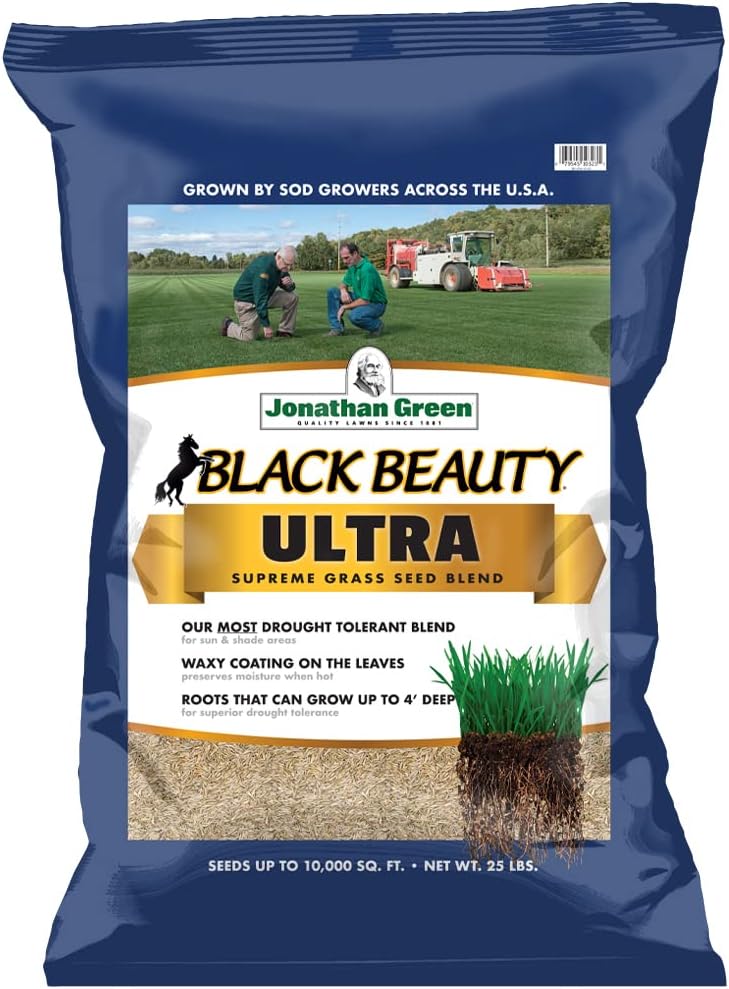
Jonathan Green Black Beauty Ultra
Jonathan Green · Cool Season · $28 (7 lbs) – $105 (25 lbs)
Why this seed for Minnesota: BBU gives Minnesota homeowners the best of both worlds — cold-tolerant KBG genetics plus deep-rooting tall fescue that accesses moisture during July dry spells. Excellent for the Twin Cities metro area.
Best Grass Seed by Region in Minnesota
Twin Cities Metro
The Minneapolis-St. Paul metropolitan area — Hennepin, Ramsey, Dakota, Anoka, Washington, and Scott counties — is Zone 4b and home to the majority of the state's lawn-obsessed homeowners. The soil is predominantly heavy glacial clay deposited by retreating ice sheets, with pH running 7.0 to 7.8 in most neighborhoods. Compaction is severe, especially in post-war suburbs like Bloomington, Richfield, and Brooklyn Park where decades of foot traffic and mowing have compressed the clay into something that sheds water like concrete. The growing season runs from mid-May to early October, the longest in the state, and the Twin Cities reliably get 30-plus inches of annual precipitation. Kentucky bluegrass is king here — the dark, manicured look is the standard in Edina, Plymouth, Woodbury, and Eagan — and the clay soil actually holds moisture and nutrients well once you break through the compaction layer with consistent aeration. Salt damage from winter road and sidewalk deicing is a major issue along boulevards and driveways in every metro suburb.
Top picks for this region:
- ✓Core aerate every fall without exception — Twin Cities glacial clay compacts so aggressively that skipping even one year visibly degrades water infiltration and root depth
- ✓Salt damage along driveways, sidewalks, and boulevards is universal in the metro — flush affected areas with heavy watering in early spring and overseed damaged strips with salt-tolerant fine fescue blends
- ✓Topdress with a half-inch of compost after fall aeration to build organic matter in the heavy clay — this is the single best long-term investment for metro lawns and shows real results after two to three years
- ✓Pre-emergent for crabgrass goes down when lilacs show first leaf-out, typically the last week of April in the metro — soil thermometers at 2 inches reading 55F are more reliable than calendar dates
- ✓Shaded yards under the massive boulevard elms and backyard maples common in south Minneapolis, St. Paul, and first-ring suburbs should transition to fine fescue rather than fighting a losing battle with bluegrass in less than four hours of sun
Southern Minnesota / Rochester
Southern Minnesota from Mankato east through Rochester and down to the Iowa border is the state's agricultural heartland and its best soil for lawns. The deep black prairie loam — sometimes running two to three feet deep before hitting clay subsoil — is among the richest topsoil on the planet, the same dirt that makes this region one of the world's most productive corn and soybean areas. Zone 4a to 4b conditions give a growing season similar to the Twin Cities, though the wide-open prairie landscape means exposure to brutal winter winds that desiccate dormant turf and drive wind chill to life-threatening levels. Rochester, home to the Mayo Clinic, has a lawn culture driven partly by the large number of medical professionals who maintain impeccable properties in neighborhoods like Pill Hill and the southwest residential corridors. Mankato, Owatonna, Albert Lea, and Winona all sit in this rich-soil zone. The challenges here are less about soil quality and more about wind exposure, spring flooding along the Minnesota and Zumbro rivers, and the occasional polar vortex event that drops temperatures to -30F even in this southern tier.
Top picks for this region:
- ✓You're working with some of the best soil in the state — deep prairie loam that holds moisture and nutrients naturally — so focus spending on quality seed rather than soil amendments
- ✓Wind desiccation is the underrated winter killer in open southern Minnesota — windbreak plantings on the north and west sides of your property protect dormant turf from the worst of the winter wind damage
- ✓Spring flooding along the Minnesota, Zumbro, and Blue Earth rivers can deposit silt on lawns — avoid mowing until silt dries, then rake it thin and overseed any smothered areas in late August
- ✓Rochester homeowners: your soil pH often runs 7.5 to 8.0 from the underlying limestone bedrock — use sulfur-based amendments to bring pH down to the 6.5 to 7.0 range that bluegrass prefers, and apply iron sulfate for green-up rather than extra nitrogen
- ✓Tall fescue is increasingly viable in southern Minnesota's Zone 4b areas as newer cultivars offer improved cold tolerance — it handles the heat spikes that occasionally push into the mid-90s better than straight bluegrass
Central Minnesota / St. Cloud
Central Minnesota — the St. Cloud, Brainerd, and Alexandria corridor — is the sandy soil zone where ancient glacial outwash deposited deep layers of sand and gravel across a swath running from roughly Little Falls south to Willmar and east to Cambridge. Zone 4a conditions mean winters are noticeably harsher than the Twin Cities, with the last spring frost often holding into late May and the first fall frost arriving by mid-September. The sandy soil drains almost too well: nutrients leach quickly, moisture disappears within hours of a rain, and maintaining a green lawn through a dry July without irrigation feels like filling a bathtub with no plug. The Brainerd Lakes area — Gull Lake, Mille Lacs, and the chain of resort communities — has significant cabin and vacation property lawns that get inconsistent maintenance. St. Cloud and Sartell have a growing suburban population trying to maintain Twin Cities-caliber lawns on fundamentally different soil. The key here is building organic matter in the sand through years of compost topdressing and accepting that sandy soil requires more frequent, lighter fertilizer applications to compensate for the rapid nutrient leaching.
Top picks for this region:
- ✓Sandy soil is your defining challenge — topdress with compost every fall and consider incorporating peat moss during renovation to increase water-holding capacity in the root zone
- ✓Fertilize with slow-release nitrogen in smaller, more frequent applications (three to four at 0.5 lb N per 1,000 sq ft) rather than two heavy applications that leach straight through sand
- ✓Creeping red fescue is your friend in central Minnesota — it handles sandy, low-fertility soil far better than Kentucky bluegrass and requires less irrigation to stay presentable
- ✓Cabin and lake property owners: if you're only up on weekends, plant a fine fescue blend that tolerates irregular mowing and less water rather than a bluegrass lawn that needs constant attention
- ✓Irrigation is almost mandatory for a quality lawn on sandy central Minnesota soil — if you can't irrigate, lean heavily on drought-adapted fine fescues and accept that the lawn will go dormant in dry stretches rather than fighting it with a garden hose
Northern Minnesota / Duluth / Iron Range
Northern Minnesota — from Duluth and the Iron Range communities of Hibbing, Virginia, and Eveleth up through Bemidji and International Falls — is Zone 3a to 3b territory and the most extreme lawn-growing environment we cover. International Falls, the self-proclaimed Icebox of the Nation, has recorded -40F, and even Duluth regularly sees -25F in January. The growing season is 90 to 110 days, with frost possible into early June and returning by early September. Soil varies wildly: Duluth sits on thin, rocky clay over bedrock along the Lake Superior shore, the Iron Range has acidic sandy soil with iron-stained hardpan, and the Bemidji-area transitions to boggy peat and muck from former wetland areas. Lawn expectations need to be recalibrated up here — a healthy stand of fine fescue that stays green from June through August is a genuine achievement. Kentucky bluegrass can work in Duluth proper where Lake Superior moderates the worst extremes, but inland on the Range and north of Grand Rapids, fine fescues are the practical choice. Snow cover lasts from November through April, making snow mold an annual certainty.
Top picks for this region:
- ✓Fine fescue should be your primary lawn grass in Zone 3 — creeping red fescue and hard fescue survive the extreme cold and short season far more reliably than Kentucky bluegrass as a monoculture
- ✓Your entire fall seeding window is August 1 through August 20 — soil temperatures drop below germination thresholds by early September in most years, so treat mid-August as your absolute deadline
- ✓Fertilize only twice: once in late May or early June after full green-up, and once in late August — the short growing season simply cannot support four or five fertilizer applications
- ✓Duluth homeowners: Lake Superior moderates your temperatures enough that a bluegrass-fescue blend is viable, but hillside properties above the lake face extreme wind exposure that desiccates turf in winter — plant windward areas with the toughest fine fescue blend you can find
- ✓Iron Range soil is often acidic (pH 5.0 to 5.8) from the iron-rich parent material and conifer needle drop — apply pelletized lime based on soil test results to bring pH up to the 6.0 to 6.5 range, which dramatically improves grass vigor
- ✓Snow mold is inevitable with five months of snow cover — focus all prevention effort on the fall: mow to 2 inches for the final cut, apply zero nitrogen after Labor Day, and remove every leaf and debris pile from the lawn before the first lasting snow
Minnesota Lawn Care Calendar
Spring
March - May
- •Assess snow mold damage the moment snowmelt exposes the lawn — look for matted circular patches of gray or pink mycelium and lightly rake affected areas with a leaf rake to lift compressed blades and promote air drying
- •Stay completely off the lawn while soil is saturated from spring thaw — this is especially critical on Twin Cities clay soil, where walking on waterlogged ground creates compaction ruts that persist all season
- •Flush salt-damaged areas along sidewalks, driveways, and boulevards with heavy irrigation once the ground thaws — metro lawns accumulate significant sodium from winter deicing that must be leached out before grass can recover
- •Apply pre-emergent crabgrass preventer when soil temperature at 2 inches reaches 55F for three consecutive days — in the Twin Cities this typically falls in the last week of April to first week of May, and two to three weeks later in central and northern Minnesota
- •Begin mowing when grass reaches 3.5 to 4 inches, typically mid-May in the metro — set your mower to 3 inches and never scalp the lawn, which invites weed invasion and stresses crowns that are still recovering from winter
- •Repair severe snow mold damage and bare patches with overseeding in late May when soil temperatures stabilize above 55F — spring seeding is always second-best to fall in Minnesota, but it's sometimes necessary after a brutal winter
Summer
June - August
- •Mow at 3 to 3.5 inches throughout summer and never remove more than one-third of the blade length per mowing — leave clippings on the lawn to recycle nitrogen back into the soil
- •Water deeply and infrequently: deliver 1 to 1.5 inches per week in one or two early-morning sessions — Minnesota's cool nights and typical summer rainfall mean you'll irrigate less than you think in most years
- •Apply a slow-release summer fertilizer at 0.5 lb N per 1,000 sq ft in early June — avoid any nitrogen applications after July 4th, as summer fertilizing pushes top growth at the expense of root development before the critical fall period
- •Scout for white grubs in late July by pulling back sections of turf in stressed areas — more than 5 grubs per square foot warrants treatment, and European chafer grubs are increasingly common in the Twin Cities metro
- •Spot-treat broadleaf weeds (dandelions, creeping charlie, clover) with selective herbicide in June when weeds are actively growing — fall broadleaf treatment is even more effective but summer catches the worst offenders
- •Begin planning your fall overseeding project by mid-July — order seed early, schedule aerator rental for mid-August, and line up your starter fertilizer so you're ready to execute the moment conditions align
Fall
September - November
- •Execute fall overseeding between August 15 and September 10 in the Twin Cities — this is the single most important lawn care event of the year and the window is non-negotiable in Minnesota's climate
- •Core aerate and overseed simultaneously for the best results — aeration punches through clay compaction and creates perfect seed-to-soil contact in the plugs
- •Apply winterizer fertilizer in mid to late October — use a high-potassium formula (low nitrogen) that strengthens cell walls and cold hardiness rather than pushing late top growth that increases snow mold risk
- •The final mow of the season should bring the lawn down to 2 to 2.5 inches — this is shorter than your summer height and is critical for snow mold prevention, as tall grass mats under snow and creates the moisture conditions fungi thrive in
- •Remove every leaf from the lawn before the first lasting snowfall — matted leaves under snow are the number one controllable factor in snow mold severity
- •Blow out irrigation systems by mid-October in the metro and early October in central and northern Minnesota — a hard freeze that catches water in your lines will crack pipes and fittings, and repair costs far exceed the blowout fee
Winter
December - February
- •Avoid piling shoveled snow onto lawn areas — concentrated snow piles take weeks longer to melt in spring and create severe snow mold hot spots directly under the pile
- •Use sand or kitty litter for traction on sidewalks and driveways instead of rock salt wherever possible — sodium chloride runoff damages the adjacent lawn strip and accumulates in soil over years of repeated application
- •Stay off frozen lawns — foot traffic on frozen grass blades causes crown damage that doesn't become visible until spring green-up reveals dead footpath patterns
- •If you see ice forming on the lawn surface from winter rain or thaw events, do not try to break it — ice crusting suffocates turf and promotes snow mold, but mechanical damage from breaking it is worse than letting it melt naturally
- •Use the dormant season for planning and soil test interpretation — send soil samples to the University of Minnesota Soil Testing Laboratory in the fall and use winter to review results and plan spring amendments
- •Order grass seed in January or February for the best selection — popular cultivars like Midnight Kentucky Bluegrass sell out of preferred lot sizes by late spring
Minnesota Lawn Tips You Won't Find on the Seed Bag
Snow Mold Prevention Is a Fall Activity, Not a Spring One
By the time you see those matted gray or pink patches in March or April, the damage is already done. Everything that determines snow mold severity happens in October and November: your final mowing height, whether you applied nitrogen too late, whether leaves were left on the lawn, and whether snow piled up on warm ground before it froze. Cut your last mow to 2 to 2.5 inches, stop all nitrogen by mid-September, and clear every leaf before the first lasting snow. These three steps reduce snow mold damage by 80% or more according to University of Minnesota extension research. Spring raking repairs the cosmetic damage, but the real battle is won or lost in the fall.
The Spring Patience Game: Do Not Rush Your Lawn
Every spring, Minnesota homeowners get antsy after five months of winter and want to do everything immediately — fertilize, seed, rake, walk on the lawn. Resist all of it until the soil dries out. Walking on saturated clay soil in the Twin Cities suburbs in April creates compaction damage that lasts all season. Fertilizing before the grass has actually started growing just feeds the weeds. Seeding into cold soil below 55F is a waste of seed and money. The rule is: wait until you've mowed twice before doing anything else to the lawn. In most years, that means mid-May in the metro and late May up north. Yes, your neighbor started raking on April 10th. No, that doesn't mean it was a good idea.
Salt Damage Is Quietly Killing Your Boulevard Grass
Minnesota road crews and homeowners spread enormous quantities of rock salt from November through March, and the sodium accumulates in the soil strip between your sidewalk and street — the boulevard — plus the first two to three feet of lawn along any salted driveway or walkway. Sodium destroys soil structure, especially in the Twin Cities clay, making it even more compacted and water-resistant. The grass along these edges turns brown and thins out every year, and most people blame winter cold or snowplow damage. The fix is aggressive spring flushing: once the ground thaws, soak salt-affected areas with 2 to 3 inches of water over a week to leach sodium below the root zone. Then apply gypsum at 40 lbs per 1,000 sq ft to displace remaining sodium from clay particles. Overseed thinned areas with a salt-tolerant fine fescue. And consider switching to calcium chloride or sand for your own sidewalk deicing.
Central Minnesota Sandy Soil Needs a Fundamentally Different Approach
If you're in the St. Cloud, Brainerd, or Alexandria area, you cannot follow the same lawn care program as someone in the Twin Cities and expect results. Your sandy glacial outwash soil drains so fast that a heavy rain is gone from the root zone in hours, taking dissolved fertilizer with it. A single heavy nitrogen application that works fine on metro clay will leach straight through your sand and end up in the groundwater. Switch to slow-release fertilizer formulas and apply smaller amounts more frequently — four applications of 0.5 lb N per 1,000 sq ft rather than two applications of 1 lb. Topdress with compost every fall to gradually build organic matter that acts as a sponge in the sand. Consider peat moss incorporation during renovation projects. And lean into fine fescues, which are adapted to low-fertility sandy conditions and don't demand the constant feeding and watering that Kentucky bluegrass needs to look its best.
Make the Most of Your 120-Day Season
Minnesota's compressed growing season means there's no room for procrastination or do-overs. Every major lawn care task has a tight window, and missing it means waiting a full year. Pre-emergent must go down within a two-week window in late April to early May. Grub treatment in late July to early August. Fall overseeding between mid-August and early September. Winterizer fertilizer in October. Final mow and leaf cleanup before the first lasting snow. Write these dates on your calendar in January and treat them as immovable. The homeowners who maintain the best lawns in Minnesota aren't necessarily more skilled — they're more disciplined about hitting every window on time, every single year.
The Fall Overseeding Window Is Sacred
In states with longer growing seasons, you have six weeks or more for fall overseeding. In Minnesota, you have three weeks — four if the weather cooperates. The target is August 15 through September 10 in the Twin Cities metro, and August 1 through August 25 in northern Minnesota. Soil temperatures are still warm enough for germination, the days are getting shorter which reduces heat stress on seedlings, and there's enough time before the first hard freeze for new grass to establish at least a few mowings' worth of growth. The mistake people make is waiting until Labor Day weekend to start — by then, half your window is already gone. Rent the aerator for mid-August, overseed immediately after, and apply starter fertilizer the same day. Every day of delay costs you establishment time that you cannot get back.
What Minnesota Lawn Pros Actually Plant
Kentucky Bluegrass
Most PopularKentucky bluegrass is the undisputed standard for Minnesota lawns and has been for generations. Its rhizomatous growth habit means it self-repairs from winter damage, filling in snow mold patches and thin spots without reseeding. Improved cultivars like Midnight, Bewitched, and Award have been specifically tested at University of Minnesota research plots and demonstrate excellent cold hardiness through Zone 4 and into Zone 3 with adequate snow cover. The deep blue-green color, dense growth habit, and barefoot-friendly texture make it the grass Minnesotans picture when they think of a great lawn. It does demand consistent moisture and fertility to look its best, but in a state where summer rainfall averages 3 to 4 inches per month, that's achievable for most homeowners.
Creeping Red Fescue
Very PopularCreeping red fescue is the unsung hero of Minnesota lawns, and it deserves far more credit than it gets. It's the most cold-hardy fine fescue, surviving Zone 3 conditions without complaint, and it thrives in the sandy, acidic, low-fertility soils that challenge bluegrass in central and northern Minnesota. It handles shade beautifully — under the oaks and maples that canopy older neighborhoods in Minneapolis, St. Paul, and Duluth, creeping red fescue fills in where bluegrass thins out. It requires less fertilizer, less water, and less mowing than Kentucky bluegrass while maintaining a fine-textured, attractive appearance. The only knock is its lighter green color and less aggressive self-repair compared to bluegrass. Most Minnesota lawn seed mixes blend bluegrass with 20 to 30 percent fine fescue for exactly this reason — the fescue covers the bluegrass's weaknesses.
Tall Fescue (Newer Cultivars)
GrowingTall fescue was historically considered too marginal for Minnesota, but newer turf-type cultivars with improved cold tolerance are gaining a foothold in the southern tier — Rochester, Mankato, and the Twin Cities metro's Zone 4b areas. Jonathan Green's Black Beauty Ultra blend includes cultivars bred for darker color and better winter survival, and Scotts Thick'R Lawn Tall Fescue provides an easy overseeding option. Tall fescue's deep root system gives it genuine drought advantages over bluegrass, and its bunch-type growth creates a dense, wear-resistant turf. The risk is that a severe Zone 3 or 4a winter — the kind that drops to -25F or below with minimal snow cover — can thin out tall fescue stands. It's best used in the southern third of the state or as a component in a diverse blend rather than a monoculture.
Fine Fescue Blends (Legacy, Hard, Chewings)
PopularDedicated fine fescue blends — combining creeping red, hard fescue, chewings fescue, and sometimes sheep fescue — are the go-to choice for low-maintenance Minnesota lawns, shaded properties, and cabin or lake home yards that don't get weekly attention. These blends thrive in the sandy, acidic soils of central Minnesota's Brainerd Lakes area and survive the extreme cold of northern Minnesota better than any other option. They need minimal fertilizer (two applications per season is plenty), tolerate irregular mowing, and stay green with far less water than bluegrass. The University of Minnesota's low-input turfgrass research has specifically endorsed fine fescue blends for homeowners who want an attractive lawn without the time and cost commitment of a bluegrass program.
Perennial Ryegrass (in blends)
Common in BlendsPerennial ryegrass is never used as a standalone lawn grass in Minnesota — its winter hardiness is simply too marginal for Zone 3 and 4 conditions, and a bad winter will kill large swaths of a ryegrass-dominant lawn. However, it's a common and useful component at 10 to 15 percent in bluegrass blends because it germinates in 5 to 7 days compared to bluegrass's 14 to 21 days. That fast germination provides quick ground cover while the slower bluegrass establishes, which is especially valuable during Minnesota's compressed fall seeding window where every day of establishment time counts. Just make sure any blend you buy keeps ryegrass below 20 percent — too much ryegrass in the mix becomes a liability when February hits -25F.
Minnesota Lawn Seeding Tips
Getting the best results from your grass seed in Minnesota comes down to timing, soil prep, and choosing the right variety for your specific conditions. Here are our top tips:
- Test your soil first. A $15 soil test from your Minnesota extension office tells you exact pH and nutrient levels. Most cool-season grasses prefer pH 6.0-7.0.
- Prep the seedbed properly. Rake or aerate to ensure good seed-to-soil contact. This single step improves germination rates more than any seed coating or starter fertilizer.
- Use a starter fertilizer. Apply a phosphorus-rich starter fertilizer at seeding time to promote root development. We recommend Scotts Starter Fertilizer or The Andersons Starter.
- Water correctly. Keep the seedbed consistently moist (not soaked) for the first 2-4 weeks. Light watering 2-3 times per day is better than one heavy soaking.
- Be patient. Kentucky Bluegrass takes 14-28 days to germinate. Tall Fescue is faster at 7-14 days. Don't panic if you don't see results immediately.
- Consider pre-germinating KBG. If you're planting Kentucky Bluegrass, you can cut germination time from 30 days to under a week using the bucket-and-bubble pre-germination method. This is especially valuable for late-season seeding in Minnesota.
Frequently Asked Questions
When is the best time to plant grass seed in Minnesota?
Mid-August through early September (fall) is the narrow ideal window; mid-May through early June for spring seeding after soil warms above 50F
What type of grass grows best in Minnesota?
Minnesota is best suited for cool-season grasses like Kentucky Bluegrass, Tall Fescue, and Perennial Ryegrass. These grasses thrive in spring and fall, stay green longer into winter, and handle cold temperatures well.
What are the biggest lawn care challenges in Minnesota?
The main challenges for Minnesota lawns include extreme cold (zone 3 winters), short growing season, snow mold (gray and pink), spring flooding and waterlogging. Choosing the right grass variety that is adapted to these specific conditions is the single most important decision you can make for your lawn.
Can I grow Kentucky Bluegrass in Minnesota?
Absolutely — Kentucky Bluegrass is one of the best choices for Minnesota. It thrives in the cool-season climate, produces a beautiful dense lawn, and self-repairs through rhizome spread. Midnight KBG is our top pick for the darkest, most premium-looking lawn.
How much does it cost to seed a lawn in Minnesota?
For a typical 5,000 sq ft lawn, expect to spend $150-$400 on seed alone depending on the variety. Premium seeds like Midnight Kentucky Bluegrass or Zenith Zoysia cost more per pound but deliver better results. Add $50-$100 for starter fertilizer and $20-$50 for soil amendments. The seed is the smallest part of your total investment — proper soil prep and consistent watering matter more than saving $50 on cheaper seed.
More Lawn Care Resources
Not in Minnesota?
We have state-specific grass seed guides for all 50 states.