
AL State Guide · Updated March 2026
Best Grass Seed for Alabama
The best grass seeds for Alabama lawns that thrive in heat, humidity, and red clay. Expert picks for Birmingham, Huntsville, Montgomery, Mobile, and Auburn.
Disclosure: This article contains affiliate links. If you buy through our links, we may earn a commission at no extra cost to you. All opinions are our own. Learn more.
Alabama is one of those states where the lawn care advice you get depends entirely on which part of the state the person giving it grew up in. A homeowner in Huntsville dealing with rocky limestone soil and Zone 7a winters has almost nothing in common with someone in Mobile managing sandy Gulf Coast soil and Zone 8b heat that barely qualifies as having a winter. Between those two extremes, Birmingham sits on top of some of the most challenging red clay in the Southeast, Montgomery straddles the boundary between Piedmont and Coastal Plain, and the Black Belt — that arc of dark, heavy prairie clay running from Selma through Demopolis to the Mississippi border — presents soil conditions unlike anything else in the state. Alabama's lawn care reality is deeply regional, and the Alabama Cooperative Extension System (run jointly through Auburn University and Alabama A&M) is your best resource for county-specific advice that actually accounts for your dirt, your climate zone, and your local pest pressure.
Bermuda grass dominates Alabama from border to border, and for good reason. It handles the state's long, punishing summers (Birmingham averages 90-plus days above 90 degrees; Mobile pushes past 100 on the heat index regularly), spreads aggressively to fill bare spots and repair damage, and creates the dense, dark green turf that Alabama homeowners expect. Drive through any new subdivision in Hoover, Madison, Prattville, or Daphne and you'll see bermuda sod on every lot — builders install it because it's cheap, establishes fast, and gives the yard an instant finished look for closing day. But builder-grade common bermuda is the lawn equivalent of builder-grade carpet: it works, but improved seeded varieties offer noticeably better color, density, drought tolerance, and cold hardiness. For a state that spans Zones 7a through 8b, that cold hardiness matters more than most people realize — Huntsville got down to 2 degrees during the 2014 polar vortex, and a lot of common bermuda didn't come back.
The transition zone question is real in North Alabama. Huntsville, Decatur, Florence, and the Tennessee Valley sit in Zone 7a to 7b, where winters are cold enough that warm-season grasses go dormant for four to five months and cool-season grasses are genuinely viable. Tall fescue lawns exist throughout the Huntsville area, and some of the best-looking year-round lawns in the state are fescue blends in Hampton Cove, Jones Valley, and the older neighborhoods near Monte Sano. But North Alabama summers still hit the mid-90s with crushing humidity, and fescue takes real punishment from late June through August. You need irrigation, 4-inch mowing height, and the willingness to overseed every September to keep fescue alive long-term. Most lawn services in Huntsville default to bermuda because it's simpler, but the fescue camp is loyal and vocal — they'll tell you that winter brown bermuda is a depressing sight from November through March, and they're not wrong.
Alabama's pest pressure is among the worst in the country, and if you've never dealt with a fall armyworm invasion, fire ant mound field, or chinch bug outbreak, you will. Armyworms migrate north from the Gulf Coast every late summer, typically arriving in Central and North Alabama between late August and October, and they can strip a bermuda lawn bare in 48 hours. Fire ants are in all 67 counties and there is no eradication — only management through systematic baiting. Chinch bugs devastate centipede and St. Augustine lawns across the southern half of the state during hot, dry stretches. Mole crickets tunnel through the sandy soils from Mobile to Dothan. The Auburn University Turfgrass Research Unit has published detailed integrated pest management guides for every major Alabama lawn pest, and your county Extension agent can identify what's eating your grass from a photo or a sample. Use these resources — they're funded by your tax dollars and staffed by people who genuinely know Alabama turf.
One more Alabama reality that shapes lawn decisions: water. The northern half of the state gets 54 to 56 inches of rain annually, but it comes unevenly — spring deluges followed by July-August dry stretches that can go three to four weeks without meaningful rain. The southern half near the Gulf gets even more total rainfall (Mobile averages 66 inches, making it one of the wettest cities in the U.S.), but summer drought spells still happen. Municipal water restrictions during drought are increasingly common in Birmingham, Huntsville, and Montgomery, which means your grass selection needs to account for surviving without irrigation for weeks at a time. This is where bermuda's deep root system pays off — established bermuda can go dormant during drought and recover when rain returns, while centipede and zoysia suffer permanent damage from extended dry periods. If you don't have irrigation and can't count on regular watering, bermuda is the safe choice across most of Alabama.
Quick Picks: Our Top 3 for Alabama
Understanding Alabama's Lawn Climate
Humid subtropical with long, hot summers and short, mild winters. Northern Alabama around Huntsville sits at the southern edge of the transition zone with occasional hard freezes, while the Gulf Coast around Mobile has an almost tropical climate with 65+ inches of rain per year. Birmingham and the central part of the state experience intense summer heat with temperatures above 95F and humidity that makes it feel over 105F. The growing season is long — 220-280 days depending on latitude — giving warm-season grasses ample time to establish and thrive.
Key Challenges
Best Planting Time for Alabama
Late April through June for warm-season grasses; avoid planting after August as fall armyworm season begins
Our Top 3 Picks for Alabama
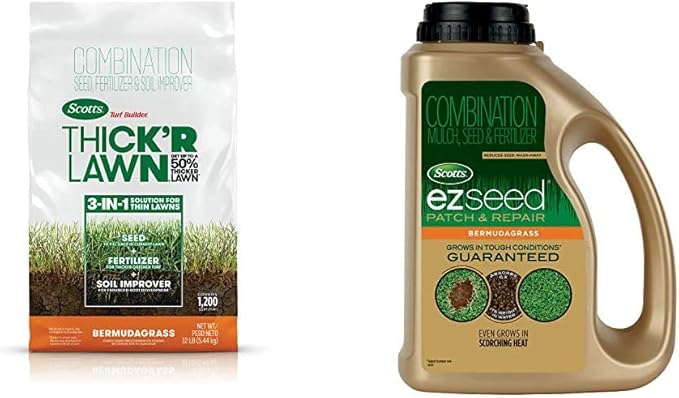
Scotts Turf Builder Bermudagrass
Scotts · Warm Season · $30-45 for 10 lbs
Why this seed for Alabama: Bermuda dominates Alabama lawns for good reason — it thrives in the long, hot summers and recovers from the foot traffic, drought, and pest pressure that's constant from April through October.
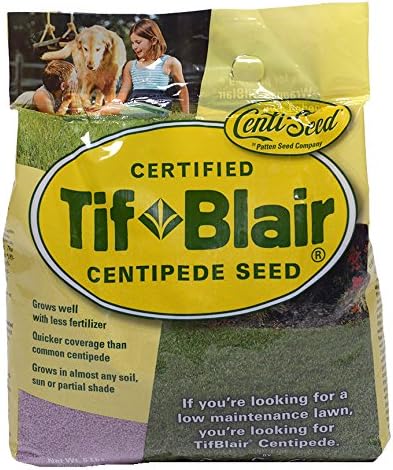
TifBlair Centipede Grass Seed
Patten Seed Company · Warm Season · $20 (1 lb) – $238 (5 lbs)
Why this seed for Alabama: Developed at Auburn University's doorstep, TifBlair centipede is made for Alabama. It thrives in acidic soil, needs almost no fertilizer, and creates a beautiful apple-green lawn with minimal effort.
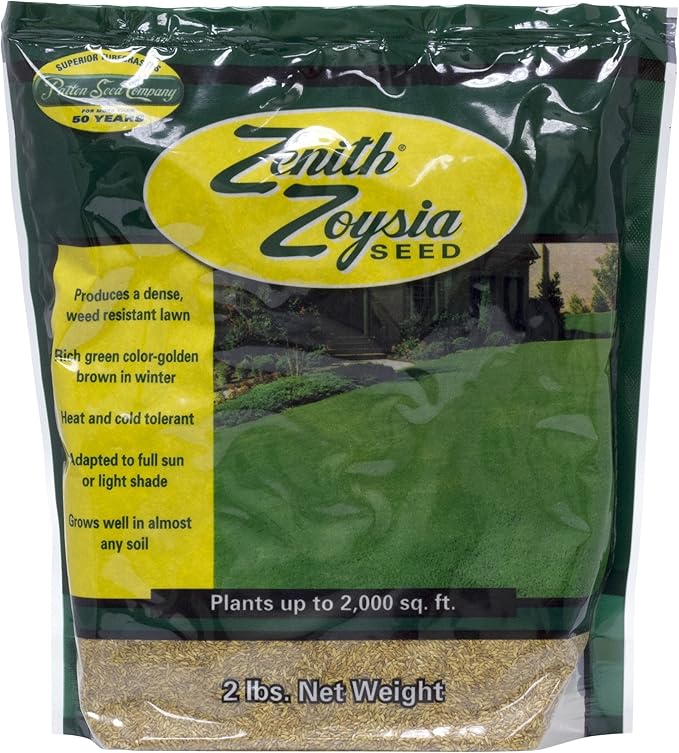
Pennington Zenith Zoysia Grass Seed & Mulch
Pennington · Warm Season · $25-35 for 2 lbs
Why this seed for Alabama: Zoysia is gaining popularity across Alabama as homeowners discover its thick, weed-choking carpet that handles shade better than bermuda. Cold-hardy enough for Huntsville's occasional hard freezes.
Best Grass Seed by Region in Alabama
North Alabama / Tennessee Valley
North Alabama — Huntsville, Decatur, Florence, Athens, and the communities stretching across the Tennessee Valley to the Georgia and Tennessee borders — is Zone 7a to 7b, making it Alabama's transition zone. The Tennessee Valley floor is underlain by limestone, producing alkaline clay soil (pH 7.0 to 7.5 in many areas) that's a sharp contrast to the acidic soils elsewhere in the state. The surrounding highlands and ridges — Monte Sano, Lookout Mountain, Sand Mountain — have rockier, thinner soil at higher elevations. Huntsville's rapid growth has pushed subdivisions into former cotton fields and up the sides of limestone ridges, creating wildly variable soil conditions within the same neighborhood. Winters are genuine here: lows in the teens happen most years, and single digits aren't unusual during polar vortex events. Bermuda remains dominant in newer construction, but tall fescue is a legitimate option for homeowners who value year-round green and are willing to invest in maintenance. Zoysia splits the difference as a warm-season grass with better cold tolerance and shade performance.
Top picks for this region:
- ✓Tennessee Valley limestone soil is often alkaline (pH 7.0+), which is the opposite of most Alabama soil — do NOT apply lime without an Auburn Extension soil test first, as raising already-alkaline pH causes iron chlorosis and nutrient lockout
- ✓For fescue lawns in Huntsville, overseed every September without exception and raise mowing to 4 inches from June through August — summer attrition claims 15 to 20% of the stand annually even with irrigation
- ✓Cold-hardy bermuda varieties are essential above the Tennessee River — standard common bermuda suffers winterkill in Zone 7a, and improved seeded varieties with cold tolerance bred into the genetics are worth the premium
- ✓Pre-emergent timing for the Tennessee Valley is typically mid-March when forsythia blooms along the Parkway — two to three weeks later than Birmingham and a month later than Mobile
Birmingham Metro / Central Piedmont
The Birmingham metro — including Hoover, Vestavia Hills, Homewood, Mountain Brook, Trussville, Alabaster, and Pelham — sits on the southern edge of the Appalachian foothills in Zone 7b to 8a. The soil is the same infamous red clay that plagues Atlanta, compacted to near-concrete density on construction sites across Shelby, Jefferson, and St. Clair counties. Birmingham's topography is defined by ridges (Red Mountain, Shades Mountain, Double Oak Mountain) and valleys, creating microclimates where hilltop lots bake in full sun while valley properties collect cold air and stay shaded longer. This is the heart of Alabama's bermuda belt for residential lawns, with zoysia gaining rapidly in the heavily wooded older neighborhoods of Mountain Brook, Crestline, and Forest Park where mature hardwoods create 60% canopy cover. The metro's growth southward into Shelby County (Chelsea, Helena, Calera) has created thousands of new lots on raw red clay subsoil — the same story as every other Piedmont boom market.
Top picks for this region:
- ✓Core aerate in May and September — Birmingham red clay compacts so severely that root growth stalls below 2 inches, and you need both passes annually to stay ahead of the problem
- ✓Apply pelletized lime at 40 to 50 lbs per 1,000 sq ft annually until your Auburn soil test shows pH above 6.0 — most untreated Birmingham red clay runs 5.0 to 5.5
- ✓In Mountain Brook, Crestline, and Homewood's older neighborhoods, choose Zenith zoysia over bermuda — the mature hardwood canopy creates too much shade for bermuda to maintain density
- ✓Red Mountain's iron-rich soil stains everything it touches and drains poorly when compacted — add gypsum at 40 lbs per 1,000 sq ft to improve clay structure without changing pH
Black Belt / West Central Alabama
The Black Belt — a crescent of dark, heavy prairie clay stretching from Selma and Dallas County through Demopolis, Livingston, and into Mississippi — is one of the most distinctive soil regions in the United States. Named for its dark-colored alkaline clay (not a demographic reference originally, though the two overlap historically), Black Belt soil is extraordinarily fertile but almost impossible to work when wet and rock-hard when dry. The clay shrinks and cracks in summer drought, sometimes opening gaps 2 to 3 inches wide, then swells shut when saturated, heaving anything in its path. Bermuda is the default choice here because it's one of the few grasses that can handle the shrink-swell cycle, the alkaline pH (often 7.0 to 8.0), and the summer heat. Centipede fails in the Black Belt because it cannot tolerate alkaline soil. Zoysia performs well but establishes slowly in the heavy clay. Tuscaloosa sits on the northern edge of this region and shares some of the clay challenges, though the university area has more varied soil types.
Top picks for this region:
- ✓Black Belt prairie clay is alkaline (pH 7.0 to 8.0) — do NOT apply lime, and do NOT plant centipede, which requires acidic soil and will yellow and die in alkaline conditions
- ✓The shrink-swell clay cracks badly in summer drought — bermuda's deep root system and aggressive lateral spread make it the best grass for handling this soil movement without tearing apart
- ✓Improve Black Belt clay drainage by core aerating in late spring and topdressing with coarse sand and compost — this is a long-term project, but it gradually opens up the dense clay structure
- ✓Fertilize bermuda on Black Belt soil based on Auburn soil test results only — the clay is naturally fertile and may need less nitrogen than you'd apply on sandy or Piedmont soils
Wiregrass / Southeast Alabama
The Wiregrass region — Dothan, Enterprise, Ozark, Troy, and the peanut-farming communities of Houston, Dale, and Henry counties — sits on the inner Coastal Plain in Zone 8a to 8b. Sandy loam soil dominates, a welcome change from the clay regions further north, though the sand drains so fast that nutrients leach out quickly and supplemental fertilization is more critical. Named for the native wiregrass that once covered the longleaf pine ecosystem, this region has long, hot summers and mild winters with only occasional hard freezes. Bermuda is the dominant lawn grass in newer construction, while centipede fills the low-maintenance role on established lots and rural properties. The Wiregrass has a strong agricultural extension presence through Auburn's research farms in the area, and local feed-and-seed stores carry regionally appropriate grass seed varieties. Dothan's position near the Florida border means the growing season is among the longest in Alabama — bermuda dormancy lasts barely three months in mild winters.
Top picks for this region:
- ✓Sandy Wiregrass soil needs split fertilizer applications — three light nitrogen passes (April, June, August) instead of two heavy ones, because rain flushes nutrients through sand before roots can absorb them
- ✓Centipede thrives in the Wiregrass because the sandy, acidic soil matches its natural preference — resist the urge to over-fertilize, and never apply more than 1 to 2 lbs of nitrogen per 1,000 sq ft per year
- ✓Mole crickets are the signature turf pest of sandy Wiregrass soils — scout for spongy turf and raised tunneling ridges in May and June, and treat with bifenthrin or beneficial nematodes
- ✓Peanut farmers in the Wiregrass know soil chemistry — if you're on former agricultural land, get an Auburn soil test because residual fertilizer and pH amendments from decades of row crops affect what your lawn needs
Gulf Coast / Mobile-Baldwin
Alabama's Gulf Coast — Mobile, Daphne, Fairhope, Gulf Shores, Orange Beach, and Spanish Fort — is Zone 8b to 9a, the warmest and wettest region in the state. Mobile averages 66 inches of rain annually, making it one of the wettest cities in America, yet summer drought spells still stress lawns because the sandy soil drains instantly. Salt exposure is a factor for properties along Mobile Bay and on the beaches of Baldwin County, and hurricane storm surge can salinate lawns well inland. The soil is predominantly sandy, often acidic, and low in organic matter. Centipede is the traditional residential grass in older Mobile neighborhoods — its low-maintenance nature suits the laid-back Gulf Coast lifestyle. Bermuda dominates newer subdivisions in Eastern Shore communities (Daphne, Fairhope, Spanish Fort) and the beach developments. St. Augustine (sod only) fills heavy shade niches under the massive live oaks that define Mobile's historic avenues. Bermuda dormancy is minimal — some winters in Gulf Shores it barely goes dormant at all.
Top picks for this region:
- ✓Mobile's extreme rainfall means drainage is everything — if your yard holds standing water after storms, address grading and drainage before investing in grass seed, because no grass survives chronic waterlogging
- ✓Salt spray on Gulf Shores, Orange Beach, and Fort Morgan eliminates centipede from oceanfront lots — bermuda is the only seeded grass with meaningful salt tolerance for beachfront and bay-adjacent properties
- ✓After hurricane flooding, flush your lawn with fresh water daily for a week to leach salt from the sandy soil profile — the faster you dilute, the less permanent root damage
- ✓Irrigate Gulf Coast sandy soil in shorter, more frequent cycles — 15 minutes three times per week beats 45 minutes once, because the sand simply cannot hold that volume of water in a single pass
- ✓Pre-emergent timing on the Gulf Coast is the earliest in the state — late January to mid-February in most years, when soil temperatures hit 55 degrees a full month before Birmingham
Alabama Lawn Care Calendar
Spring
March - May
- •Apply pre-emergent herbicide when soil temperatures reach 55 degrees at 4-inch depth — on the Gulf Coast that's late January to mid-February, in Montgomery and the Black Belt early-to-mid March, in Birmingham mid-March, and in Huntsville late March to early April
- •Scalp bermuda lawns to 0.5 to 1 inch once you see 50% green-up — in Mobile that's usually late February to early March, in Birmingham mid-to-late March, in Huntsville early-to-mid April
- •Submit a soil test through the Auburn University Soil Testing Lab (around $10) or the Alabama A&M Extension — this is the most important single step for any Alabama lawn, especially on untested clay where pH and nutrient levels are almost always off
- •Apply pelletized lime based on soil test results — Birmingham red clay typically needs heavy liming, while Black Belt prairie soil is already alkaline and needs none, and Tennessee Valley limestone soil may already be too high
- •Seed bermuda, centipede, or zoysia once soil temperatures hold above 65 degrees for two consecutive weeks — that's mid-April on the Gulf Coast, early May in the Midlands, mid-to-late May in North Alabama
- •Begin regular mowing once warm-season grass is actively growing — bermuda at 1 to 2 inches, centipede at 1.5 to 2 inches, zoysia at 1 to 2.5 inches
Summer
June - August
- •Apply balanced fertilizer in early June — bermuda gets 16-4-8 or similar at 1 lb nitrogen per 1,000 sq ft, centipede gets a single light application of 15-0-15 and nothing more for the season
- •Water 1 to 1.25 inches per week in one or two early-morning sessions — subtract rainfall from your irrigation target, as Alabama's afternoon thunderstorms often provide significant but unpredictable weekly totals
- •Scout for armyworms weekly from late July through October — watch for birds feeding intensely on your lawn, ragged grass blades with windowpane damage, and use the soap flush test (2 tablespoons dish soap per gallon of water) to confirm
- •Monitor for chinch bugs in centipede lawns during hot dry stretches — look for irregular brown patches expanding from driveways and sidewalks where radiated heat concentrates the insects
- •Sharpen mower blades monthly — dull cuts in Alabama's humidity create disease entry points that lead to dollar spot, brown patch, and other fungal problems
- •Do not fertilize centipede after July 1 — late nitrogen produces soft growth vulnerable to cold damage at the first fall frost
Fall
September - November
- •Apply fall pre-emergent in early September to prevent winter annual weeds (Poa annua, henbit, chickweed) from establishing in dormant warm-season turf
- •Core aerate bermuda and zoysia lawns in September while grass is still actively growing and has 4 to 6 weeks to recover before dormancy — this is critical on Birmingham and Piedmont red clay
- •For North Alabama fescue lawns, overseed in mid-September through early October when soil temperatures are 60 to 70 degrees — the window is tight and must not be missed
- •Apply winterizer fertilizer with high potassium (5-5-25 or 10-5-15) in mid-to-late October to harden warm-season grass before dormancy
- •Broadcast fire ant bait across the entire lawn in October — fall baiting when ants are actively foraging is the single most effective treatment timing according to Auburn Extension research
- •Continue mowing at normal height until growth stops — do not scalp before dormancy, as the leaf blade insulates the crown from freeze damage
Winter
December - February
- •Leave dormant warm-season grass alone — no fertilizer, no herbicides on dormant turf, and minimize foot traffic on frozen grass that can crush dormant crowns
- •Spot-treat actively growing winter weeds (henbit, chickweed, annual bluegrass) with post-emergent herbicide while the lawn is dormant and weeds are exposed and vulnerable
- •Plan renovation projects — drainage installation, soil grading, and irrigation system work are best done in January and February before spring green-up
- •Order grass seed by late January — improved bermuda and centipede varieties sell out fast at Alabama garden centers, Co-ops, and Tractor Supply stores, which stock seed by mid-February
- •Service your mower, sharpen blades, and clean the underside of the deck — Gulf Coast humidity and salt air corrode equipment, and even Birmingham's damp winters take a toll on unprotected metal
Alabama Lawn Tips You Won't Find on the Seed Bag
Auburn Extension Is Alabama's Best Free Lawn Resource
The Alabama Cooperative Extension System, run through Auburn University and Alabama A&M, operates offices in all 67 counties and provides soil testing for about $10 per sample. Their soil lab returns results with specific lime and fertilizer recommendations calibrated to Alabama soils — not generic national advice. The Auburn Turfgrass Research Unit also publishes free pest identification guides, fertilizer schedules, and variety recommendations tested on Alabama soil. Your county Extension agent can identify lawn problems from a photo or sample, and the service is funded by your tax dollars — use it.
Alabama's Three Soil Worlds
Alabama has three radically different soil types that demand different approaches. Piedmont red clay (Birmingham, Anniston, Talladega) is acidic, compacted, and nutrient-poor — it needs lime, aeration, and organic matter. Black Belt prairie clay (Selma, Demopolis, Livingston) is alkaline, naturally fertile, and shrinks-swells dramatically — it needs gypsum and careful pH management, never lime. Coastal Plain sand (Mobile, Dothan, Montgomery south) is acidic, well-drained, and nutrient-leaching — it needs frequent light fertilization and micronutrient supplementation. Using the wrong approach for your soil type wastes money and can actively harm your lawn.
Armyworm Season Is Real and It's Annual
Fall armyworms migrate into Alabama from the Gulf Coast on late-summer weather fronts every year, typically hitting South Alabama in August and reaching Birmingham and Huntsville by September. An untreated infestation can consume an entire bermuda lawn in 48 hours — this is not an exaggeration. The early warning signs are birds suddenly feeding on your lawn, grass blades with ragged edges and windowpane feeding damage, and small green-brown caterpillars visible at dawn or dusk. Do the soap flush test weekly from August through October: pour a gallon of soapy water on a suspect area and count what crawls up. Treat immediately with Bt for small caterpillars or bifenthrin for larger ones.
Fire Ants: Management, Not Elimination
Red imported fire ants are in every Alabama county, and complete elimination from your property is not possible — queens fly in from neighboring properties to recolonize within weeks. Auburn Extension's proven 'Two-Step Method' is the most effective approach: broadcast a bait product (hydramethylnon or spinosad) across the entire lawn in April and October when ants are actively foraging, then treat individual problem mounds with contact insecticide two weeks later. Baiting works because foraging workers carry the bait back to the queen. Individual mound treatments without prior baiting are like playing whack-a-mole — satisfying but ineffective long-term.
Bermuda Winter Dormancy and the Color Question
Every Alabama bermuda lawn turns straw-brown in winter, and the dormancy period ranges from barely two months on the Gulf Coast to nearly five months in Huntsville. Some homeowners overseed with perennial ryegrass in October for winter green color, and it works aesthetically — your lawn stays green while neighbors stare at brown turf. But Auburn turfgrass researchers generally advise against it because ryegrass competes with bermuda during spring transition, potentially thinning your stand and delaying green-up by two to three weeks. If winter color is truly important, consider zoysia, which holds its green longer into fall and greens up earlier in spring than bermuda.
Watering Through Alabama's Summer Drought Spells
Alabama gets plenty of total annual rainfall, but it comes unevenly. July and August routinely bring two-to-four-week dry stretches even in Mobile, and Birmingham's summer droughts can trigger municipal water restrictions. Established bermuda survives these droughts by going semi-dormant — it browns out but recovers when rain returns. Centipede and zoysia are less resilient and can suffer permanent damage after three weeks without water. If you don't have irrigation, choose bermuda and accept the temporary brown during drought. If you do irrigate, water deeply (1 inch) once or twice per week in early morning rather than light daily watering, which encourages shallow roots and fungal disease.
What Alabama Lawn Pros Actually Plant
Bermuda Grass
Most PopularBermuda is Alabama's dominant lawn grass by a wide margin, covering the majority of residential lawns from Huntsville to Mobile. Scotts Bermudagrass seed is the most widely available option at Home Depot, Lowe's, and garden centers across the state, and Pennington Smart Seed Bermuda offers improved genetics for homeowners willing to spend a bit more. Bermuda handles Alabama's brutal summers without flinching, repairs damage from kids, dogs, and football games in the backyard within weeks, and tolerates the periodic drought that hits every Alabama summer. Its deep root system makes it the most drought-resilient seeded option, and established bermuda recovers from dormancy reliably even after harsh North Alabama winters. The only real limitations are full sun requirement (six hours minimum) and three to five months of straw-brown winter dormancy depending on your location in the state.
Centipede Grass
Very PopularCentipede is Alabama's low-maintenance champion, beloved by homeowners who want a respectable lawn without a weekend hobby-level commitment. TifBlair centipede — developed at the University of Georgia but tested extensively at Auburn — is the improved variety with cold hardiness that pushes centipede's reliable range into the Birmingham metro and even some protected spots in North Alabama. Centipede thrives in Alabama's acidic soils (Piedmont clay and Coastal Plain sand alike), needs only 1 to 2 pounds of nitrogen per year, and grows slowly enough that biweekly mowing is acceptable. It defines established neighborhoods in Montgomery, the Wiregrass, and Mobile's older residential areas. The critical warning: do not over-fertilize centipede. More centipede lawns in Alabama are killed by too much nitrogen than by any pest or disease.
Zoysia Grass
Growing in PopularityZoysia fills the premium niche for Alabama homeowners who want a thick, carpet-like lawn with better shade tolerance than bermuda. Pennington Zenith zoysia is the go-to seeded variety, handling 4 hours of filtered light and producing an extraordinarily dense turf once established. Zoysia is most popular in Birmingham's heavily wooded older neighborhoods (Mountain Brook, Homewood, Crestline), Huntsville's shaded lots near Monte Sano, and Mobile's live oak-canopied historic districts. It establishes slower than bermuda (60 to 90 days versus 30 to 45) and costs more per bag, but the mature lawn is remarkably weed-resistant and requires less mowing than bermuda. Zoysia is growing fast in popularity as Alabama homeowners discover it's the only warm-season seeded option for yards with significant tree cover.
Tall Fescue (North Alabama Only)
Niche ChoiceTall fescue is viable in Huntsville, Decatur, Florence, and the Tennessee Valley where Zone 7a to 7b conditions provide enough winter cool for a cool-season grass to persist. The appeal is twelve months of green color when every bermuda lawn in the state is brown from November through March. Hampton Cove, Jones Valley, and the Monte Sano area have some of the best fescue lawns in Alabama. The commitment is real: irrigation through July and August, 4-inch mowing height in summer, and mandatory September overseeding to replace annual stand losses. Below Birmingham, fescue is not a realistic option — the summers are too long and too hot. But for North Alabama homeowners who prioritize year-round color and are willing to invest in maintenance, fescue delivers something no warm-season grass can.
Bahia Grass
Niche ChoiceBahia grass serves the large-lot, low-input niche across southern Alabama — rural properties, roadside areas, and acreage where toughness and drought survival matter more than manicured appearance. Argentine bahia is the improved variety, producing a coarse but functional lawn that survives on rainfall alone, tolerates the sandy Coastal Plain soil, and ignores most pests that devastate other species. It's common on properties over an acre in the Wiregrass, Gulf Coast, and lower Alabama river counties where practical lawn management means mowing what grows. The downsides are obvious: coarse texture, tall seed heads between mowings, and an open growth habit that allows weeds. But for a large rural lot where bermuda's maintenance demands are impractical, bahia is the honest answer.
Alabama Lawn Seeding Tips
Getting the best results from your grass seed in Alabama comes down to timing, soil prep, and choosing the right variety for your specific conditions. Here are our top tips:
- Test your soil first. A $15 soil test from your Alabama extension office tells you exact pH and nutrient levels. Most warm-season grasses prefer pH 6.0-6.5.
- Prep the seedbed properly. Rake or aerate to ensure good seed-to-soil contact. This single step improves germination rates more than any seed coating or starter fertilizer.
- Use a starter fertilizer. Apply a phosphorus-rich starter fertilizer at seeding time to promote root development. We recommend Scotts Starter Fertilizer or The Andersons Starter.
- Water correctly. Keep the seedbed consistently moist (not soaked) for the first 2-4 weeks. Light watering 2-3 times per day is better than one heavy soaking.
- Be patient. Warm-season grasses are slower to establish. Bermuda takes 7-14 days, but Zoysia and Centipede can take 3-4 weeks. Don't panic if you don't see results immediately.
Frequently Asked Questions
When is the best time to plant grass seed in Alabama?
Late April through June for warm-season grasses; avoid planting after August as fall armyworm season begins
What type of grass grows best in Alabama?
Alabama is best suited for warm-season grasses like Bermuda, Zoysia, Centipede, and Bahia. These grasses thrive in heat, go dormant in winter, and grow most actively from late spring through early fall.
What are the biggest lawn care challenges in Alabama?
The main challenges for Alabama lawns include long hot summers with extreme humidity, fire ants throughout the state, chinch bugs and armyworms, heavy red clay in central al. Choosing the right grass variety that is adapted to these specific conditions is the single most important decision you can make for your lawn.
Can I grow Kentucky Bluegrass in Alabama?
Kentucky Bluegrass is not recommended for Alabama. KBG is a cool-season grass that will struggle with the heat and go dormant or die during Alabama's hot summers. Stick with warm-season options like Bermuda or Zoysia for the best results.
How much does it cost to seed a lawn in Alabama?
For a typical 5,000 sq ft lawn, expect to spend $150-$400 on seed alone depending on the variety. Premium seeds like Midnight Kentucky Bluegrass or Zenith Zoysia cost more per pound but deliver better results. Add $50-$100 for starter fertilizer and $20-$50 for soil amendments. The seed is the smallest part of your total investment — proper soil prep and consistent watering matter more than saving $50 on cheaper seed.
More Lawn Care Resources
Not in Alabama?
We have state-specific grass seed guides for all 50 states.