
MS State Guide · Updated March 2026
Best Grass Seed for Mississippi
Top grass seeds for Mississippi lawns that thrive in extreme heat, humidity, and Delta clay. Expert picks for Jackson, Gulfport, Tupelo, and the Mississippi Delta.
Disclosure: This article contains affiliate links. If you buy through our links, we may earn a commission at no extra cost to you. All opinions are our own. Learn more.
Mississippi lawn care is a war of attrition against heat, humidity, and bugs — and the heat and humidity have homefield advantage from April through October. We're talking about a state where 95 degrees with 85 percent humidity is a normal Tuesday in July, where the growing season stretches from late February in Gulfport to early December in Tupelo, and where the insect pressure — fire ants, armyworms, mole crickets — never truly lets up. But the flip side of all that warmth is that warm-season grasses absolutely thrive here. Bermuda, centipede, and zoysia grow with a vigor that Northern homeowners can only dream about, and if you pick the right grass for your region and manage the pests, you can maintain a thick, green lawn for eight to nine months of the year.
Mississippi's soil situation is as varied as the state's geography, and understanding what's under your feet is the first step to a successful lawn. The Delta — that flat, impossibly fertile floodplain running from Vicksburg up through Greenville to Tunica — has some of the heaviest clay soil in the South. It's called buckshot clay, and when it dries out it cracks into chunks that look like shotgun pellets. Incredibly fertile, miserable to work with. Cross over to the loess bluffs around Vicksburg and Natchez and you're on wind-deposited silt that erodes if you look at it wrong. Head south into the Piney Woods and coastal plain and the soil turns sandy, acidic, and well-drained. Each of these soil types demands a different approach, and what works for your cousin in Hattiesburg won't necessarily work for your brother in Greenwood.
The coast is its own world. Gulfport, Biloxi, Ocean Springs, and Pascagoula deal with everything the rest of Mississippi does plus salt spray, sandy soil that won't hold nutrients or water, and the occasional hurricane that deposits six inches of storm surge saltwater on your lawn. Centipede grass has traditionally dominated the coast because it tolerates the acidic sandy soil and low fertility, but it's also the most salt-sensitive warm-season grass — a single tropical storm surge can wipe out centipede lawns for miles. Bermuda and zoysia handle salt exposure better and are increasingly the choice for coastal homeowners who've replanted one too many centipede lawns after hurricane damage.
Fire ants are the lawn pest that unites all Mississippians in shared misery. Those red imported fire ant mounds pop up overnight, especially after rain, and they're not just ugly — they're painful, they damage mower blades, and they kill grass around the mound perimeter. MSU Extension estimates that fire ants infest every county in Mississippi, with an average of 40 to 60 mounds per acre in residential areas. Broadcast bait treatments in spring and fall (April and September) are the most effective control strategy, but complete elimination is impossible — you're managing the population, not eradicating it. Armyworms are the other pest that keeps Mississippi lawn owners up at night, literally, as they feed most actively at dawn and dusk during September and October.
Here's the thing about Mississippi lawns that newcomers from up North don't understand: the growing season is so long and the conditions so favorable for warm-season grasses that establishment from seed is remarkably fast compared to cool-season regions. Bermuda seeded in May can reach full coverage by mid-July — eight weeks from bare dirt to mowable lawn. That speed of establishment means you can recover from almost anything: flood damage, hurricane damage, armyworm destruction, even a bad renovation job. The climate is forgiving if you're willing to put in the work during the growing season. Pick the right grass, manage the pests, and accept that your lawn will go dormant from December through February — that's Mississippi lawn care in a nutshell.
Quick Picks: Our Top 3 for Mississippi
Understanding Mississippi's Lawn Climate
Humid subtropical with long, brutally hot summers and short, mild winters. Mississippi's growing season is among the longest in the country — 240-280 days — giving warm-season grasses ample time to establish. Summers are oppressive with temperatures in the 90s and humidity that makes it feel over 110F. The Delta region in the northwest is flat, hot, and clay-heavy, while the Piney Woods in the south have sandy soil and slightly more moderate temperatures. The Gulf Coast around Biloxi and Gulfport adds salt exposure and hurricane risk.
Key Challenges
Best Planting Time for Mississippi
Late March through May for warm-season grasses; avoid planting after August due to fall armyworm pressure
Our Top 3 Picks for Mississippi
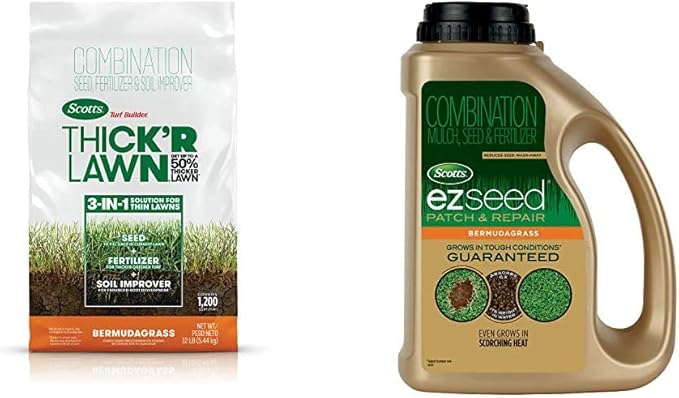
Scotts Turf Builder Bermudagrass
Scotts · Warm Season · $30-45 for 10 lbs
Why this seed for Mississippi: Bermuda is the default lawn grass for Mississippi — it thrives in the heat, handles the heavy clay in the Delta, and recovers from armyworm damage and foot traffic.
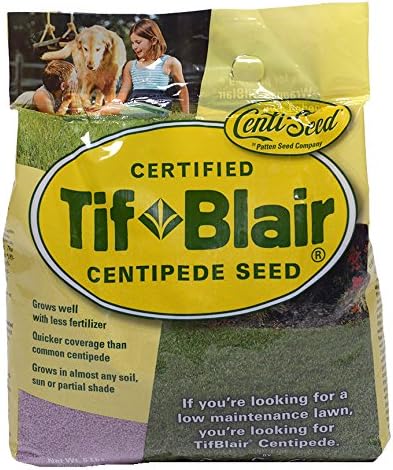
TifBlair Centipede Grass Seed
Patten Seed Company · Warm Season · $20 (1 lb) – $238 (5 lbs)
Why this seed for Mississippi: Centipede thrives in Mississippi's acidic Piney Woods soil with almost zero maintenance. The smart choice for homeowners who want green without the bermuda mowing schedule.
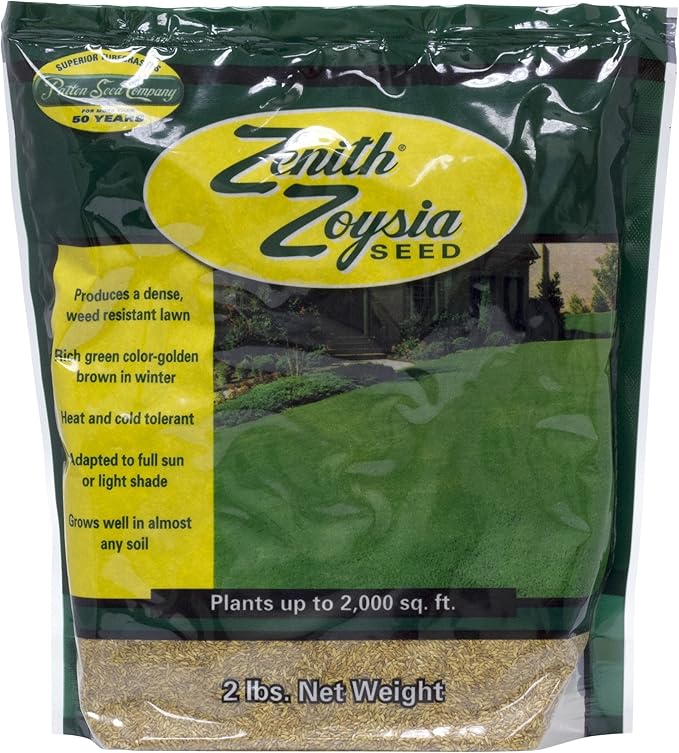
Pennington Zenith Zoysia Grass Seed & Mulch
Pennington · Warm Season · $25-35 for 2 lbs
Why this seed for Mississippi: Zoysia is the premium upgrade for Mississippi homeowners. Thicker and softer than bermuda, it handles partial shade and creates a lawn that chokes out weeds naturally.
Best Grass Seed by Region in Mississippi
Mississippi Delta
The Delta is flat, hot, and built on some of the most fertile soil in the world — but that fertility comes in the form of heavy buckshot clay that's a nightmare to manage as a lawn surface. This alluvial floodplain stretching from Tunica County south through Greenville, Cleveland, and Greenwood to Vicksburg has soil with 50 to 60 percent clay content that swells when wet and cracks into hard chunks when dry. Zone 8a conditions mean long, brutal summers with temperatures exceeding 95 degrees for weeks at a stretch and humidity that makes it feel like 110. Bermuda is the dominant grass in the Delta because it handles the heavy clay, the heat, and the periodic flooding from the Mississippi River tributaries that still overflow their banks most springs. The flat terrain means drainage is a constant issue — water has nowhere to go after heavy rains, and low spots can stay waterlogged for days.
Top picks for this region:
- ✓Delta buckshot clay must be core aerated twice annually — April and September — to combat the severe compaction that develops in this heavy soil
- ✓Bermuda is the only grass that handles both the Delta clay and the periodic spring flooding — it recovers from submersion faster than any other warm-season species
- ✓Apply gypsum at 50 lbs per 1,000 sq ft annually to improve clay aggregation — the Delta's sodium-rich alluvial soil responds well to calcium amendments
- ✓Grade your lot to move standing water — even a 1 percent slope makes a dramatic difference on Delta clay where water pools on any flat surface
- ✓Fire ant mounds are especially prolific in Delta clay because the moist soil stays workable for nest construction — broadcast bait in April and again in September for best control
Jackson Metro / Central Mississippi
The Jackson metropolitan area — including Ridgeland, Madison, Brandon, Pearl, and Clinton — sits at the geographic crossroads of Mississippi's major soil types. The western edge of the metro hits the loess bluffs with their silty, erosion-prone soil. Eastern suburbs sit on the red clay hills of the Central Plateau, with heavy clay soil similar to but slightly lighter than the Delta's buckshot. Zone 8a conditions give Jackson a growing season that runs from mid-March through early November, with summer temperatures regularly exceeding 95 degrees and humidity that makes fungal disease a constant concern. Bermuda dominates sun-exposed lawns, while centipede fills shaded and low-maintenance lots. Zoysia is increasingly popular in Jackson's established neighborhoods where mature hardwoods create significant shade challenges that bermuda can't handle.
Top picks for this region:
- ✓Jackson's loess-influenced soil erodes aggressively on slopes — establish bermuda or zoysia on graded slopes immediately and use erosion blankets during establishment
- ✓Brown patch fungus is endemic in Jackson's humid summers — avoid evening irrigation and apply preventive fungicide (azoxystrobin) in May before humidity peaks
- ✓Zoysia is the best choice for Jackson lots with mature oaks and magnolias creating 50-percent-plus shade — bermuda simply won't maintain density in those conditions
- ✓Central Mississippi's red clay benefits from sulfur applications to lower pH if it tests above 7.0 — target 6.0 to 6.5 for optimal bermuda performance
- ✓Armyworm outbreaks typically hit the Jackson metro in September — scout weekly and treat with bifenthrin at the first sign of skeletonized leaf blades or flocks of birds working your lawn
Gulf Coast (Gulfport / Biloxi / Ocean Springs)
Mississippi's Gulf Coast from Bay St. Louis through Gulfport, Biloxi, and Pascagoula has a subtropical climate that's in a league of its own. Zone 8b to 9a conditions mean winters are mild (hard freezes are rare events, not annual certainties), the growing season stretches nearly year-round, and the humidity is oppressive from May through October. The soil is predominantly deep sand and sandy loam — well-drained, acidic (pH 5.0 to 6.0), and nutrient-poor. It drains so fast that fertilizer leaches through before grass can use it, which is why slow-release fertilizers and split applications are essential here. Salt spray from the Gulf reaches several miles inland during storms and gradually salinizes coastal soils. Hurricane storm surge is the catastrophic threat — Katrina deposited saltwater and debris across every lawn within a mile of the coast, and recovery took years.
Top picks for this region:
- ✓Sandy coastal soil needs split fertilizer applications — three to four light applications per season rather than two heavy ones, because nutrients leach through sand before roots can absorb them
- ✓After any tropical storm or hurricane, flush salt-affected lawns with 2 to 3 inches of fresh water daily for a week to push salt below the root zone
- ✓Centipede grass is the traditional coast choice but it's the most salt-sensitive warm-season grass — bermuda and zoysia recover faster from salt exposure if you're within a mile of the Gulf
- ✓Mole crickets are more destructive on the coast than anywhere else in Mississippi — apply a bait-type insecticide in June when nymphs are small and most vulnerable
- ✓The acidic sandy soil often needs lime to raise pH from its natural 5.0-5.5 range up to 6.0-6.5 — pelletized lime applied in fall gives it time to react before the spring growing season
North Mississippi (Tupelo / Oxford / Corinth)
North Mississippi from Tupelo and Oxford up through Corinth and Holly Springs is the state's transition into more temperate conditions. Zone 7b to 8a means winters are colder than the rest of the state — low single digits are possible, and hard freezes lasting several days occur most years. The soil is a mix of clay loam and sandy clay in the hills, with richer bottomland soils along the Tombigbee River corridor. This is the part of Mississippi where bermuda's cold tolerance gets tested, and homeowners who don't pick cold-hardy varieties pay the price with winterkill and slow spring green-up. The slightly cooler climate also means tall fescue is marginally viable in heavily shaded areas, making this a soft transition zone. Oxford's Ole Miss campus and Tupelo's older residential neighborhoods both showcase beautiful bermuda lawns, proof that the species thrives here when managed properly.
Top picks for this region:
- ✓North Mississippi's Zone 7b winters demand cold-hardy bermuda varieties — common bermuda thins badly after hard winters, and Yukon bermuda offers significantly better cold tolerance
- ✓Apply winterizer fertilizer (high potassium, 10-5-15) in early October to help bermuda harden off before the first freeze, which typically hits north Mississippi by late November
- ✓Fall armyworm pressure is heaviest in north Mississippi during September — these caterpillars migrate northward through the season, hitting the upper counties last and hardest
- ✓The red clay hills around Oxford and Holly Springs compact severely — core aerate in September and apply compost topdressing to build soil structure over time
- ✓Zoysia is an excellent cold-tolerant option for north Mississippi homeowners who want a denser, more shade-tolerant lawn than bermuda — Zenith zoysia handles Zone 7b winters reliably
Mississippi Lawn Care Calendar
Spring
March - May
- •Apply pre-emergent herbicide when soil temperatures reach 55 degrees at 4-inch depth — in south Mississippi that's late February, in Jackson early March, in Tupelo mid-March. MSU Extension's soil temperature resources help pinpoint timing
- •Scalp bermuda lawns to 0.75 inches once 50% green-up is visible — mid-March on the coast, late March in Jackson, mid-April in north Mississippi. Bag all clippings to expose soil to warming sunlight
- •Begin mowing bermuda at 1 to 1.5 inches once active growth resumes — frequent mowing encourages lateral spread and density
- •Seed bare spots or establish new bermuda lawns once soil temps hold above 65 degrees for two weeks — late April statewide is the safe window
- •Apply the first round of fertilizer (16-4-8 or similar) in late April after bermuda is fully green and actively growing — MSU Extension recommends 1 lb of nitrogen per 1,000 sq ft
- •Broadcast fire ant bait across the entire lawn in April as mound activity increases — baits are more effective than individual mound treatments for area-wide control
Summer
June - August
- •Maintain bermuda at 1 to 2 inches and mow frequently — in Mississippi's growing season, that means mowing every 4 to 5 days during peak growth in June and July
- •Water 1 to 1.5 inches per week in one or two deep sessions — morning watering before 8 AM reduces disease risk from extended leaf wetness in Mississippi's humid conditions
- •Apply second fertilizer round in June (0.5 to 1 lb nitrogen per 1,000 sq ft) using a slow-release formula — avoid quick-release nitrogen in summer heat
- •Scout for large patch (brown patch) in centipede and zoysia lawns — circular brown areas expanding outward indicate fungal infection, treat with azoxystrobin or propiconazole
- •Monitor for chinch bugs in July and August, especially in sunny bermuda areas along driveways and sidewalks — treat with bifenthrin at first sign of yellowing
- •For centipede grass, do NOT over-fertilize in summer — centipede decline is caused by excessive nitrogen. One pound of nitrogen per 1,000 sq ft for the entire year is the MSU Extension maximum for centipede
Fall
September - November
- •Scout aggressively for fall armyworms in September and October — they can destroy a bermuda lawn in 48 hours. Birds congregating on the lawn and skeletonized leaf blades are early warning signs
- •Apply a second round of fire ant bait in September when colony activity increases with cooler temperatures and fall rains
- •Apply winterizer fertilizer (high potassium, 10-5-15 or similar) in early to mid-October — potassium strengthens cell walls and improves cold tolerance, especially critical in north Mississippi
- •Apply pre-emergent for winter annual weeds (Poa annua, henbit, chickweed) in early October before soil temps drop below 70 degrees
- •Continue mowing bermuda until growth stops naturally — on the coast that may not be until early December, in north Mississippi growth typically ceases by mid-November
- •Overseed bermuda with annual ryegrass in October if you want winter color — this is common on the coast and in Jackson but less practical in north Mississippi where the overseed window is short
Winter
December - February
- •Leave dormant bermuda and zoysia alone — no fertilizer, minimal water (unless you go 6-plus weeks without rain), and no mowing
- •Spot-treat winter weeds like henbit, chickweed, and annual bluegrass with a post-emergent containing 2,4-D while the lawn is dormant and weeds are actively growing
- •On the Gulf Coast, bermuda may show partial green-up during warm January spells — do not scalp or fertilize yet, as freeze events are still possible through late February
- •Submit soil samples to MSU Extension's soil testing lab — winter is the ideal time to test so you have results in hand before the spring growing season begins
- •Sharpen mower blades and service all equipment during the off-season — Mississippi's long mowing season (8-9 months) puts more wear on equipment than Northern states
- •Plan any major lawn renovation projects including grading, drainage improvements, and irrigation repairs — complete soil work before bermuda breaks dormancy in March
Mississippi Lawn Tips You Won't Find on the Seed Bag
Fire Ants: You Can't Win, But You Can Manage
Every square inch of Mississippi is fire ant territory, and any homeowner who tells you they've eliminated them is either lying or about to be disappointed. The red imported fire ant has infested Mississippi since the 1950s, and with mound densities averaging 40 to 60 per acre in residential areas, management is the only realistic goal. MSU Extension's two-step method is the gold standard: broadcast a bait product (like Amdro or Extinguish Plus) across your entire yard in April and September, then follow up with individual mound treatments for any colonies that survive. Baits work slowly (2 to 6 weeks) but they eliminate the queen, which is the only way to kill a colony. Pouring boiling water on mounds is satisfying but only works about 60 percent of the time and doesn't prevent recolonization. Budget for two bait applications per year, every year, forever.
Armyworm Detection: Watch the Birds, Save Your Lawn
Fall armyworms are the single most destructive turf pest in Mississippi, capable of stripping a bermuda lawn to bare soil in 48 hours during a severe outbreak. The caterpillars feed most actively at dawn and dusk, so homeowners often don't see them until the damage is catastrophic. The earliest warning sign isn't the worms themselves — it's birds. When you see unusually large numbers of starlings, grackles, or robins working your lawn intensely, they're feeding on armyworms. Part the grass and look at the soil surface — you'll see the green-brown caterpillars curled up at the base of the blades. Treat immediately with bifenthrin or spinosad; don't wait for the damage to spread. September and October are peak armyworm months in Mississippi, and outbreaks tend to be worst after a wet late summer.
Centipede Grass: The Low-Maintenance Lie
Centipede grass has a reputation as the 'lazy man's grass,' and there's some truth to it — it needs less mowing, less fertilizer, and less water than bermuda. But 'low maintenance' doesn't mean 'no maintenance,' and more centipede lawns in Mississippi die from over-care than neglect. The number one killer of centipede is excessive nitrogen fertilization. MSU Extension caps centipede at 1 pound of nitrogen per 1,000 square feet per year — total, for the entire season. Homeowners who apply bermuda-rate fertilizer programs to centipede end up with centipede decline: the grass gets leggy, thatchy, and susceptible to disease. The second most common mistake is mowing too short — centipede needs 1.5 to 2 inches, and scalping it invites weed invasion. Treat centipede like it wants to be left alone, because it does.
Hurricane and Flood Recovery for Mississippi Lawns
If you've lived on the Mississippi coast or in the Delta floodplain long enough, you've replanted a lawn after storm or flood damage. The recovery process depends on what hit you. For saltwater storm surge (coastal hurricanes), the priority is flushing salt from the soil — apply 2 to 3 inches of fresh water daily for a week to push sodium below the root zone, then test soil salinity before replanting. For freshwater flooding (Delta spring floods), scrape silt deposits off the lawn surface within a week; more than an inch of silt will suffocate the grass. For wind damage that strips turf, wait until debris is cleared and soil is stable, then reseed bermuda when soil temps are above 65 degrees. Bermuda is the best recovery grass in Mississippi because it establishes fast from seed and spreads aggressively to fill in damaged areas.
Why You Should Mow Bermuda Like a Putting Green (Almost)
Mississippi bermuda lawns look their best when mowed low and frequently — and most homeowners don't mow low enough or often enough. The ideal bermuda mowing height in Mississippi is 1 to 1.5 inches during the active growing season, which means you need to mow every 4 to 5 days during peak growth in June and July. Yes, that's twice a week. Letting bermuda get tall and then cutting it back hard (removing more than one-third of the blade) stresses the plant, creates scalped spots, and opens the door for weed invasion. A reel mower produces the cleanest cut at low heights, but a sharp rotary mower set to 1.5 inches works fine for most residential lawns. The payoff for frequent low mowing is a dense, tight-knit turf that chokes out weeds naturally and looks like a golf course fairway.
Dealing With Mississippi's Acidic Sandy Soils
South Mississippi — from Hattiesburg down through the Piney Woods to the coast — sits on deep sand and sandy loam with naturally low pH, typically 5.0 to 5.5. Most warm-season grasses prefer 6.0 to 6.5, which means liming is a routine maintenance task in this region. MSU Extension recommends testing soil pH every two to three years and applying pelletized limestone at the rate your test recommends. Apply lime in fall so it has time to react with the soil before the spring growing season. Don't guess on the amount — overliming is just as problematic as under-liming, and sandy soils have low buffering capacity, meaning pH swings quickly in response to amendments. Beyond pH, sandy soil's biggest limitation is nutrient retention: nitrogen, potassium, and micronutrients leach through sand fast, which is why slow-release fertilizers and split applications (three to four times per year instead of two) are essential on the coastal plain.
What Mississippi Lawn Pros Actually Plant
Bermuda Grass
Most PopularBermuda is Mississippi's number one lawn grass, covering an estimated 60 to 65 percent of residential properties statewide. It handles the brutal summers, recovers from damage with astonishing speed, and produces a dense, attractive turf when mowed low and frequently. Common bermuda comes standard on new construction across the state, but it's thin compared to improved varieties and goes dormant early. Seeded improved bermudas offer better density, darker color, and faster establishment — bermuda seed planted in May can produce a mowable lawn by mid-July in Mississippi's long growing season. The only places bermuda struggles in Mississippi are heavily shaded lots and the most acidic sandy soils on the coast where centipede historically held ground.
Centipede Grass
Very PopularCentipede is the traditional lawn grass of south Mississippi and the Gulf Coast, loved for its low maintenance requirements and tolerance of the acidic sandy soils that dominate the Piney Woods and coastal plain. It needs less fertilizer than bermuda (1 lb nitrogen per year maximum), grows slowly enough to reduce mowing frequency, and maintains a pleasant medium-green color through the growing season. TifBlair centipede, developed at the University of Georgia, offers better cold tolerance than common centipede, which matters in north Mississippi where hard freezes can damage standard centipede. The downsides are real: centipede is the most salt-sensitive warm-season grass (a liability on the hurricane coast), it doesn't handle heavy traffic, and it's extremely intolerant of over-fertilization.
Zoysia Grass
Growing in PopularityZoysia is the premium choice that's rapidly gaining ground in Mississippi's urban areas, particularly in Jackson, Tupelo, and Oxford where homeowners want a thick, carpet-like lawn with better shade tolerance than bermuda. Zenith zoysia, available as seed, has made the species accessible to DIY homeowners who previously couldn't afford zoysia sod. It handles 4 hours of filtered shade — critical under Mississippi's mature magnolias, live oaks, and water oaks — and produces a dense, weed-resistant turf that feels exceptional underfoot. Establishment is slower than bermuda (60 to 90 days to full coverage), but once established, zoysia is remarkably drought-tolerant and holds up to moderate foot traffic better than centipede.
St. Augustine Grass
Niche ChoiceSt. Augustine has a loyal following on the Mississippi Gulf Coast, where its thick-bladed, tropical appearance matches the coastal aesthetic. It's the most shade-tolerant warm-season grass, handling heavier tree cover than even zoysia, which makes it popular under the live oak canopies that line Mississippi's coastal neighborhoods. The major drawbacks keep it from wider adoption: it's sod-only (no viable seed varieties exist), it's expensive to install, it demands the most water of any warm-season species, and chinch bugs target it relentlessly. Floratam is the dominant variety on the coast, but it has poor cold tolerance and suffers damage in north Mississippi's winters. It's a coastal and south Mississippi grass, period.
Bahia Grass
Niche ChoiceBahia grass occupies the utility space in Mississippi lawn care — it's the grass you plant when durability and low cost matter more than aesthetics. Argentine bahia is the improved variety, producing a deeper green color and finer texture than the old Pensacola type. It's popular on larger rural properties, church grounds, and commercial lots in south Mississippi where the sandy soil suits its deep root system. Bahia handles drought and poor soil better than bermuda, needs minimal fertilizer, and its aggressive root system prevents erosion on sandy slopes. The open seed heads that shoot up between mowings are its biggest cosmetic downside — frequent mowing or a growth regulator helps, but bahia will never look as manicured as bermuda or zoysia.
Mississippi Lawn Seeding Tips
Getting the best results from your grass seed in Mississippi comes down to timing, soil prep, and choosing the right variety for your specific conditions. Here are our top tips:
- Test your soil first. A $15 soil test from your Mississippi extension office tells you exact pH and nutrient levels. Most warm-season grasses prefer pH 6.0-6.5.
- Prep the seedbed properly. Rake or aerate to ensure good seed-to-soil contact. This single step improves germination rates more than any seed coating or starter fertilizer.
- Use a starter fertilizer. Apply a phosphorus-rich starter fertilizer at seeding time to promote root development. We recommend Scotts Starter Fertilizer or The Andersons Starter.
- Water correctly. Keep the seedbed consistently moist (not soaked) for the first 2-4 weeks. Light watering 2-3 times per day is better than one heavy soaking.
- Be patient. Warm-season grasses are slower to establish. Bermuda takes 7-14 days, but Zoysia and Centipede can take 3-4 weeks. Don't panic if you don't see results immediately.
Frequently Asked Questions
When is the best time to plant grass seed in Mississippi?
Late March through May for warm-season grasses; avoid planting after August due to fall armyworm pressure
What type of grass grows best in Mississippi?
Mississippi is best suited for warm-season grasses like Bermuda, Zoysia, Centipede, and Bahia. These grasses thrive in heat, go dormant in winter, and grow most actively from late spring through early fall.
What are the biggest lawn care challenges in Mississippi?
The main challenges for Mississippi lawns include extreme heat and humidity year-round, fire ants throughout the state, fall armyworm outbreaks, heavy clay in the delta. Choosing the right grass variety that is adapted to these specific conditions is the single most important decision you can make for your lawn.
Can I grow Kentucky Bluegrass in Mississippi?
Kentucky Bluegrass is not recommended for Mississippi. KBG is a cool-season grass that will struggle with the heat and go dormant or die during Mississippi's hot summers. Stick with warm-season options like Bermuda or Zoysia for the best results.
How much does it cost to seed a lawn in Mississippi?
For a typical 5,000 sq ft lawn, expect to spend $150-$400 on seed alone depending on the variety. Premium seeds like Midnight Kentucky Bluegrass or Zenith Zoysia cost more per pound but deliver better results. Add $50-$100 for starter fertilizer and $20-$50 for soil amendments. The seed is the smallest part of your total investment — proper soil prep and consistent watering matter more than saving $50 on cheaper seed.
More Lawn Care Resources
Not in Mississippi?
We have state-specific grass seed guides for all 50 states.