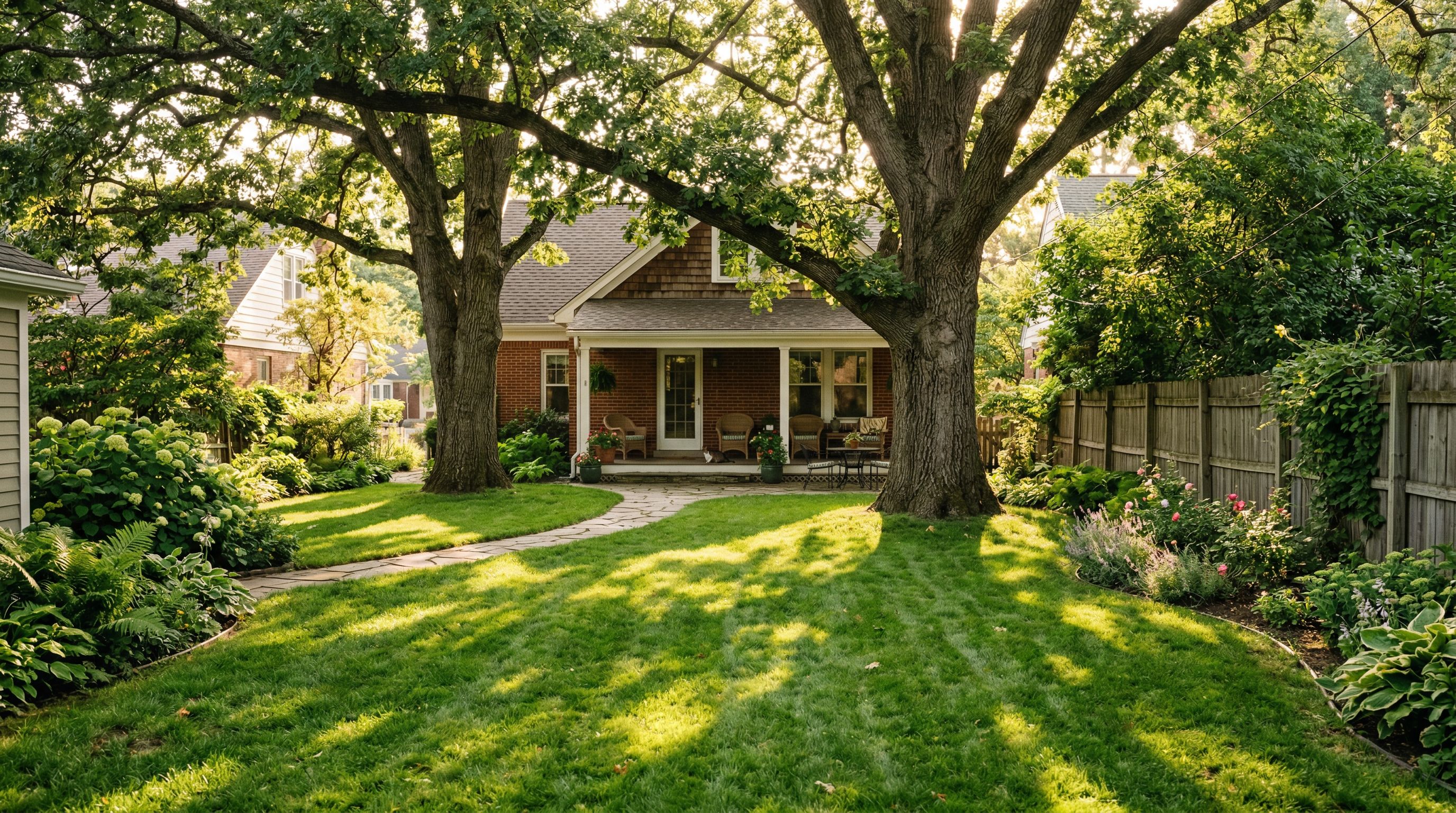
Weekend Work Order
Thin Shade Repair
Audit light first, then seed only where grass has enough sun to survive. Pair shade seed with starter and an even spreader pass in the early fall window.
Timing: Best in late August through September for cool-season shade.
Do not buy yet
Under 2 hours of usable light, hot midsummer soil, or no watering plan.
Prep first
Rake litter, loosen the surface, prune lower branches where safe, and mark irrigation gaps.
Buy the basket
Seed in early fall with shade seed, starter where allowed, and an even spreader pass.
Warning
Do not buy yet if:
- Do not seed turfgrass where the area gets under 2 hours of usable light.
- Do not seed in midsummer heat unless you can keep the surface damp without runoff.
- Do not feed aggressively in shade. Soft growth invites disease.
Primary basket
Use this when shade is the actual diagnosis
This basket assumes a cool-season shady repair with enough light to support turf and a fall seeding window coming up.
- Track light through one clear day before choosing seed.
- Clear leaves and rough up the top quarter inch of soil.
- Raise the mowing height after establishment so shade grass can capture more light.
Primary shade seed
Outsidepride Combat Extreme Northern Zone
Outsidepride
Northern homeowners in zones 3-6 with shaded yards who want quality seed genetics without big-brand pricing.
Fine-fescue-heavy seed for cool-season shade zones where normal sun mixes keep thinning.
Seed-day starter
Scotts Turf Builder Starter Food for New Grass
Scotts
Homeowners seeding or overseeding who want the simplest reliable starter fertilizer.
Use only at seeding time and only where phosphorus rules allow establishment fertilizer.
Even spread tool
Scotts Turf Builder EdgeGuard DLX Broadcast Spreader
Scotts
The default broadcast spreader recommendation for most homeowners. Especially for lawns with sidewalks, beds, and edges that need spread control.
The repair works better when seed and starter land evenly instead of in stripes and pileups.
Repair Sequence
1. Measure light before buying seed
Check the area every two hours on a clear day. Heavy shade that still gets 2 to 3 hours of usable light can support fine fescue in cool-season climates. Areas under 2 hours usually germinate, thin out, and fail again.
2. Wait for early fall in cool-season shade
Spring shade seeding can work, but the young grass has to face summer before it has a deep root system. Late August through September gives cooler air, warm soil, and less weed pressure.
3. Fix the surface
Rake leaves and matted turf away, rough up the top quarter inch of soil, and remove branches only where pruning is safe for the tree. The seed needs soil contact more than it needs a thick layer of compost on top.
4. Seed, starter, and water lightly
Spread seed evenly, apply starter fertilizer only if allowed, and water lightly enough to keep the surface damp without washing seed into low spots. Once seedlings are established, mow shade grass taller than the sunny lawn.
Budget and alternate basket
Use these when the job is smaller or less severe
Not every shady repair needs the premium basket. These are better fits when the area is small, partially shaded, or already established.
Budget mixed-shade seed
Pennington Smart Seed Sun & Shade
Pennington
Budget-conscious homeowners in zones 3-8 with mixed sun/shade conditions who want reliable results without premium pricing.
A better value when the area gets partial shade rather than heavy tree canopy.
Small bare-patch shortcut
Scotts EZ Seed Patch & Repair Sun & Shade
Scotts
Quick, easy bare spot repairs. Dog spots, high-traffic areas, and small patches where convenience matters more than cost per square foot.
Useful for small scars where an all-in-one patch product beats a full overseed.
Gentle follow-up feed
Milorganite Slow-Release Nitrogen Fertilizer
Milorganite
Cautious homeowners who want a gentle organic feeding pass or an established-lawn fertilizer that is hard to overdo.
A slow-release option after new grass is established and you want a lower-burn feeding pass.
Related next