
Scotts
Scotts Turf Builder EdgeGuard DLX Broadcast Spreader
$70 - $110
Buy on AmazonLast updated:
Disclosure: This article contains affiliate links. If you buy through our links, we may earn a commission at no extra cost to you. All opinions are our own. Learn more.
Pros & Cons
What We Like
- EdgeGuard side shield is genuinely category-defining for control
- 15,000 sq ft capacity is a one-pass tool for most lots
- Scotts publishes settings for every common lawn product
- Deflector design keeps flow even at low fill levels
Watch Out For
- Wheels are plastic — can crack if left out year-round
- Hopper sealing isn't perfect — flush after each use to prevent corrosion
- Calibration accuracy varies if hopper is loaded unevenly
Best For
The default broadcast spreader recommendation for most homeowners. Especially for lawns with sidewalks, beds, and edges that need spread control.
The Owner-Style Take
Opinion
My read: Scotts Turf Builder EdgeGuard DLX Broadcast Spreader is not a universal recommendation. It earns its place when the use case is narrow and real: The default broadcast spreader recommendation for most homeowners. Especially for lawns with sidewalks, beds, and edges that need spread control.
The reason to keep it on the shortlist is EdgeGuard side shield is genuinely category-defining for control. The reason to slow down before buying is wheels are plastic — can crack if left out year-round. I would not treat the star rating as the decision; I would treat the yard, storage, maintenance tolerance, and five-year cost as the decision.
If you are deciding between this and Earthway 2150 Commercial Broadcast Spreader, start with the failure mode you are trying to avoid. Pick Scotts Turf Builder EdgeGuard DLX Broadcast Spreader when the notes below describe your lawn more closely; pick Earthway 2150 Commercial Broadcast Spreader when its compromises sound easier to live with.
Pick It Over
- Pick Scotts Turf Builder EdgeGuard DLX Broadcast Spreader over Earthway 2150 Commercial Broadcast Spreader when integrated edge control, lower price, and simple Scotts settings matter more than enthusiast-grade pattern accuracy.
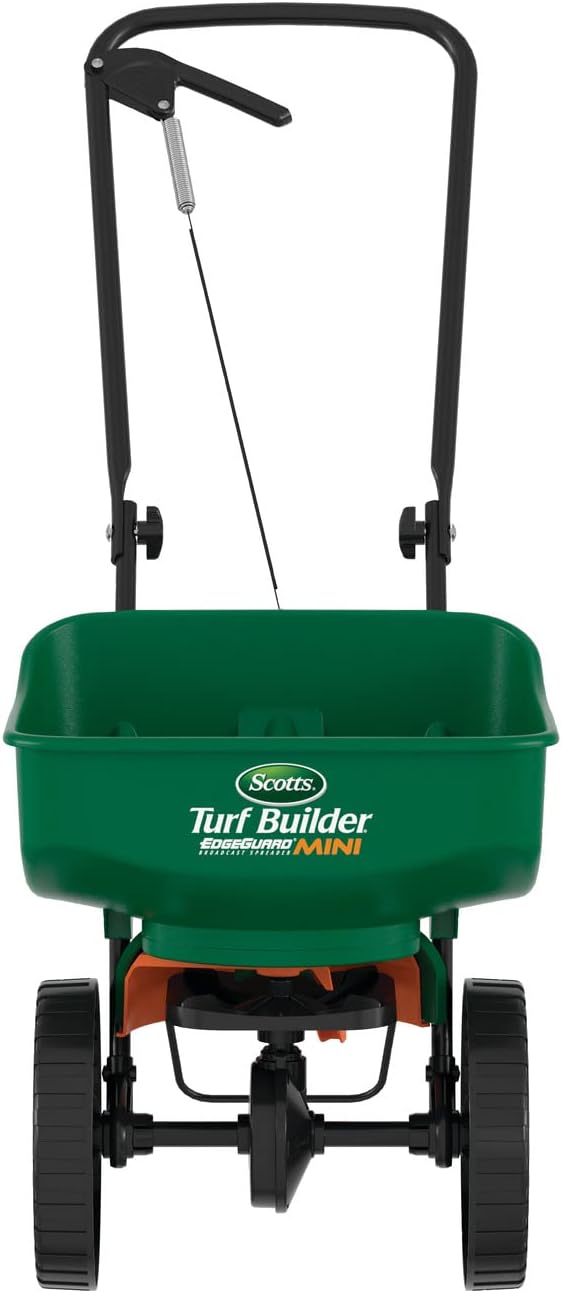
- Pick Scotts Turf Builder EdgeGuard DLX Broadcast Spreader over Scotts Turf Builder EdgeGuard Mini Broadcast Spreader when the lawn is large enough that the 5,000 sq ft Mini hopper would turn every application into refills.
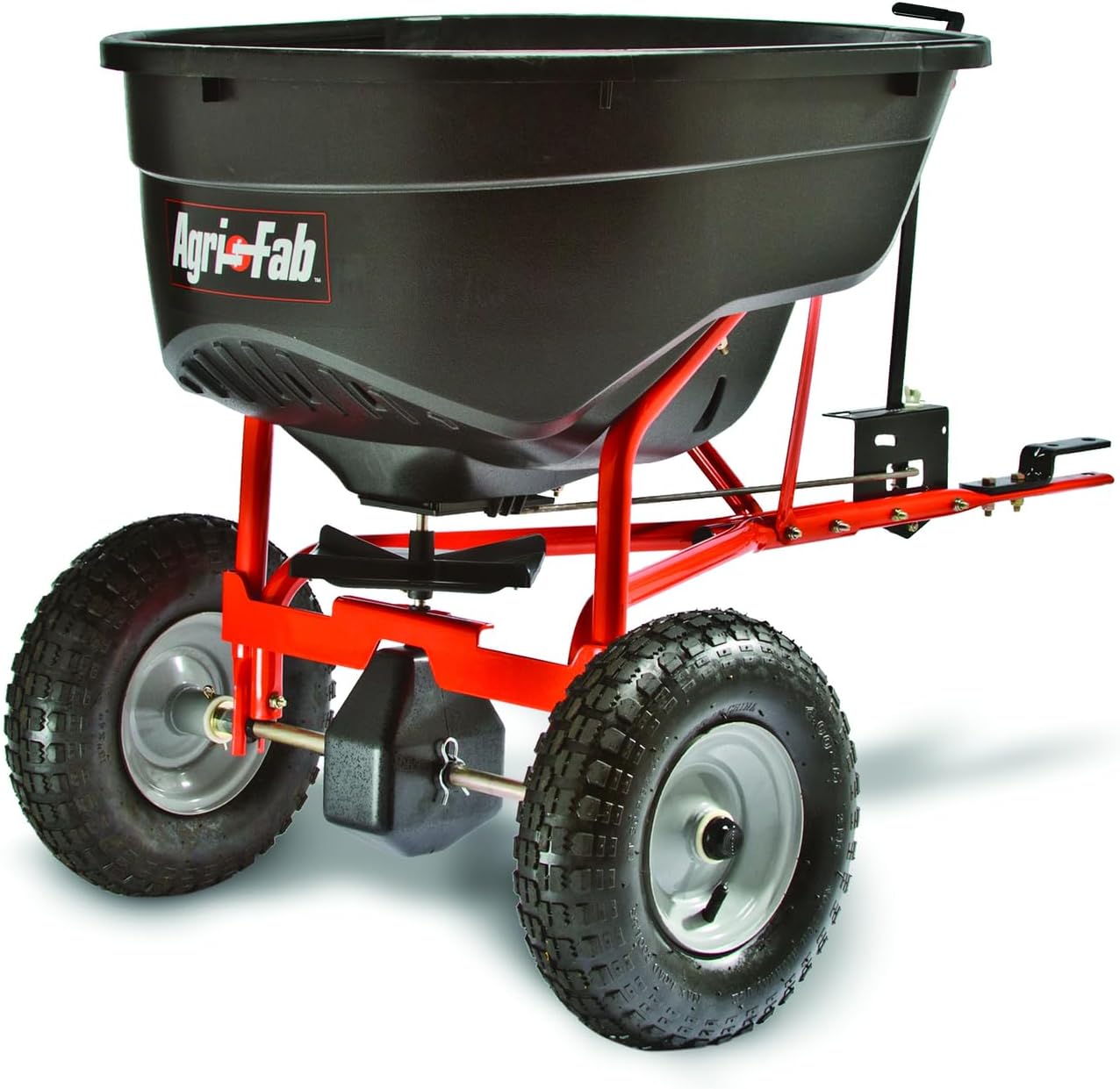
- Pick Scotts Turf Builder EdgeGuard DLX Broadcast Spreader over Agri-Fab 45-0463 130 lb Tow-Behind Broadcast Spreader when the lawn is still walkable and a tow-behind trailer would be more storage burden than benefit.
Skip If
- - You will not rinse, dry, and store the spreader indoors; fertilizer residue ruins cheap spreaders fast.
- - Wheels are plastic — can crack if left out year-round
- - Hopper sealing isn't perfect — flush after each use to prevent corrosion
Five-Year Cost
Estimated five-year cash outlay: $90-$250. That includes the current street-price range plus rinse-down supplies, lubricant, possible gate/impeller/tire parts, and calibration supplies; it does not assume a paid repair shop unless the category commonly forces one.
Scotts Turf Builder EdgeGuard DLX Broadcast Spreader: Editorial Assessment
The EdgeGuard DLX is the spreader I would hand to most homeowners before I talk about pro gear. Scotts' own capacity claim is up to 15,000 sq ft of lawn product, which means a typical 5,000-10,000 sq ft lawn can be treated without constant refilling. The EdgeGuard side shield is the real reason it works for normal yards: it blocks the right-side pattern when you are walking along sidewalks, driveways, mulch beds, and curb edges.
Pick the DLX over the EdgeGuard Mini when the lawn is bigger than a small townhouse patch or when one-pass hopper capacity matters. Pick the EarthWay 2150 when you are chasing a more even broadcast pattern and will actually calibrate the spreader. Pick a tow-behind Agri-Fab only when you already own a tractor and have enough area that walking becomes the job.
The owner caveat is precision. Scotts settings get you close with Scotts products, but granular fertilizer size, walking speed, and overlap still decide whether the lawn stripes. I would sweep the driveway before the granules dissolve, rinse the hopper after fertilizer, and store it indoors. Five-year cost is low if you treat it like a plastic tool, not a shed ornament left in UV and salt.
Purchase Options
Similar Products
 Tool
ToolLawn enthusiasts, large-property owners, and contractor wannabes who want measurably even broadcast accuracy.
 Tool
ToolTownhouse, condo, and small suburban lot (1/8 to 1/4 acre) owners who want EdgeGuard control without a full-size unit.
 Tool
ToolOwners of 1/2 acre+ lots with riding mowers who want to spread fertilizer and seed at tractor speed.