The setup
One yard, two physical systems
The in-ground system does most of the yard. The hose still earns its keep.
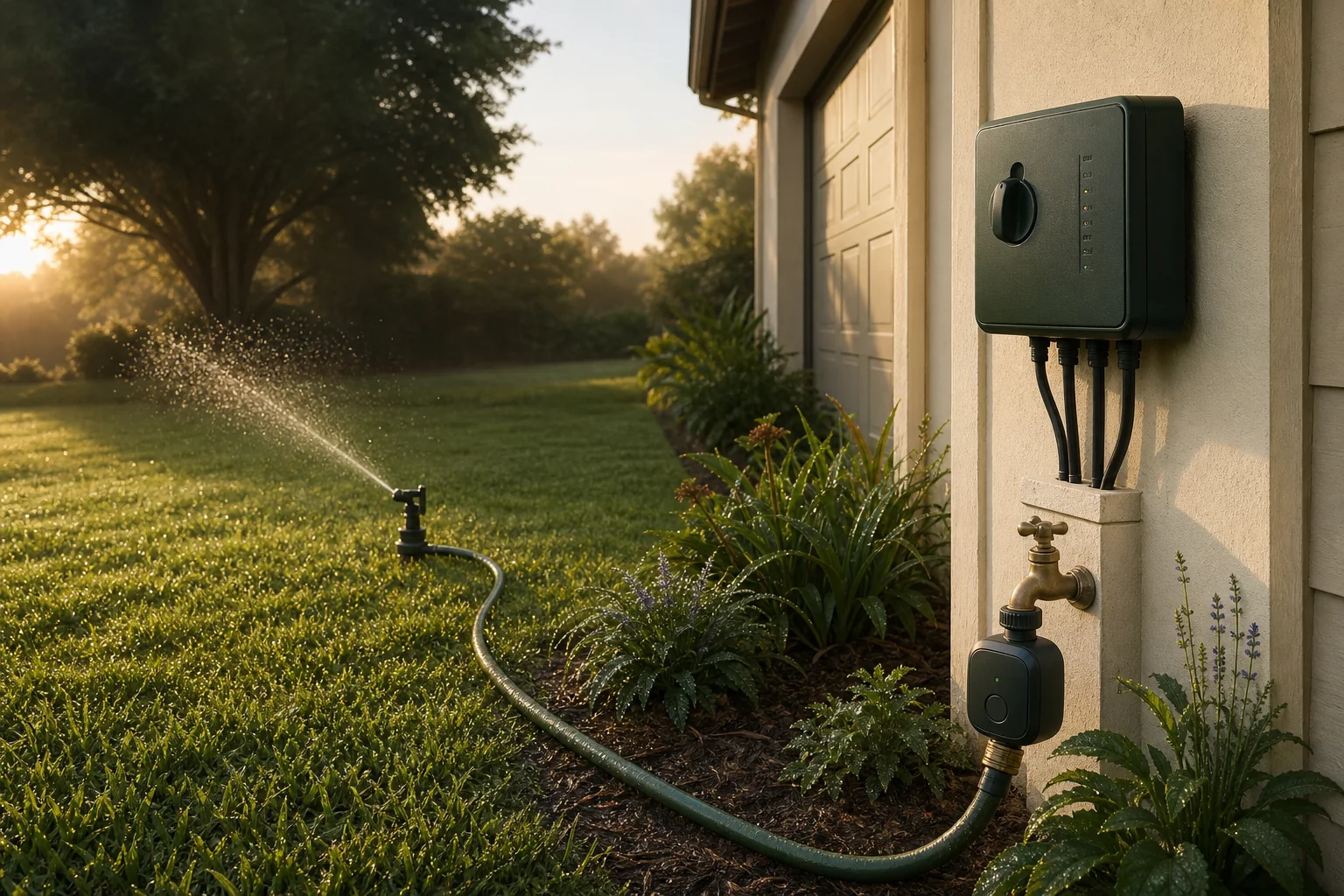
I use a Rachio to run the in-ground zones. That covers most of the lawn. The hose and a movable sprinkler fill the gaps — corners the heads miss, a dry patch after heat, or days the irrigation schedule can't run because of local watering rules.
Those are two different setups. The wall controller opens in-ground valves. A hose timer opens and closes the spigot. Same yard. Same water rules. Separate schedules.
How the week works
One set of watering rules. Two ways to put water on the grass.
Start with the days your utility allows. Then decide which hardware does the work inside those days. The strip below is a pattern, not your city — real weekdays change by address and drought stage.
Rules over both
Your local watering rules apply to both
Allowed days and hours sit above every controller, timer, and hose.
Example pattern only — real weekdays change by address and drought stage.
In-ground irrigation
Permanent zones, controlled from the garage or wall.
Step 1: Rachio (or other wall controller)
Holds the schedule and opens the wired valves.
Step 2: In-ground valves
Send water through the permanent irrigation lines.
Step 3: Fixed zones
Cover the parts of the lawn the heads already reach.
Hose & sprinkler
Spigot, hose, and a head you place yourself.
Step 1: Smart hose timer (optional)
A proposed option for starting and stopping a separate hose schedule at the faucet.
Step 2: Hose + movable sprinkler
Gets water to spots the fixed zones do not cover well.
Step 3: You still place the head
Coverage depends on where you set it — the app cannot do that.
Weather skip can cancel a run. It cannot move that run onto a banned day. Keep both schedules inside the current rule for your address.
The decision that started this guide
Why I looked at the Rachio Smart Hose Timer
I already live in the Rachio app for the in-ground system. Putting the hose on a timer in that same app is convenient — not magic. It's still a separate valve, batteries, hub, and winter-storage job. Same app does not mean one combined schedule.
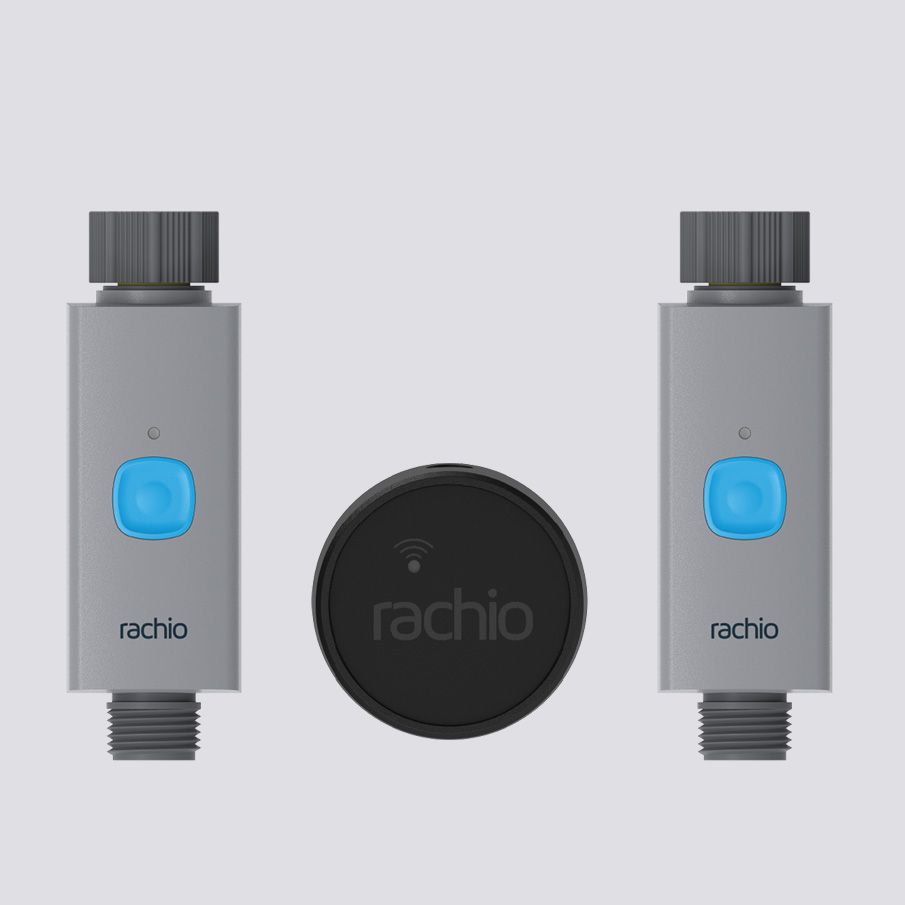
Rachio · Smart hose timer
Rachio Smart Hose Timer with Wi-Fi Hub and Extra Hose Valve
Automates a separate hose routine at the faucet. Does not turn the hose into another in-ground zone, and does not merge the two schedules.
Confirm faucet fit and bundle contents first. The Amazon link is a buying exit, not proof it fits your yard.
Helps with
- Scheduled starts and shutoffs for recurring hose watering
- Remote control, run history, and Rain Skip
- Seeing the wall controller and hose valves in one app
Doesn't change
- Your watering days or hours
- Where you place the sprinkler, or leak / backflow basics
- Winter drain-and-store for outdoor valves
Check before buying
- Faucet threads, pressure, batteries, backflow hardware
- Hub placement, 2.4 GHz Wi-Fi, valve range
- Exact valve + hub count in the current bundle
The hose valves and Rachio 3 can appear in the same app, but they remain separate hardware with separate schedules. The hose timer is not covered by the wired Rachio 3 controller's WaterSense status. Treat it as separate hardware — do not buy it hoping for another watering day.
Do you actually need a smart hose timer?
01
Probably yes
You water with a hose on a repeating schedule inside allowed days, and you'd rather not babysit the shutoff.
You also want run history and can live with batteries, hub range, and seasonal storage.
02
Maybe
The main draw is seeing both devices in the Rachio app.
They're still separate devices with separate schedules. Same app visibility does not automatically coordinate them.
03
Probably no
Hose watering is occasional and you're standing there anyway — or a cheap mechanical timer already handles shutoff.
Also a no if the goal is another watering day. No timer can grant that.
If you're replacing the wall box
Smart controllers for in-ground irrigation
These products compete with each other. They do not compete with a faucet timer. Count every active zone, confirm the installation location, and decide who will maintain the system before comparing app features.
These compete with each other. They do not compete with a faucet timer. Count active zones first, then pick.
Rachio
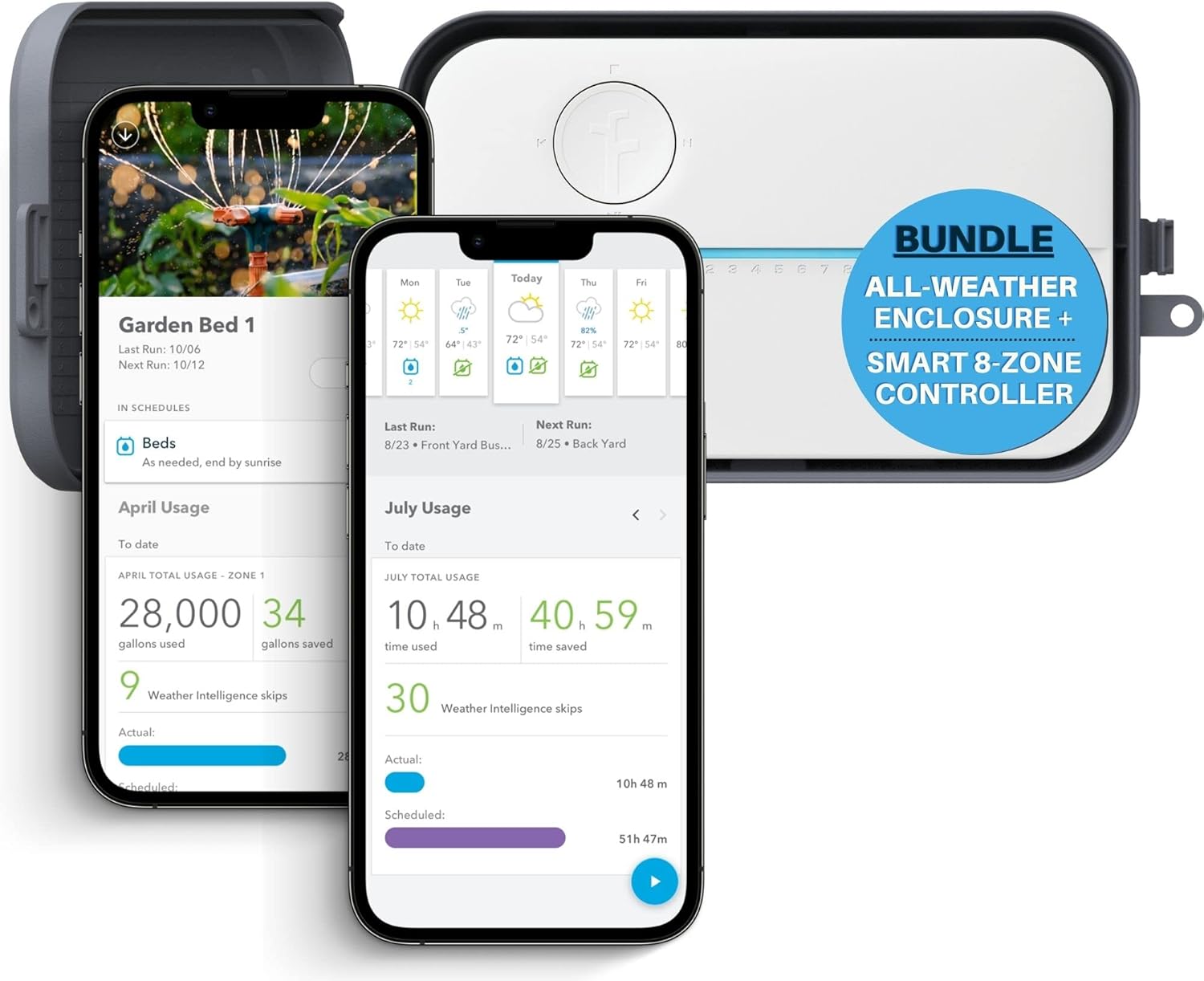
Rachio 3 Smart Sprinkler Controller (8-Zone)
Owner-operated 24 VAC systems with eight or fewer active zones.
Fit check: Weather skips still need a schedule that fits the current allowed watering days.
Listed in the EPA WaterSense registry for the reviewed model family. Certification does not change your local watering rule.
Rachio
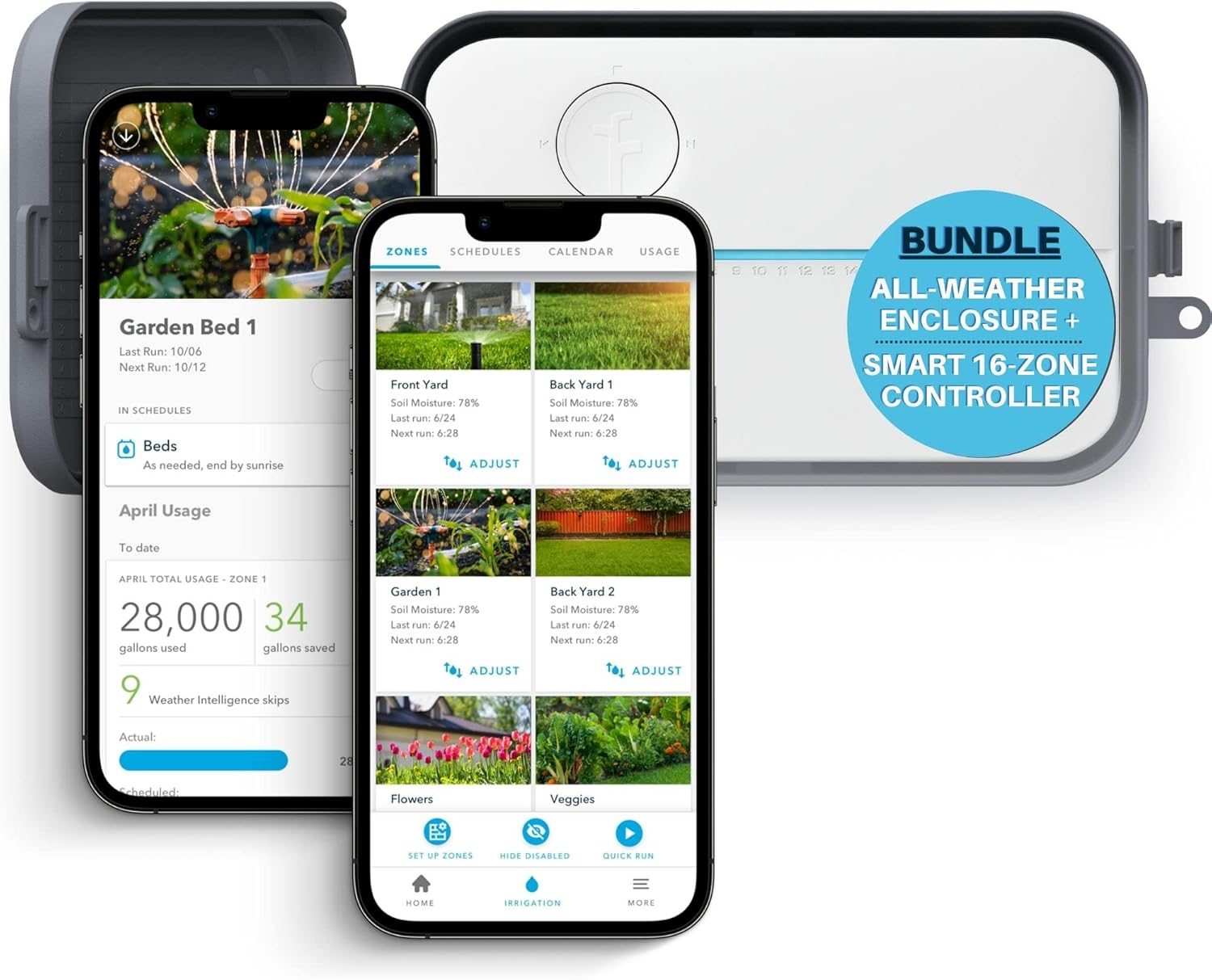
Rachio 3 Smart Sprinkler Controller (16-Zone)
Larger 24 VAC systems with nine to sixteen active wired zones.
Fit check: Unused terminals do not water better — count active and planned zones first.
Listed in the EPA WaterSense registry for the reviewed model family. Certification does not change your local watering rule.
Orbit
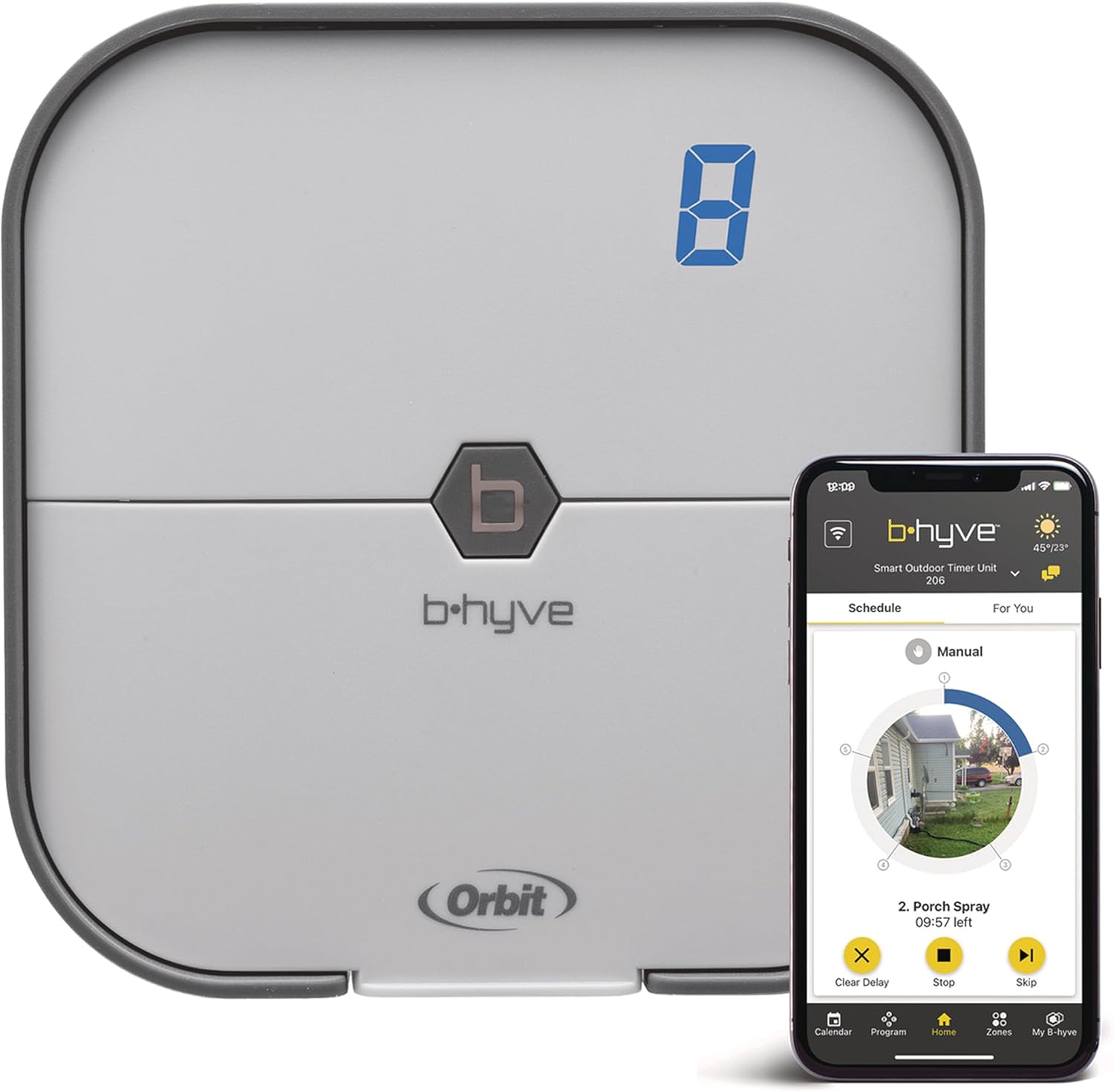
Orbit B-hyve XR Smart Sprinkler Controller (8-Zone)
Up to eight wired zones where an indoor/outdoor enclosure and local controls matter.
Fit check: Confirm the exact zone count and model because B-hyve products span several hardware families.
Listed in the EPA WaterSense registry for the reviewed model family. Certification does not change your local watering rule.
Rain Bird
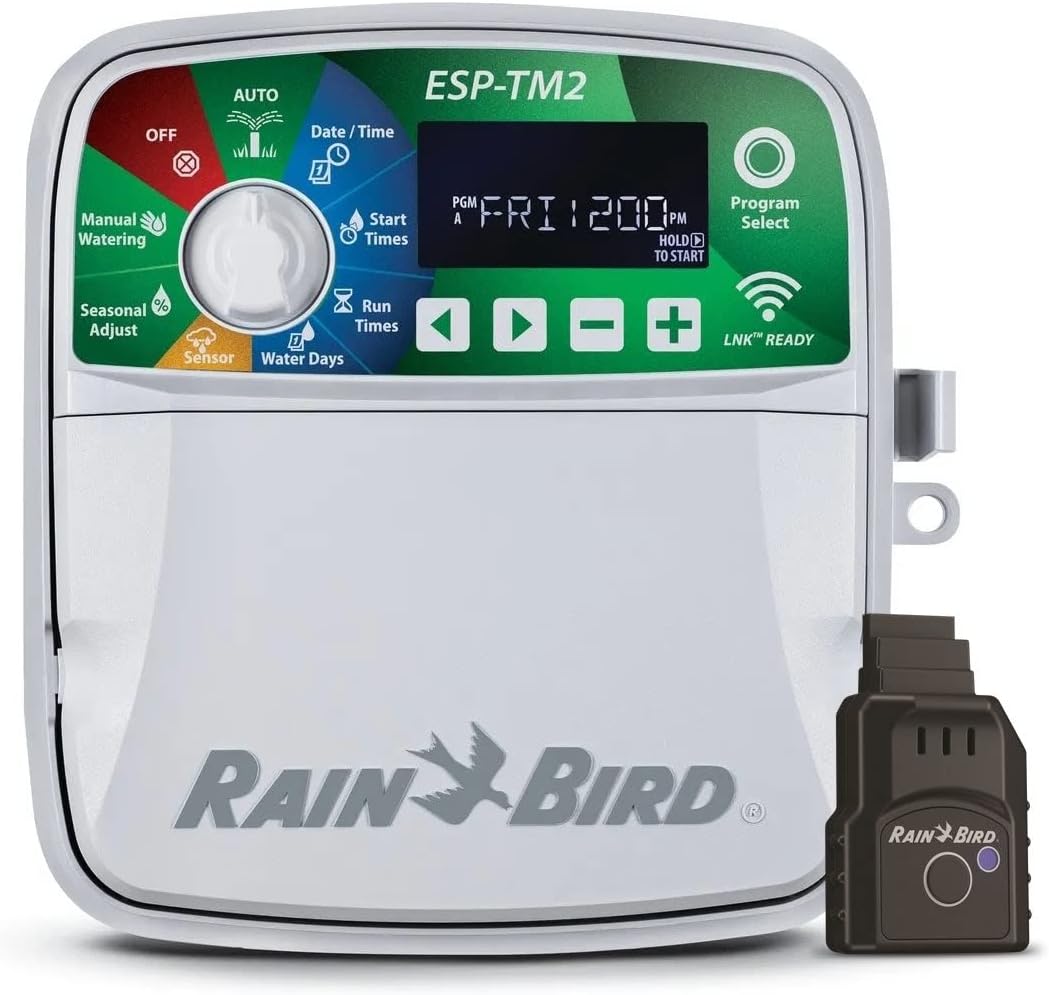
Rain Bird ESP-TM2 Smart Irrigation Controller (8-Zone)
Fixed eight-station systems where local programming or Rain Bird service familiarity matters.
Fit check: Wi-Fi and the documented smart-certification path require compatible add-on hardware.
This guide does not assert a WaterSense listing for this exact configuration. Check the model and add-on combo first.
Hunter
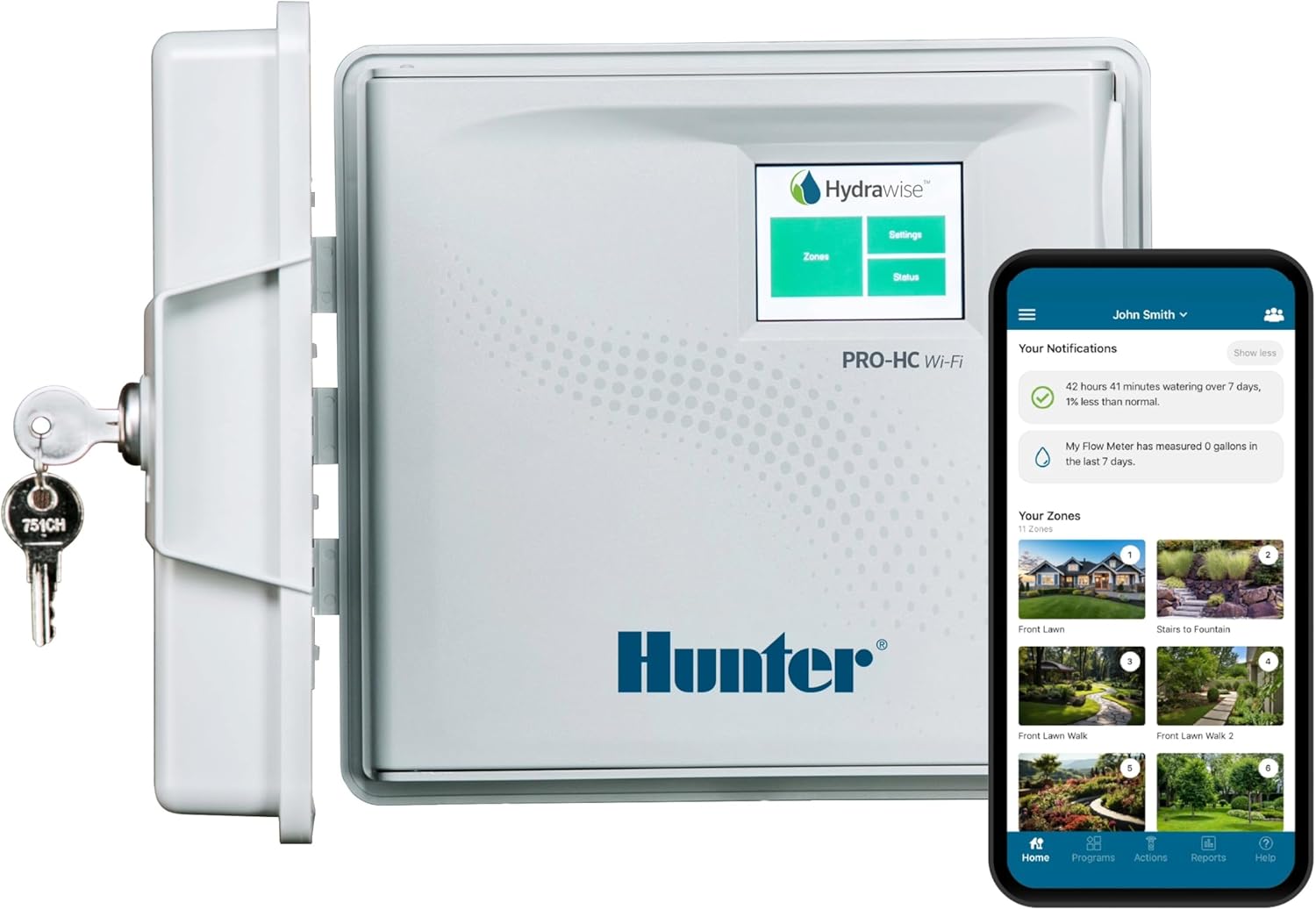
Hunter Hydrawise HC Smart Wi-Fi Irrigation Controller
Indoor six-station systems where contractor access and sensor inputs matter.
Fit check: This six-station model is fixed-capacity, so confirm every active zone before ordering.
This guide does not assert a WaterSense listing for this exact configuration. Check the model and add-on combo first.
Reality check
What happens when the plan goes wrong?
Rain skips, lost connectivity, a pressurized hose, and freezing weather expose the difference between remote control and physical control. These are documentation-based scenarios, not a hands-on product test.
A weather skip lands on the scheduled window
The forecast triggers a skip during the window already set aside for watering.
- In-ground response
- Leave the skipped run in the log and wait for the next currently allowed day unless the provider says otherwise.
- Hose response
- Treat Rain Skip the same way. A skipped hose event does not move itself onto a newly allowed day.
- Field check
- Review both device logs and the current rule before moving any run.
Connectivity drops
The controller, hub or phone loses its network connection before a scheduled event.
- In-ground response
- Check the model's local behavior and the schedule already stored on the controller.
- Hose response
- Stored valve events may still run, while remote changes and fresh weather decisions may be unavailable.
- Field check
- Observe an offline test while you are home and record what each device actually does.
The faucet stays pressurized behind the valve
The outdoor faucet remains open so the hose valve can start a run on schedule.
- In-ground response
- Inspect the irrigation shutoff and exposed fittings under the in-ground system's normal maintenance plan.
- Hose response
- Inspect every washer, fitting and hose because the connections remain pressurized behind the closed valve.
- Field check
- Confirm required backflow protection and watch every connection during the first run.
A freeze approaches
The forecast is nearing freezing while water remains in exposed hardware.
- In-ground response
- Follow the irrigation system's winterization plan for exposed plumbing and valves.
- Hose response
- Disconnect, drain and store the faucet valves indoors before freezing conditions.
- Field check
- Put winterization on the calendar instead of treating app connectivity as freeze protection.
Before you walk away
Watch the first run
Useful whether you buy a smart controller, a mechanical timer, or nothing.
- 01
Confirm the current rule for your address, method, and drought stage.
- 02
Photograph the existing wiring or faucet setup before you change anything.
- 03
Count zones, or confirm faucet threads, pressure, hub range, and backflow.
- 04
Program a short first run and stay present.
- 05
Check coverage edges and every connection while water is moving.
- 06
Decide what a weather skip means — next allowed day, not tomorrow by default.
- 07
Put winterization on the calendar.
Evidence appendix
The rule changes by address. The hardware facts do not.
Official utility pages govern the restriction examples. Manufacturer documents govern setup facts. EPA records govern certification language. Open the current source before copying any schedule.
These city examples are illustrative. They show why delivery method, landscape target, provider, address, and restriction stage matter. Do not use them as current advice for your address. Check the official page for the water provider serving that exact address before setting a schedule.
Austin, TexasChecked
Automatic, hose-end and hand-held watering can follow different schedules. Confirm how the exact setup is classified.
Raleigh, North CarolinaChecked
A set-down hose is treated as a hose-end sprinkler; hand watering means continuously holding the hose.
Denver, ColoradoChecked
Summer turf rules and drought-period hand-watering language depend on both the target and method.
Aurora, ColoradoChecked
The turf schedule applies whether the lawn is watered by hand or by an automatic system.
Southern NevadaChecked
Seasonal sprinkler schedules coexist with narrower hand-held and non-spray exceptions.
Full source register
Direct sources used for rule examples, product fit, certification, and setup limits. All were checked on 2026-07-22.
Certification
EPA WaterSense irrigation-controller registryModel-level WaterSense listing checks
Checked
Manufacturer
Rachio Smart Hose Timer quick-start guideValve setup, connectivity, pressure, batteries and safety limits
Checked
Manufacturer
Rachio Smart Hose Timer valve bundleTwo-valve and one-hub bundle contents
Checked
Manufacturer
Rachio Weather IntelligenceRain Skip behavior and weather-decision limits
Checked
Manufacturer
Rachio 3 smart sprinkler controllerRachio 3 capacity variants and controller features
Checked
Manufacturer
Orbit B-hyve XR sprinkler timerEight-zone fit, enclosure and connectivity
Checked
Manufacturer
Rain Bird ESP-TM2 series controllersStation counts and the separate smart-control path
Checked
Manufacturer
Hunter Hydrawise HC controllerFixed station counts, Wi-Fi, sensors and Hydrawise management
Checked
Official rule
Austin Water watering days and drought planMethod-specific schedule example
Checked
Official rule
Raleigh water conservation stagesHeld-hose and set-down-hose definitions
Checked
Official rule
Denver Water summer watering rulesTurf schedule and method language
Checked
Official rule
Aurora drought rulesTurf schedule across hand and automatic methods
Checked
Official rule
Las Vegas Valley Water District service rulesSeasonal schedules and method exceptions
Checked
Amazon links are buying exits, not technical evidence. We may earn a commission if you purchase through them. No manufacturer sponsored this guide.
Continue with the full smart-controller tool catalog or return to all Lawn Report field guides.